Yoga for two can feel tricky at first. You might wonder how to balance, breathe, and trust another person while stretching.
This guide walks you through 17 yoga poses for 2, starting easy and moving toward advanced moves.
You will learn simple seated stretches, standing balances, and fun partner challenges like the double wheel pose.
I have practiced partner yoga with friends and family for years, and I know how rewarding it feels once you find your rhythm together.
This article solves the confusion many beginners face when trying poses alone. By the end, you will have a clear plan to try at home, step by step, with confidence.
What Are Yoga Poses for 2?
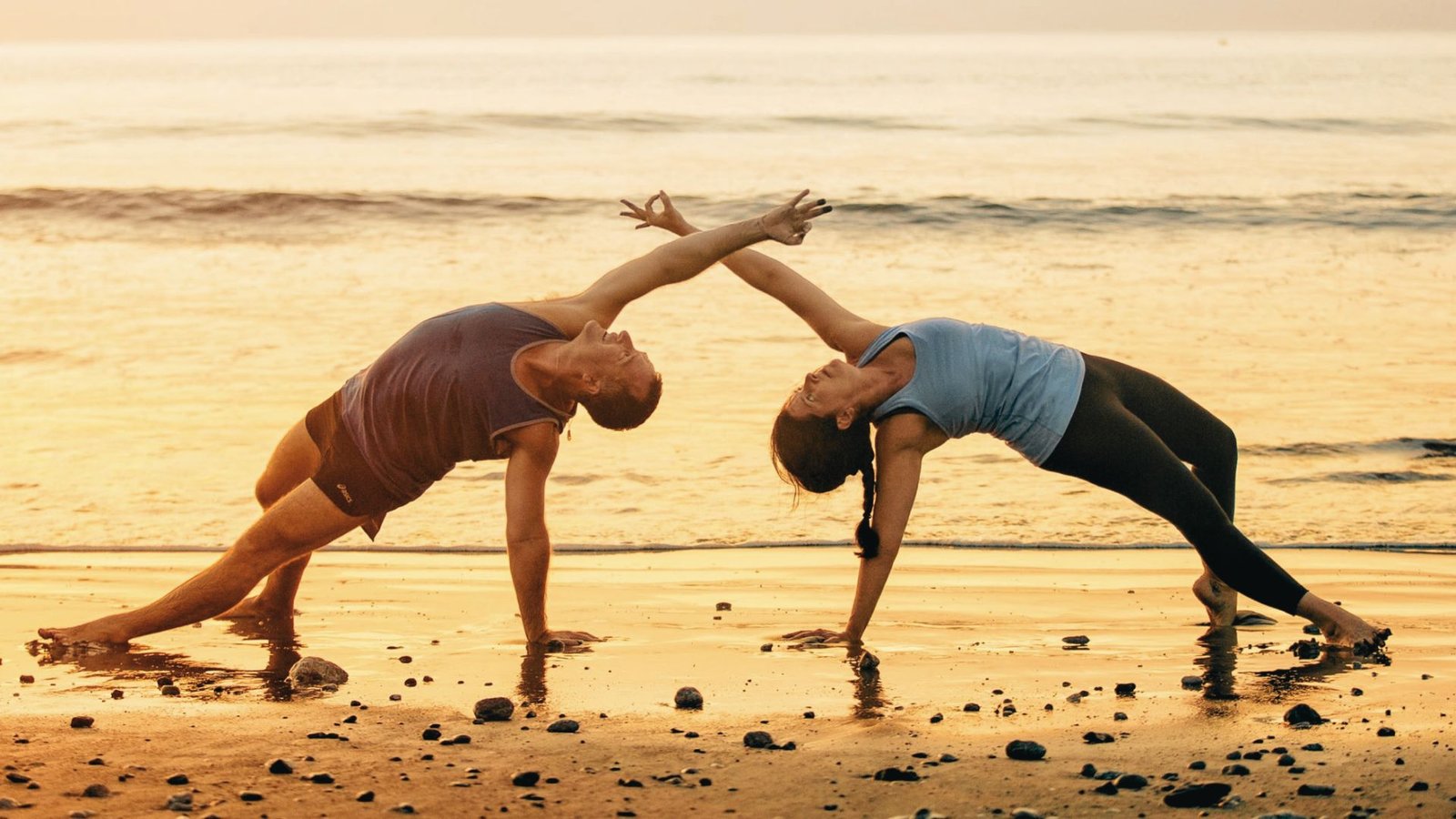
Partner yoga uses two people working together to deepen stretches and build trust.
Yoga poses for 2 are partner exercises where two people support each other to stretch, balance, and breathe together.
Instead of practicing alone, you rely on a partner for added stability and depth in each pose.
These poses range from calm seated stretches to advanced balancing acts. They work well for couples, friends, parents and kids, or yoga buddies at the gym.
The shared effort makes the poses more fun and often easier to hold for longer.
17 Yoga Poses for 2 (Beginner to Advanced)
Here are 17 poses that take you from gentle stretches to advanced balances.
1. Seated Meditation Pose
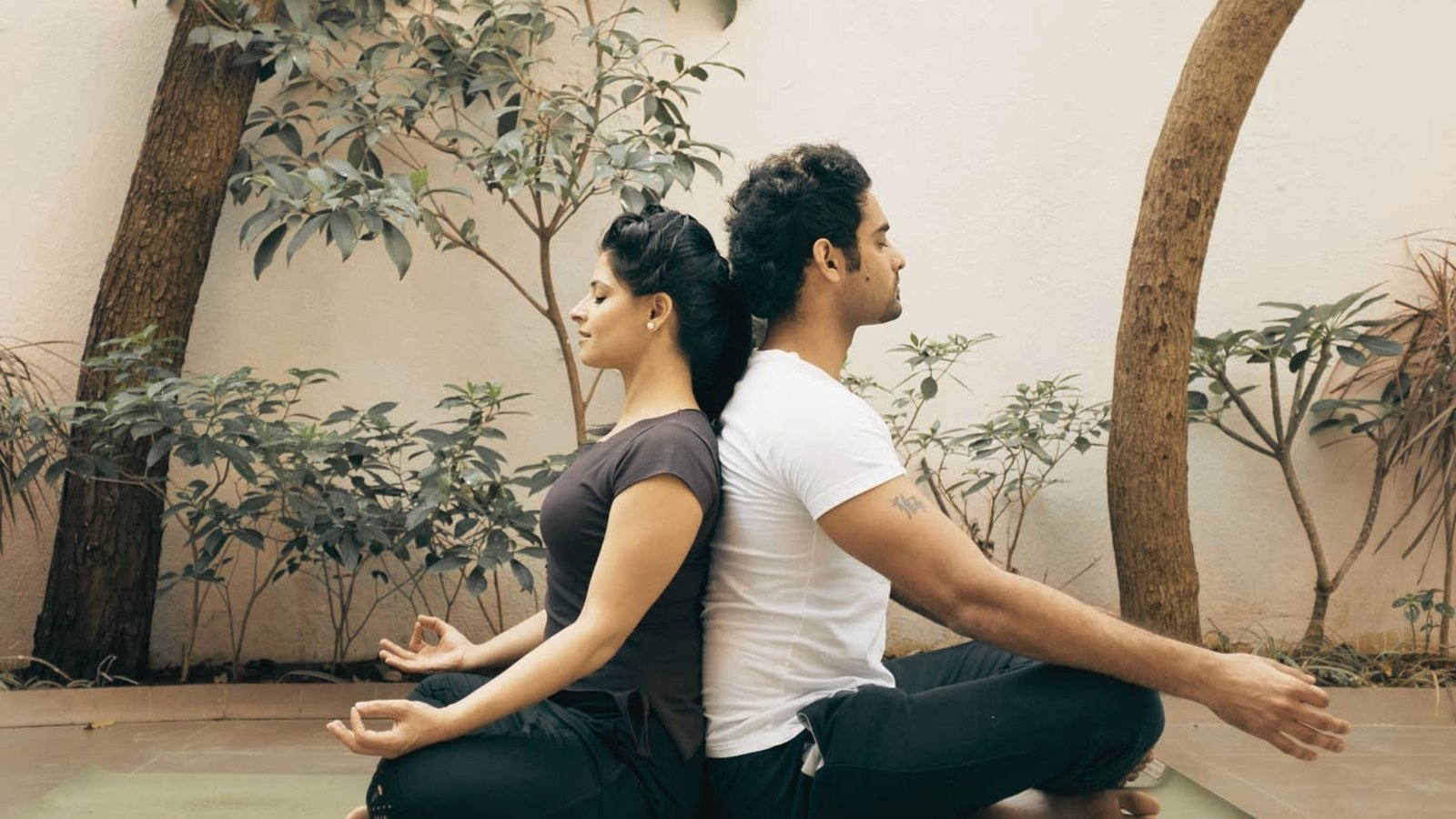
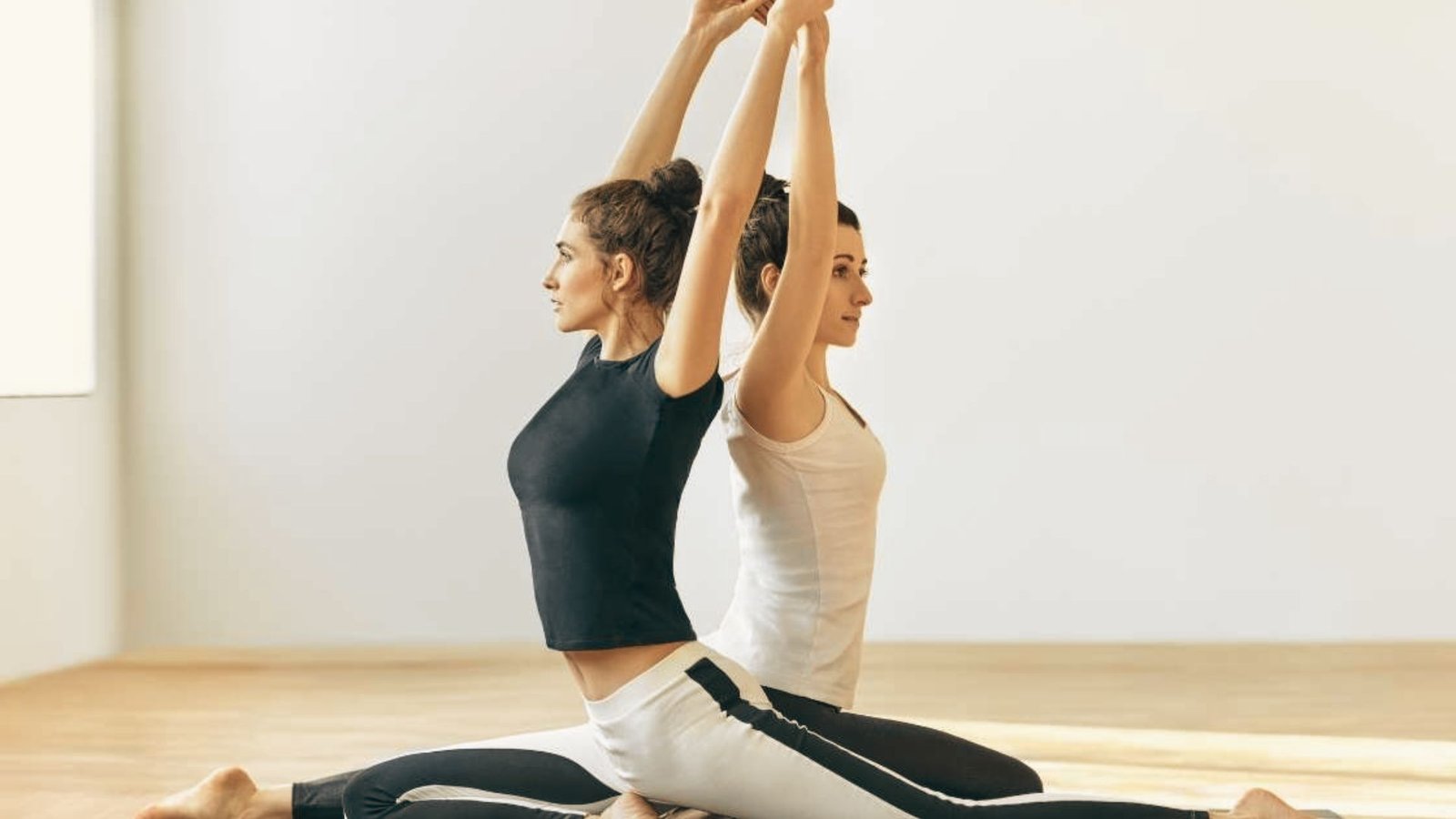
Sit back to back with your partner, cross-legged, and rest your spines against each other. Close your eyes and breathe slowly. This pose calms the mind and helps you tune into your partner's breath.
2. Partner Seated Spinal Twist
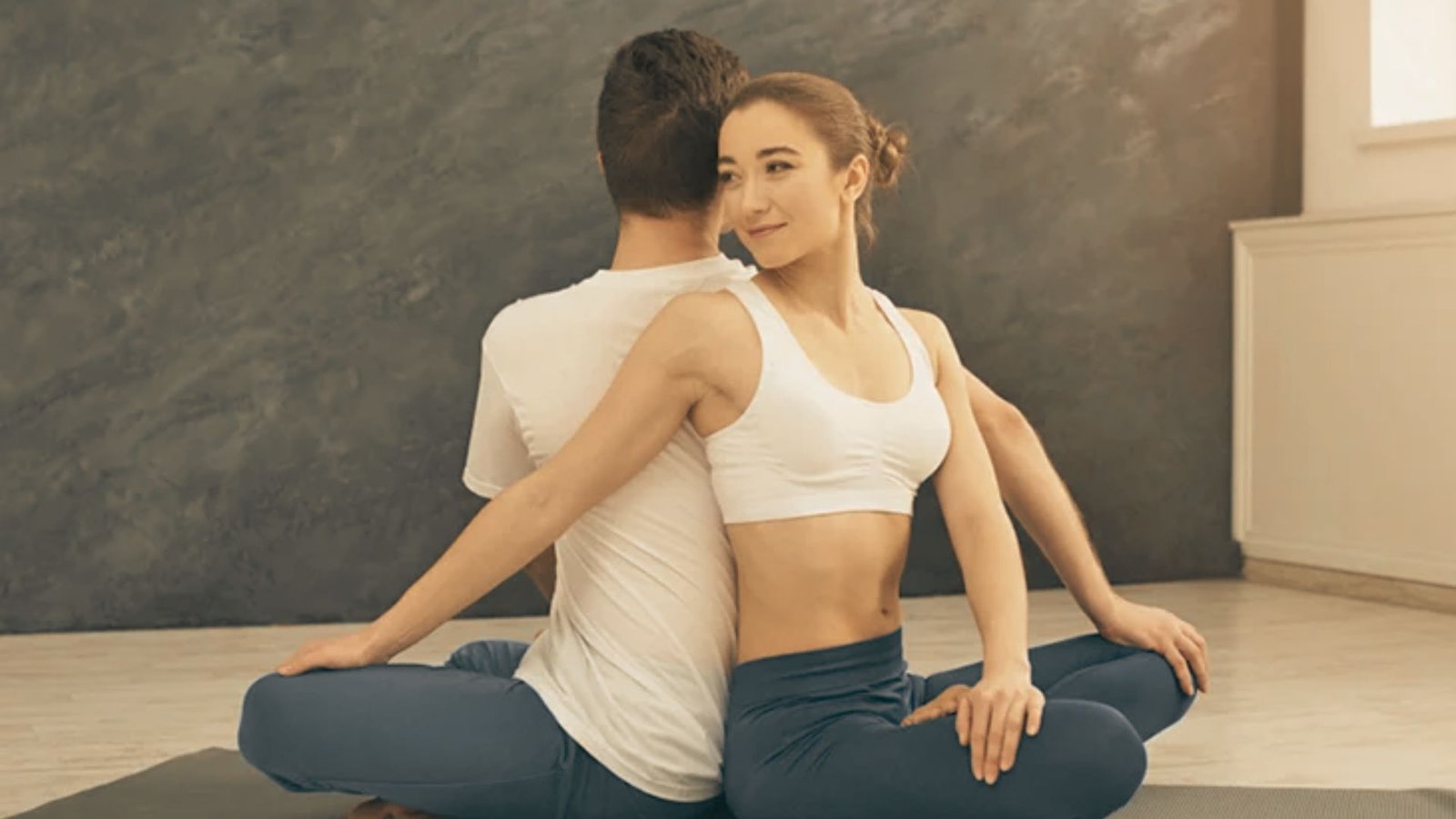
Sit back to back, then twist your upper body to one side while your partner twists the same way. Hold hands or touch shoulders for support. This twist gently loosens the spine.
3. Seated Wide-Legged Forward Fold
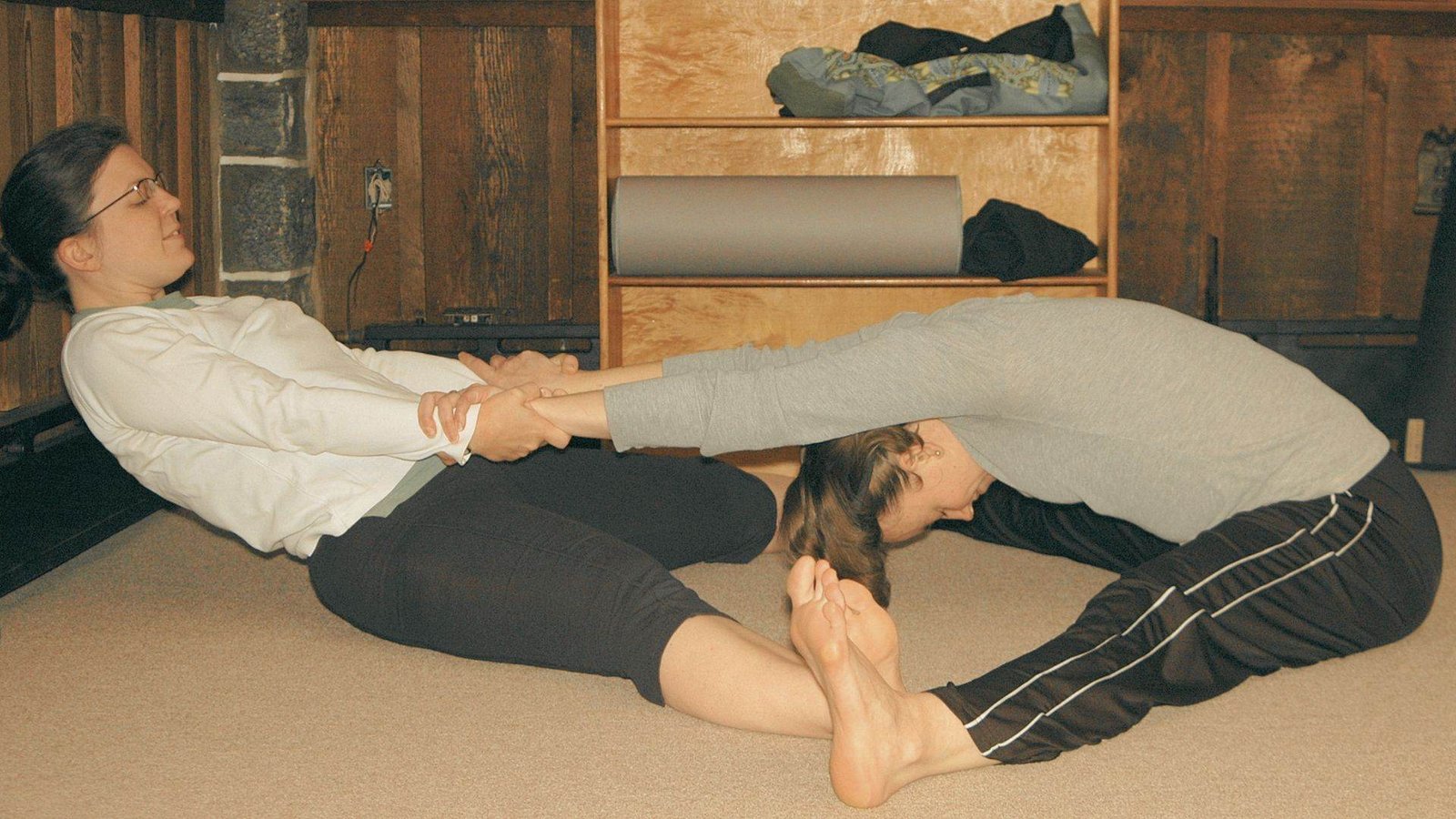
Sit facing your partner with legs spread wide and feet touching. Hold hands and gently pull each other forward into a fold. This stretch targets the hamstrings and lower back.
4. Double Child's Pose
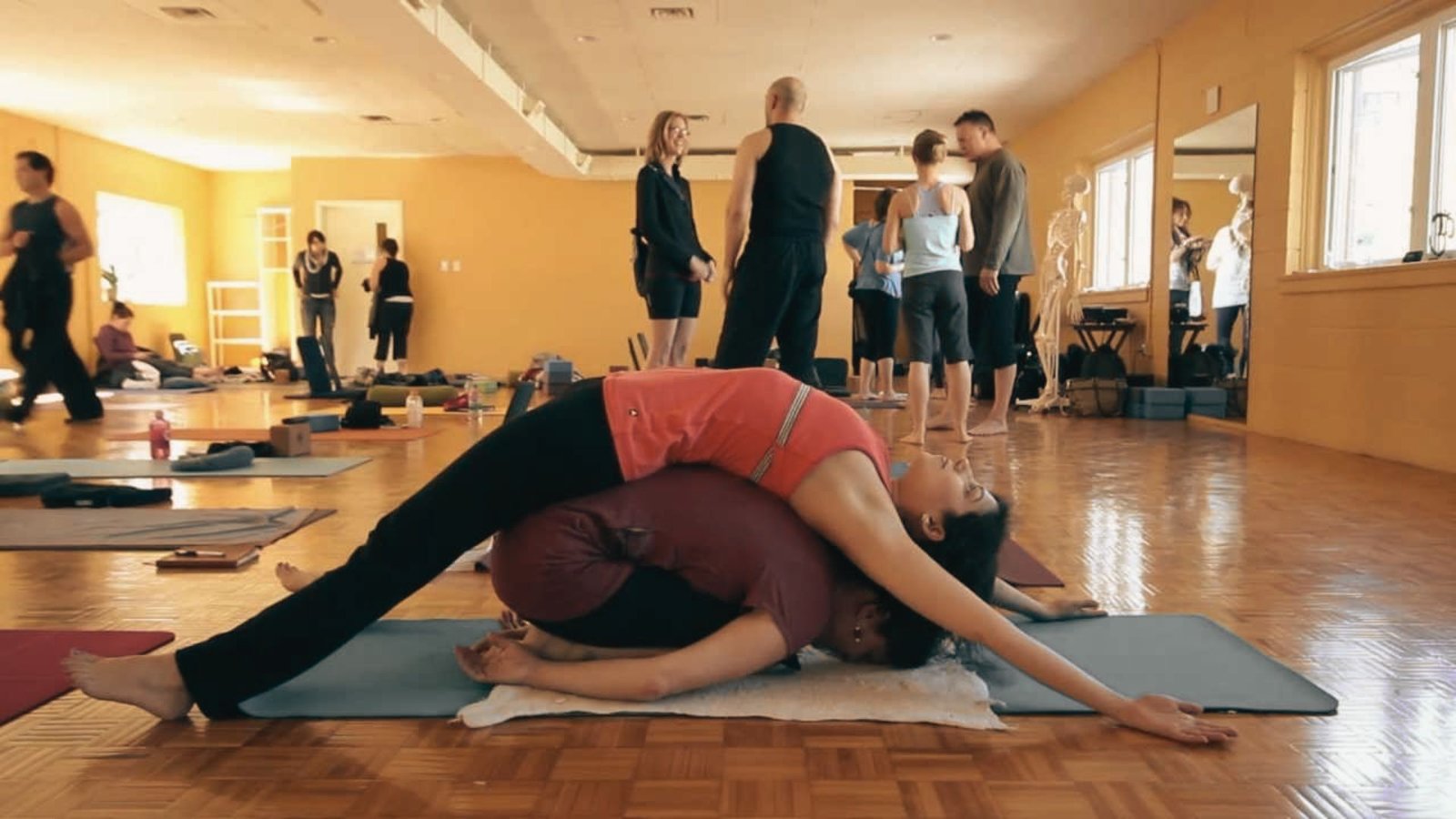
Kneel facing each other and fold forward until your foreheads touch. Rest your arms beside you. This pose gives a soft stretch for the back and a quiet moment of connection.
5. Seated Cat-Cow Stretch
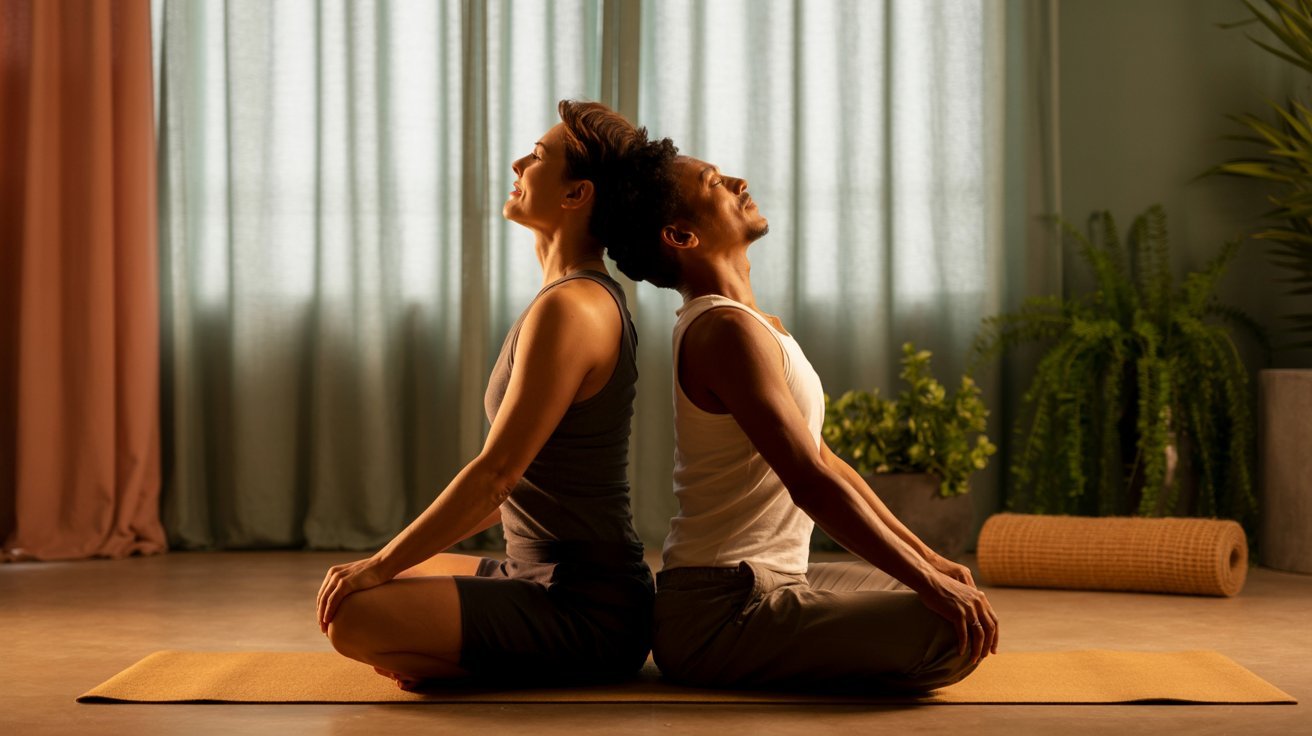
Sit cross-legged facing your partner and hold hands. Arch your back and lift your chest as your partner rounds their spine, then switch. This warms up the spine and builds rhythm together.
6. Thread the Needle Pose
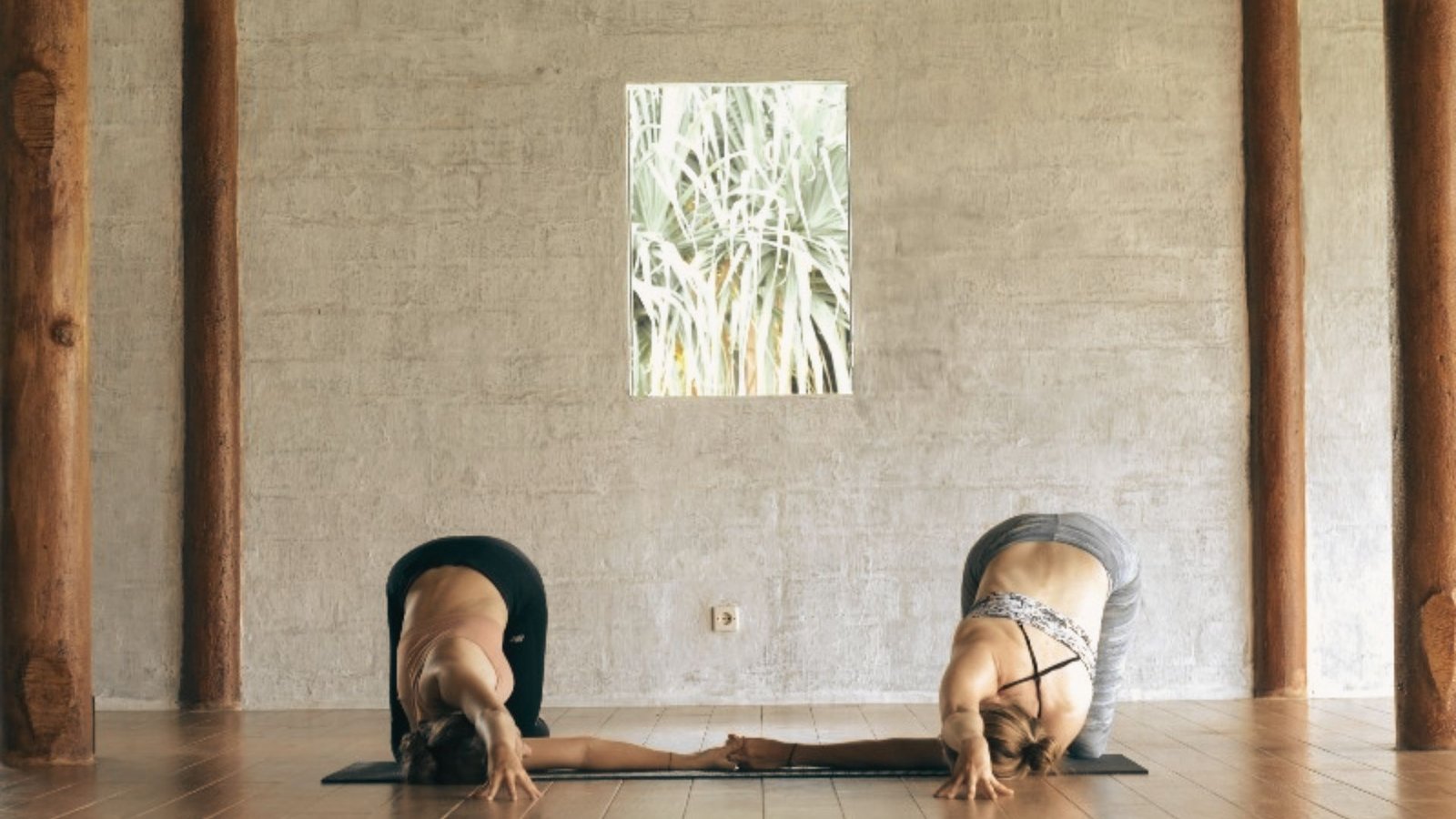
Kneel side by side, then thread one arm under the other and lower your shoulder to the floor. Your partner can gently press on your back for a deeper stretch.
7. Temple Pose
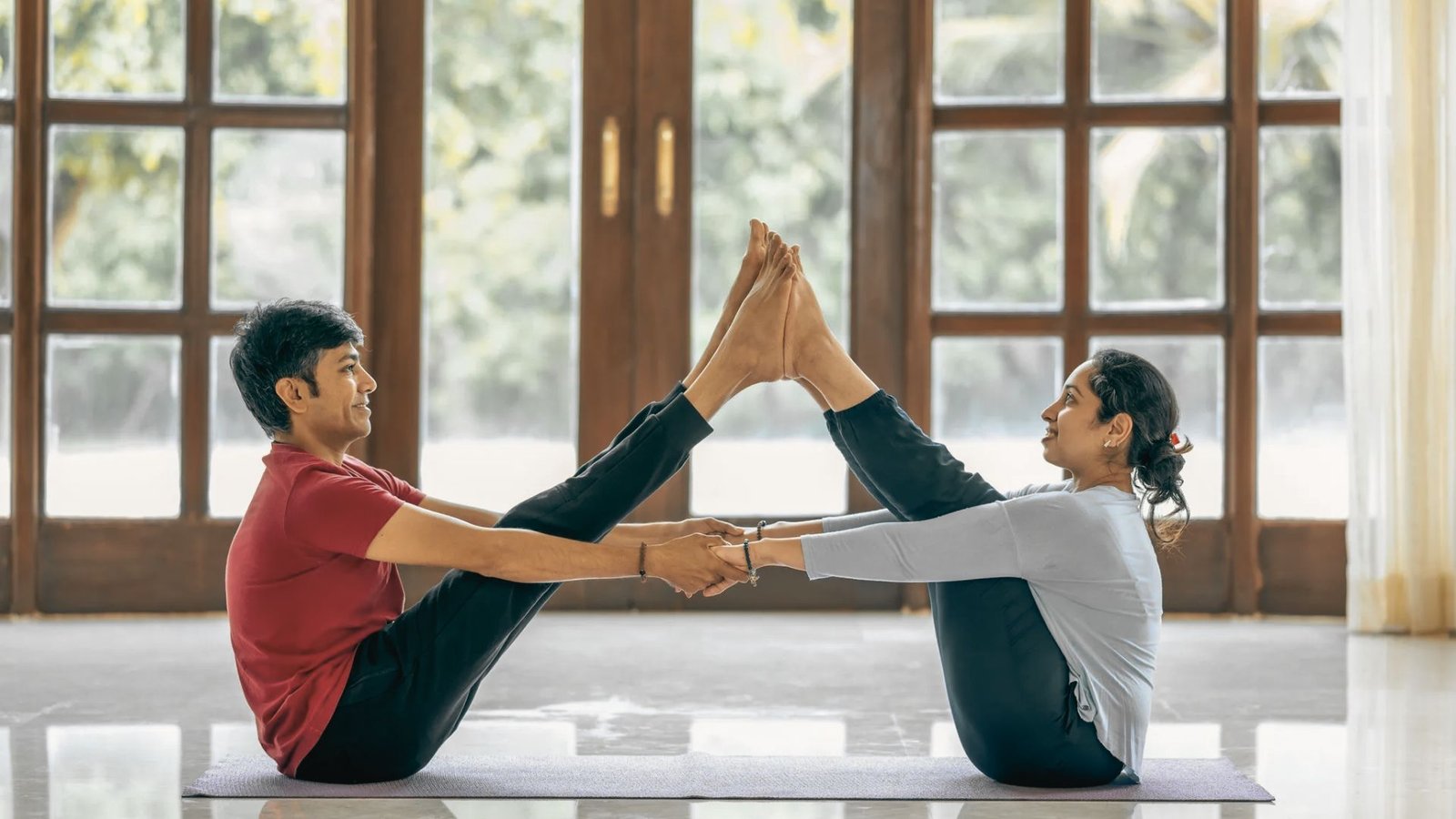
Stand facing your partner, place your hands together, and lean forward until your foreheads meet, forming a triangle shape. This pose builds trust and stretches the shoulders and back.
8. Standing Forward Fold
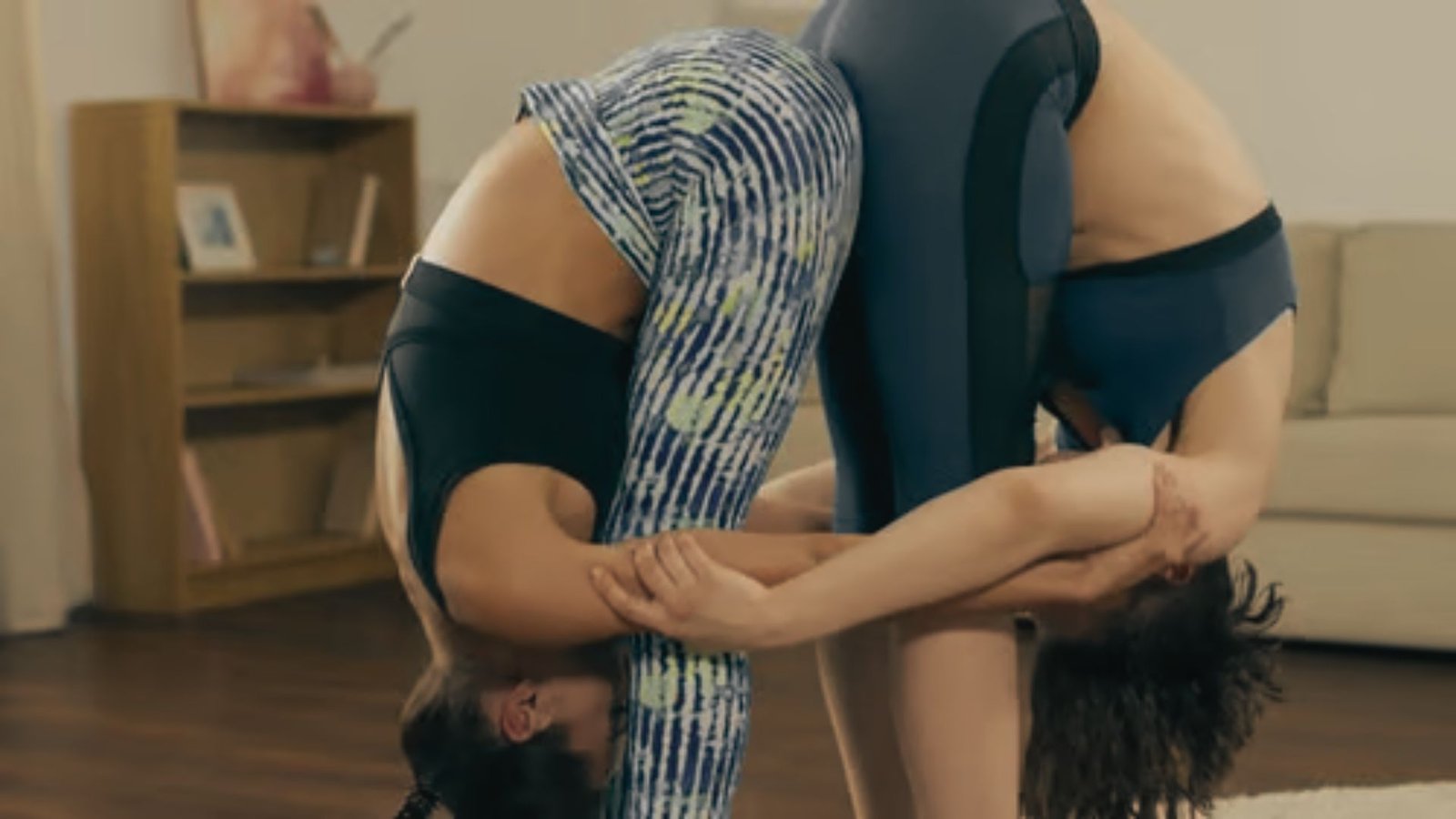
Stand back to back, then one partner folds forward while the other leans back over them. Switch sides after a few breaths. This loosens the hamstrings and spine.
9. Back-to-Back Chair Pose
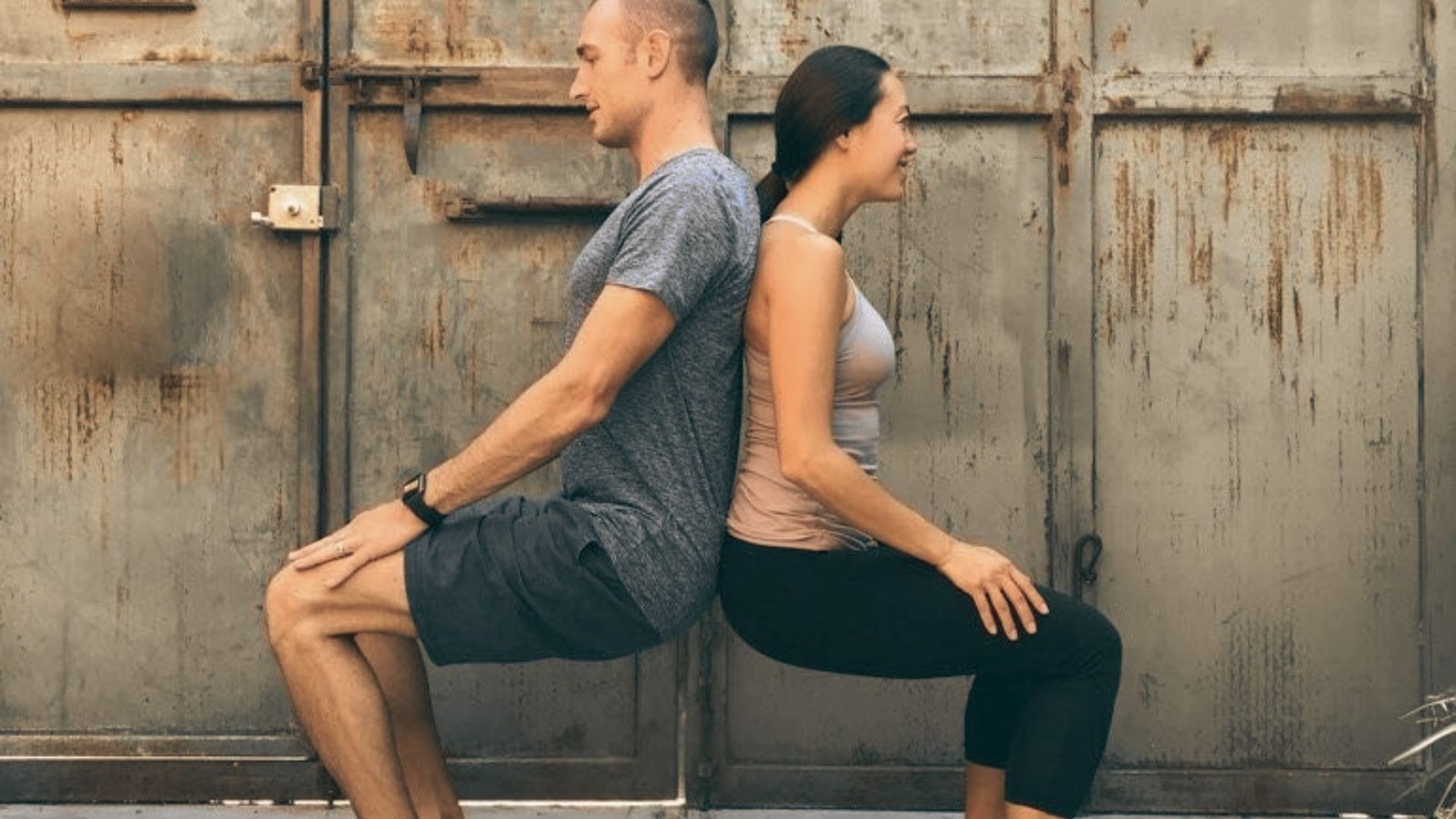
Stand back to back with knees bent as if sitting in a chair. Lean into each other for support. This pose strengthens the legs and core while testing balance together.
10. Side-by-Side Tree Pose
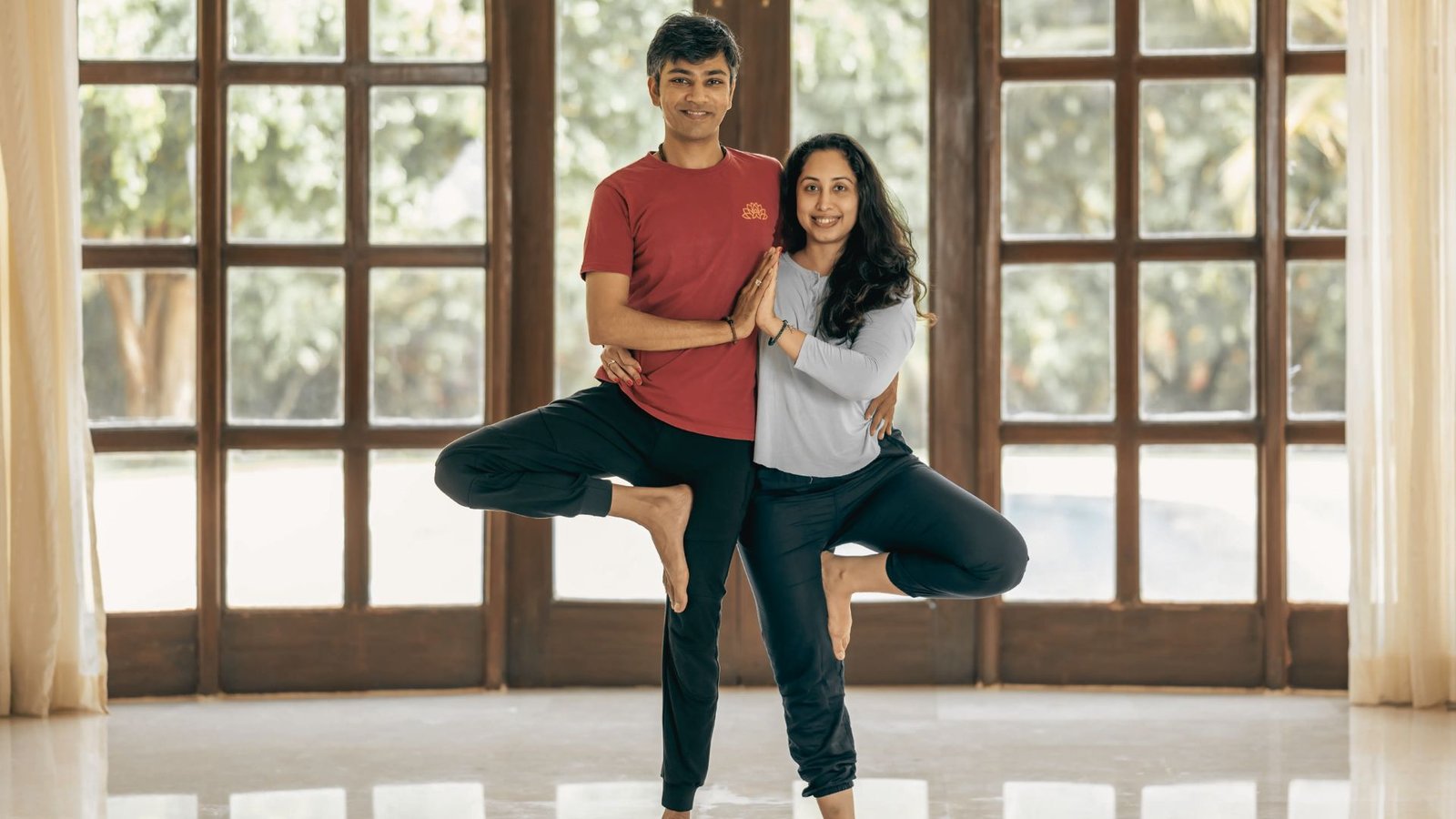
Stand side by side, hold hands, and lift the outer leg into tree pose. Use each other for balance. This sharpens focus and steadies wobbly legs.
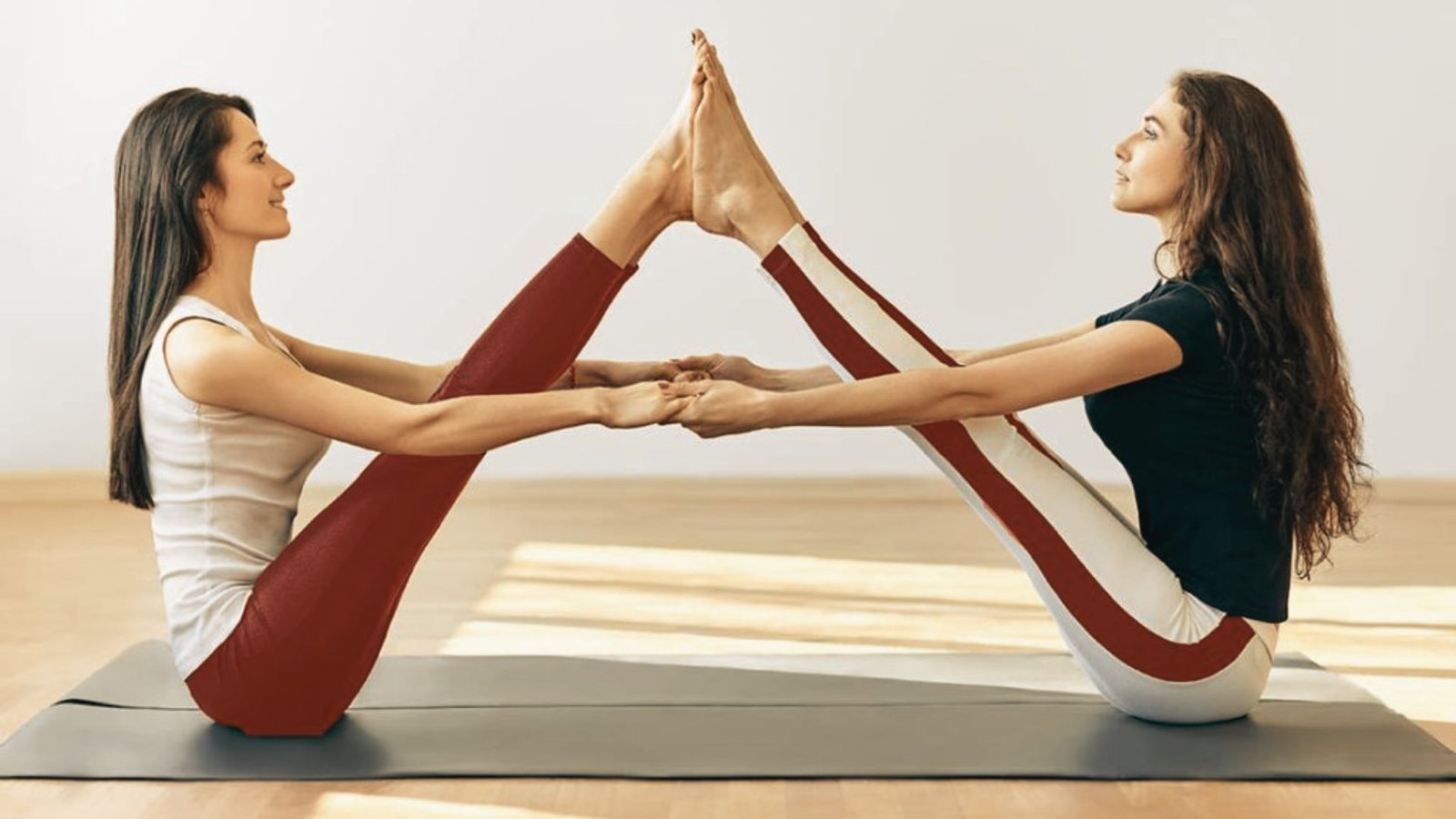
11. Partner Boat Pose
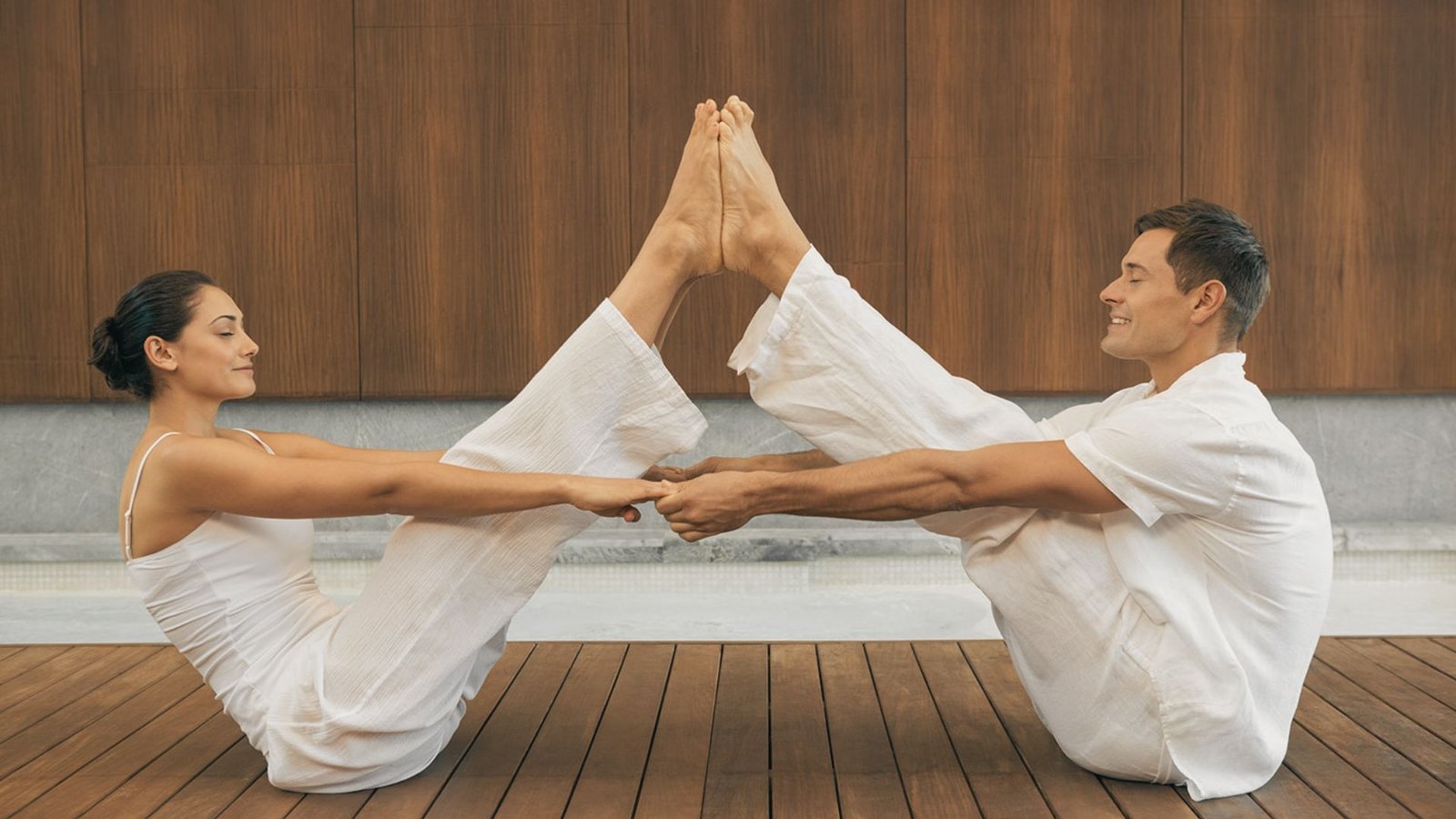
Sit facing each other, hold hands, and lift your legs to form a V shape with feet touching. This pose works the core and tests balance as a team.
12. Partner Warrior III Pose
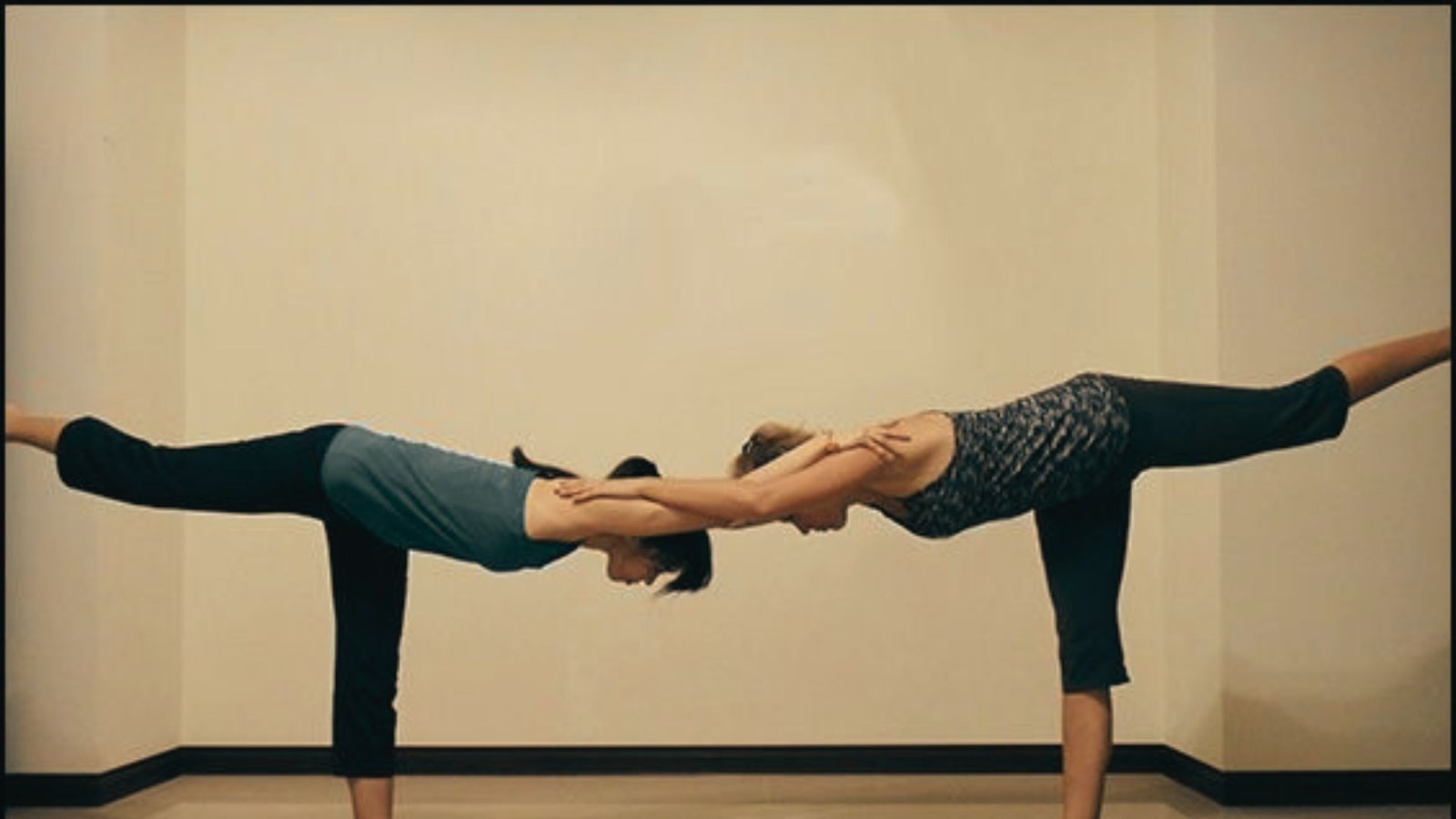
Stand facing your partner, extend one leg back, and lean forward while holding hands for support. This pose builds balance and leg strength with a safety net from your partner.
13. Double Downward Dog Pose
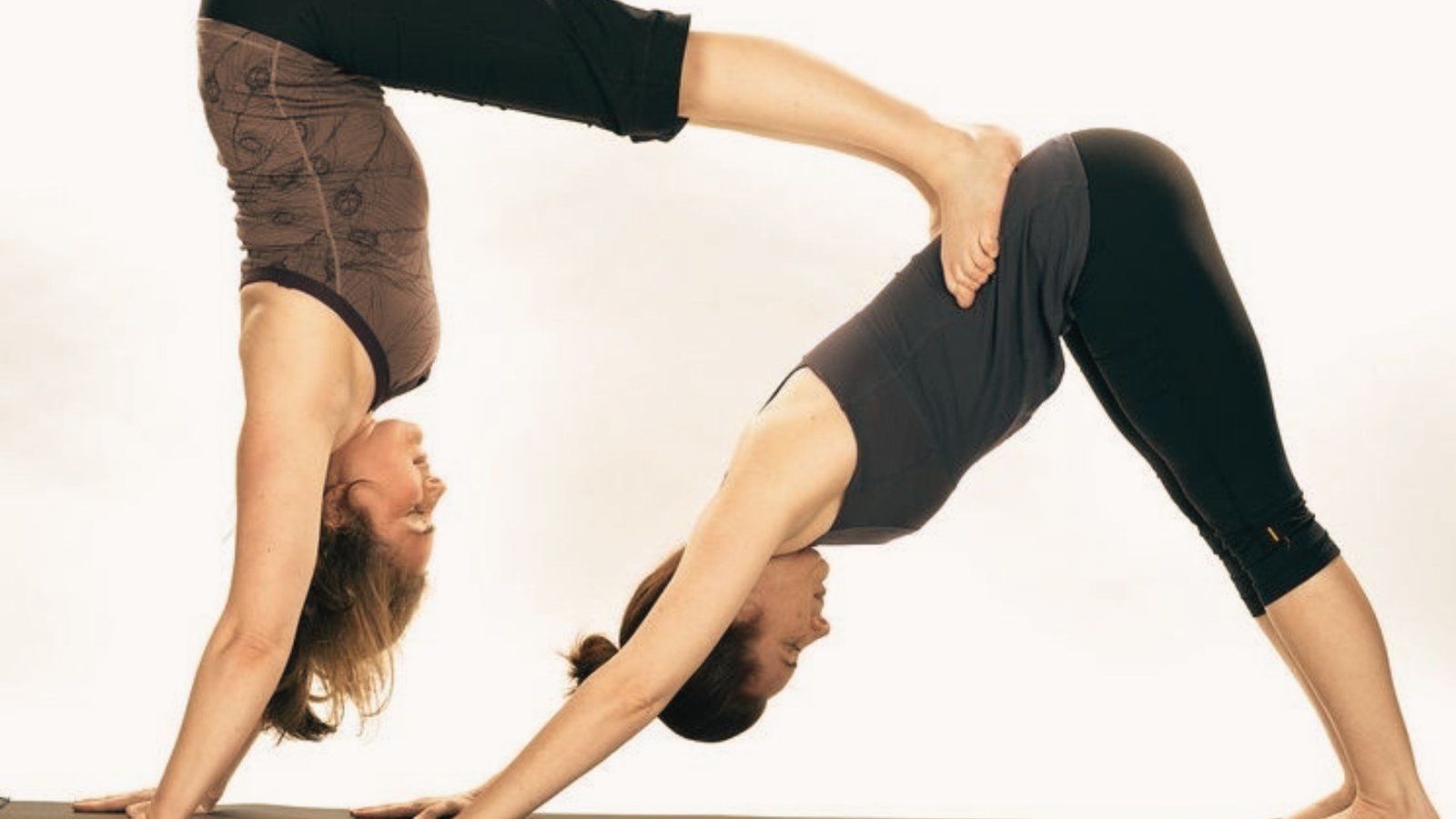
One partner moves into downward dog while the other places their hands on the first partner's lower back and lifts into a deeper downward dog. This stretches the shoulders, back, and legs.
14. Partner Plank Hold
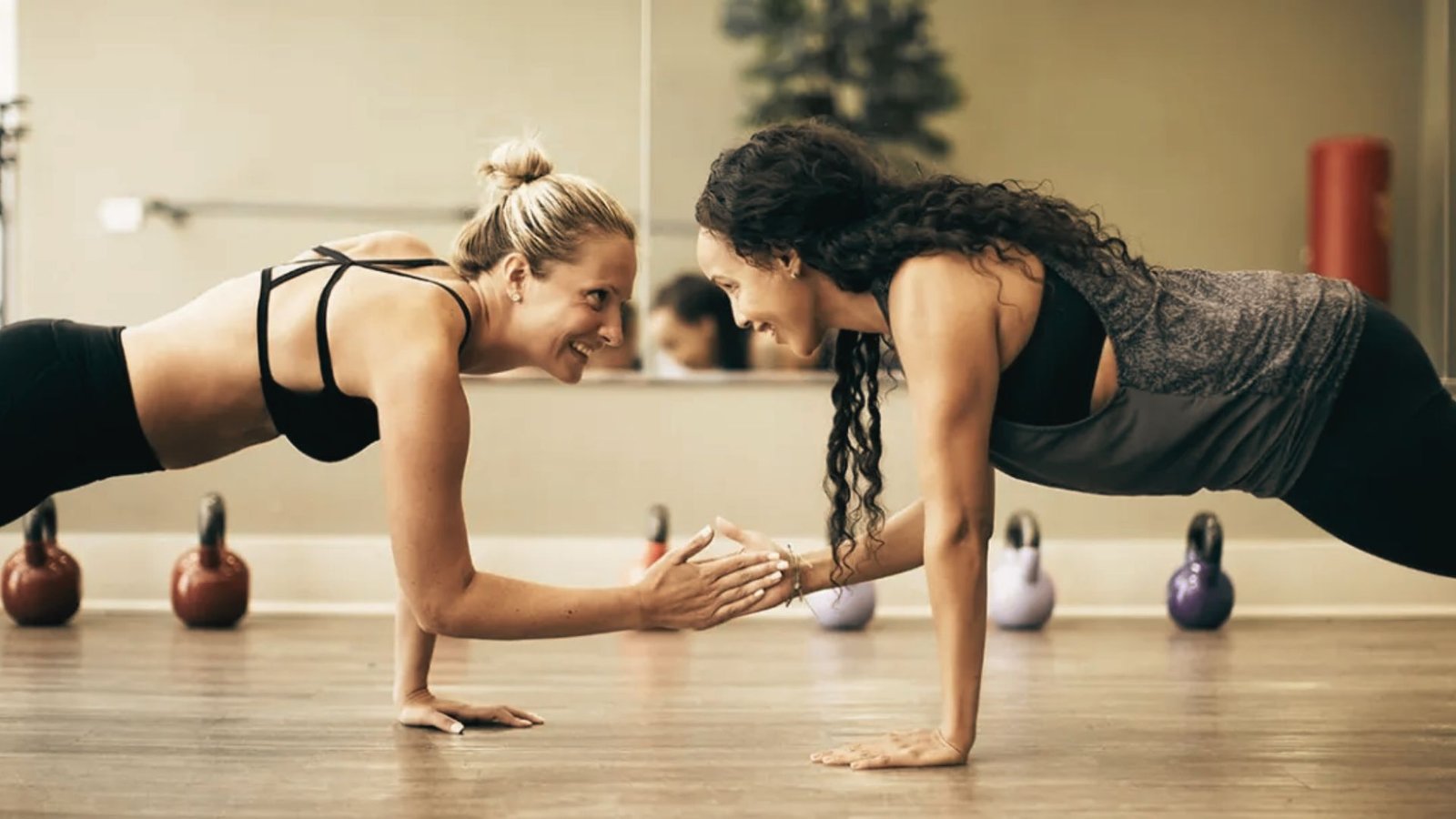
Face each other in plank position and high five with one hand while balancing on the other. This pose builds core strength with a playful twist.
15. Flying Bow Pose
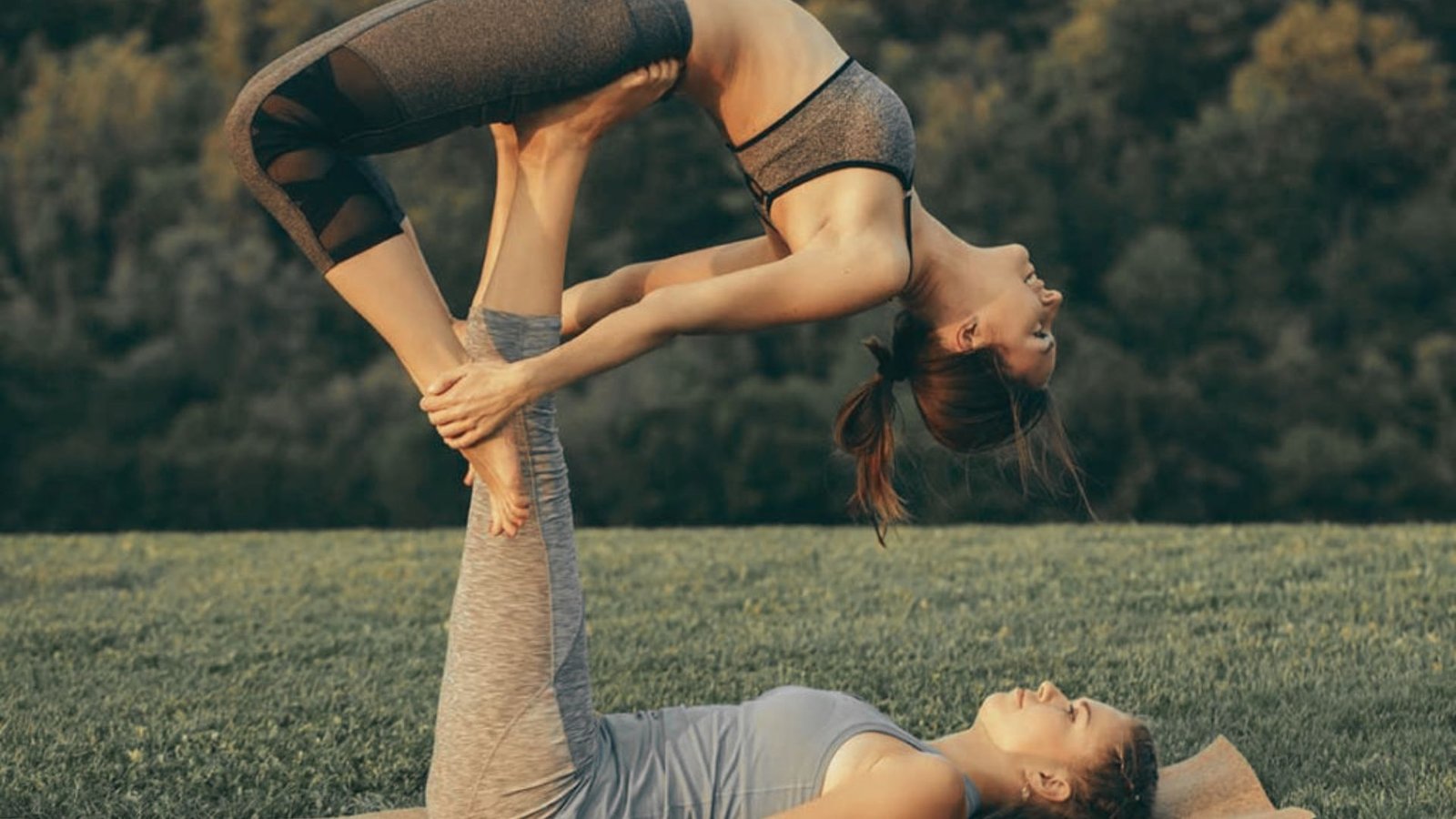
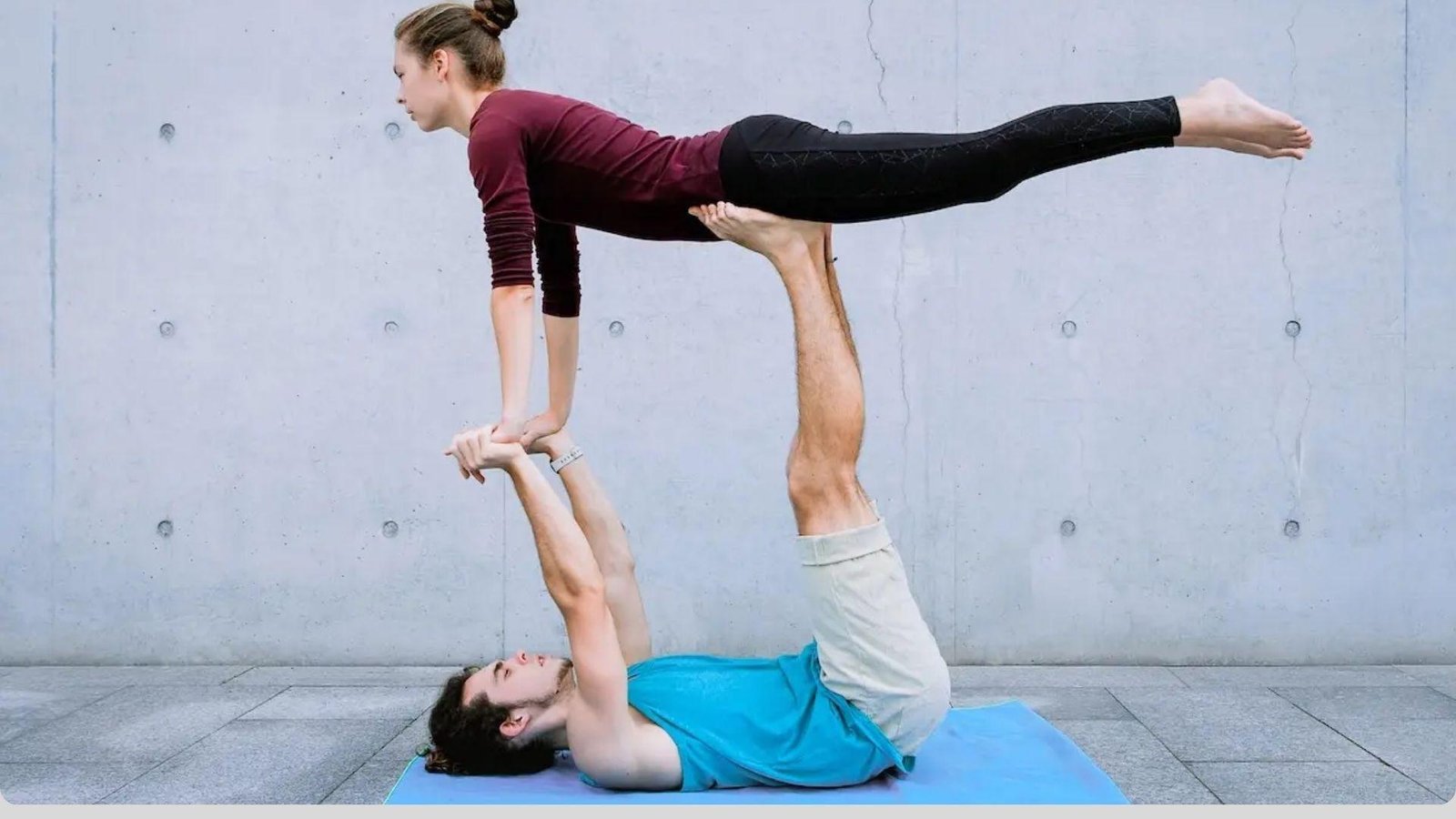
One partner lies on their back with feet raised while the other balances on their feet in a bow shape. This advanced pose needs trust, strength, and clear communication.
16. Partner Handstand
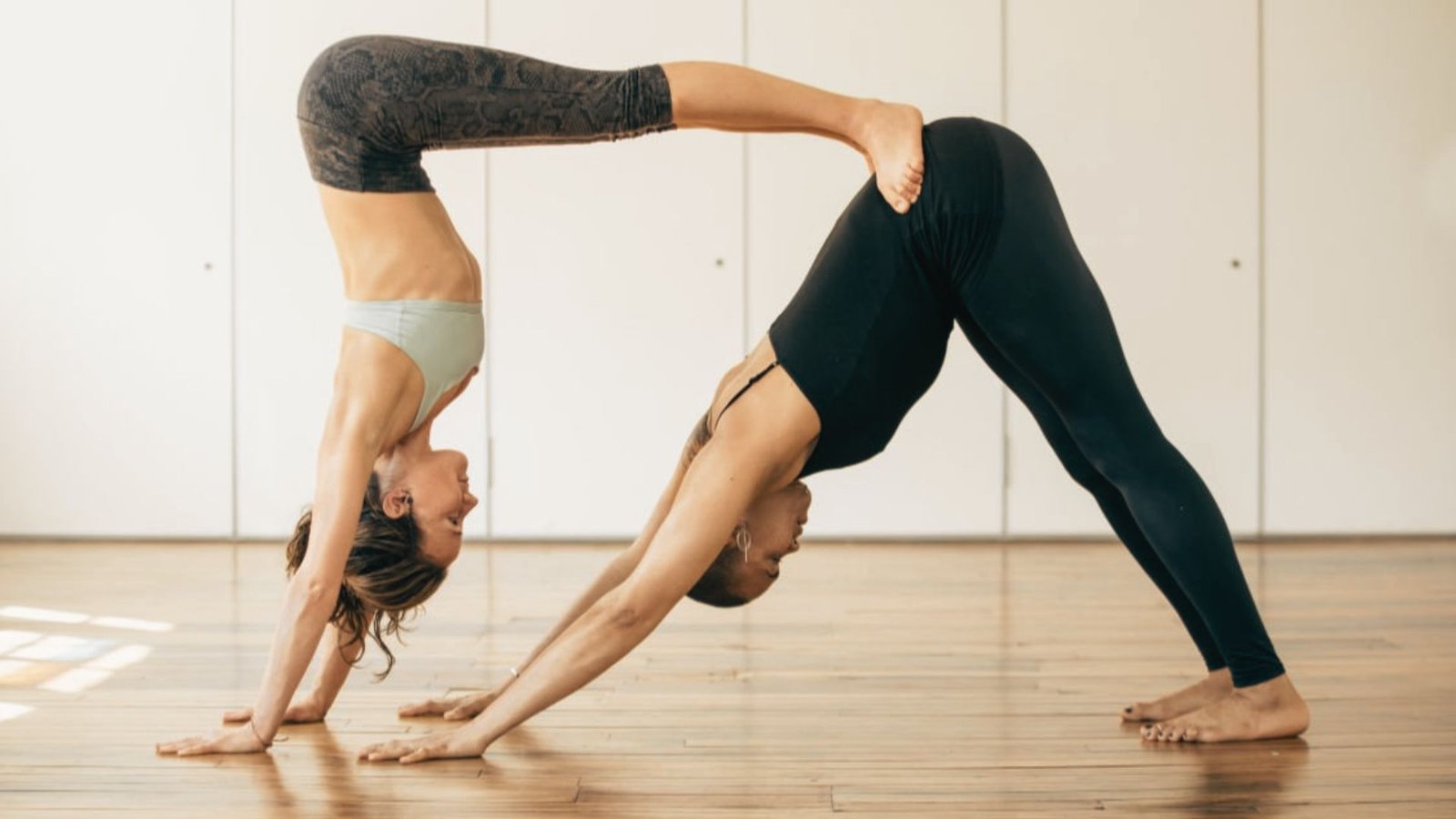
One partner holds a handstand while the other spots and supports their legs. This pose demands strength, balance, and full trust between partners.
17. Double Wheel Pose
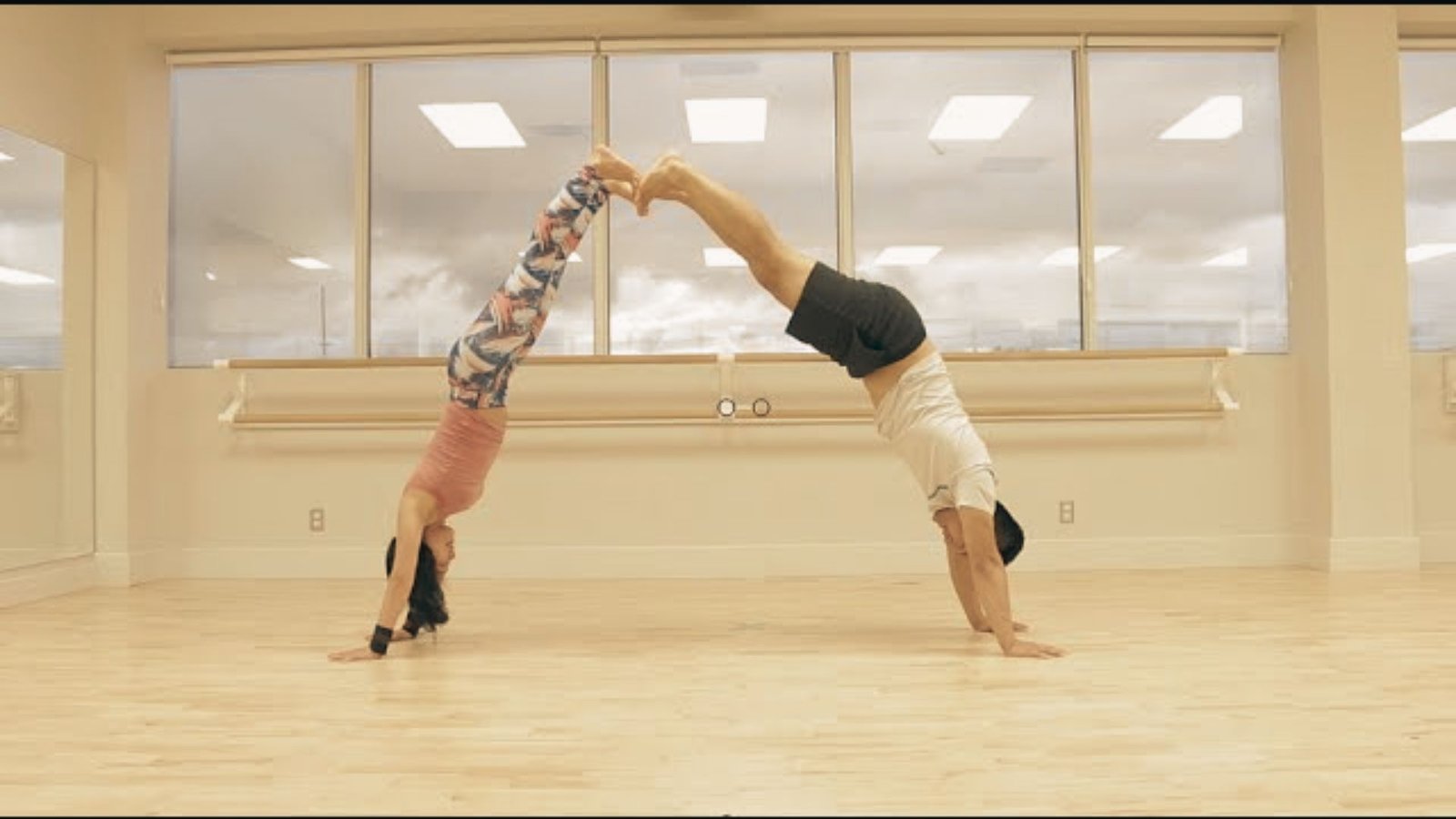
Both partners move into wheel pose facing each other, with hands and feet touching for support. This advanced backbend stretches the whole body and needs strong communication.
Benefits of Practicing Yoga Poses for 2 People
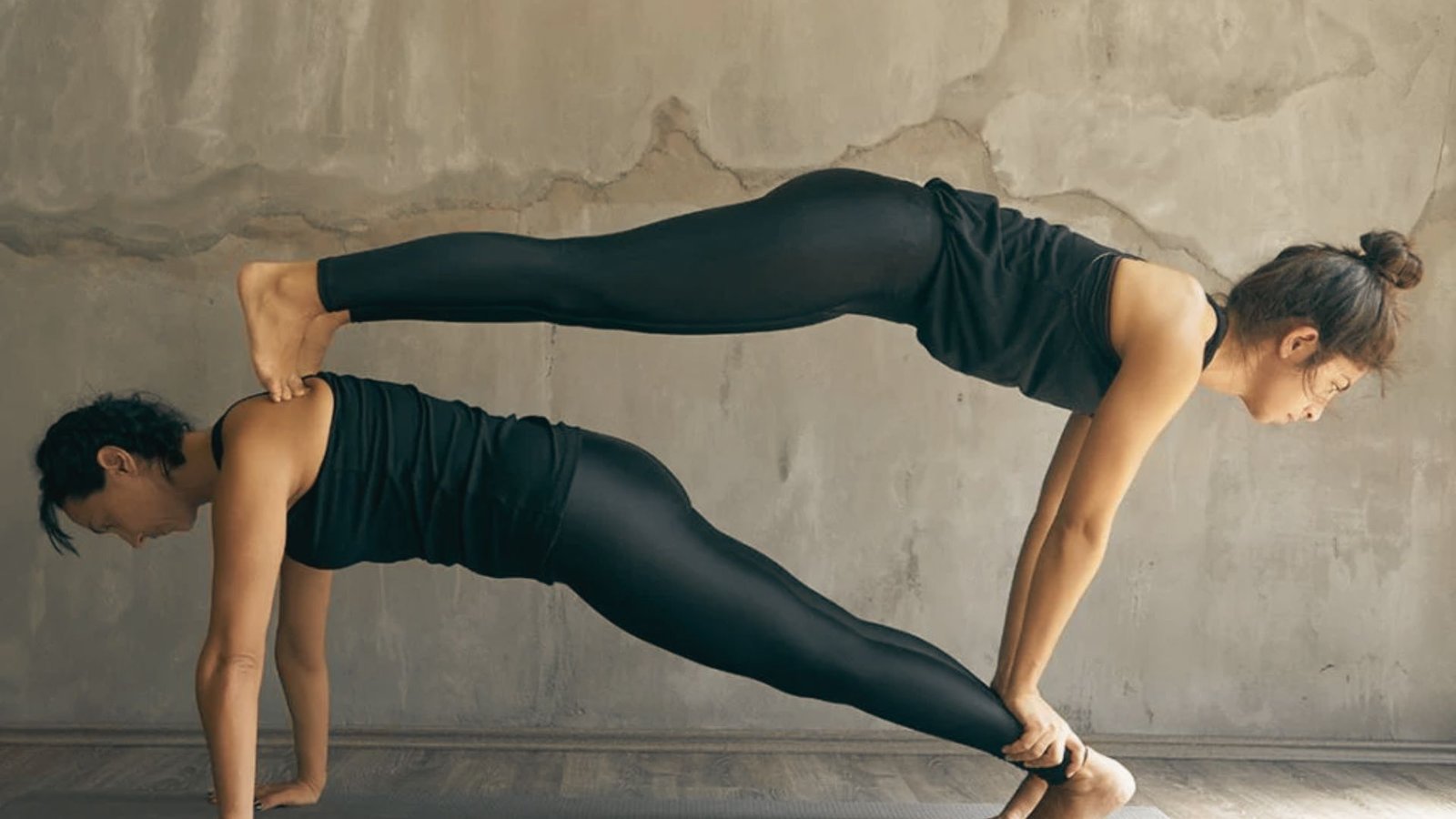
Partner yoga offers more than a stretch, it builds connection too.
Strengthens Communication and Trust
Partner yoga makes you talk and listen. You learn to adjust your movements based on your partner's needs, which builds trust over time.
Improves Flexibility and Mobility
Having a partner gently support a stretch lets you reach further than you could alone. This helps loosen tight muscles safely.
Builds Core Strength and Stability
Many partner poses need balance and control. Your core muscles work harder to stay steady, which improves strength over time.
Improves Balance and Coordination
Working with a partner sharpens your sense of balance. You learn to move in sync, which improves coordination both on and off the mat.
Helps Reduce Stress and Anxiety
Practicing yoga with another person adds a social element that can lift your mood. Shared breathing and movement help calm the nervous system.
How to Practice Easy Yoga Poses for 2 at Home
A few simple steps make starting partner yoga at home much easier.
Create a Beginner-Friendly Routine
Start with simple seated poses before trying standing or balancing ones. A short routine of five to seven poses is enough for beginners.
Use Props for Extra Support
Yoga blocks, straps, and cushions can make poses more comfortable. Props help beginners hold poses longer without strain.
Progress Safely to More Advanced Poses
Add one new pose at a time once you feel steady with the basics. Moving slowly helps prevent injury and builds confidence.
Tips for Getting the Most Out of Yoga Poses for 2
A few simple habits can make every partner pose smoother and safer.
- Communicate throughout every pose so you can adjust together if something feels off.
- Sync your breathing to make movements smoother and keep both minds calm.
- Start with easy poses before advancing to build confidence and trust.
- Use props like blocks and straps when extra support is needed.
- Prioritize good alignment over deep stretching to stay safe and injury-free.
Conclusion
Partner yoga poses for 2 have changed how I stretch and connect with people close to me.
I remember wobbling through my first balance pose with a friend, laughing more than holding the pose, but it still felt good. That is the point.
These poses build trust, strength, and a few laughs along the way. Try one tonight with someone you trust, even if it feels clumsy at first.
Drop a comment below and tell me which pose you tried. Share this guide with a friend who needs a stretch buddy too.
Frequently Asked Questions
What Are the Best Yoga Poses for 2 Beginners?
Seated meditation, double child's pose, and seated cat-cow stretch are great starting points. They are gentle, calming, and easy to learn.
Can Friends Practice Yoga Poses for 2 People?
Yes, friends can practice these poses just as well as couples or family members. All you need is trust and clear communication.
How Often Should You Do Partner Yoga?
Two to three sessions a week work well for most beginners. This gives your body time to rest and adjust between practices.
Are Yoga Poses for 2 Safe for Beginners?
Yes, as long as you start with simple poses and listen to your body. Save poses like the double wheel for later, once you build strength.
What Equipment Do You Need for Partner Yoga?
A yoga mat and comfortable clothing are enough to begin. Blocks or straps can help if you need extra support.