Want to try yoga wheel exercises but do not know where to start?
A yoga wheel can make stretches feel more comfortable and help you practice poses with more support.
It is a simple tool that many beginners use to ease tight muscles, open the chest, and improve flexibility at home.
In this guide, you will find 19 beginner friendly yoga wheel exercises and stretches that are easy to follow.
Each pose includes simple instructions and tips to help you move safely and with confidence.
You will also learn how to use a yoga wheel correctly, avoid common mistakes, and create a practice that fits your schedule.
By the end, you will have a clear plan for starting yoga wheel exercises at home and making them part of your routine.
Why Try Yoga Wheel Exercises at Home?
Yoga wheel exercises help improve flexibility, posture, and body awareness without needing a gym or large space.
Many beginners like the wheel because it supports the back and makes stretches feel more comfortable.
Yoga teachers often use it to help students open the chest, loosen tight hips, and reduce stiffness from long hours of sitting.
Home practice also lets you move at your own speed and repeat poses as needed.
With regular practice, many people notice easier movement, better balance, and less tension in the neck and shoulders.
How to Use a Yoga Wheel Safely Before You Start
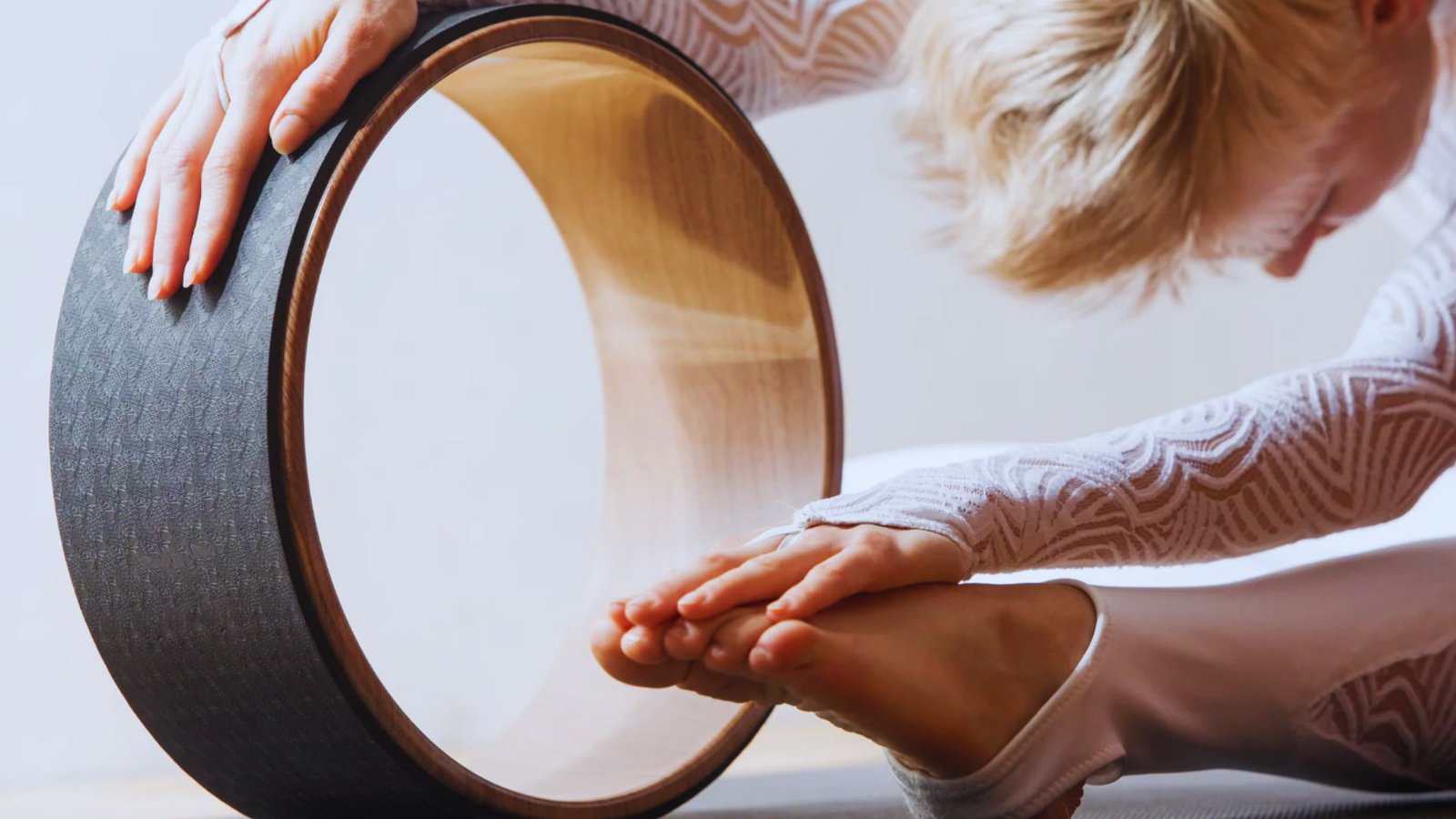
Choose a yoga wheel with a firm grip and place it on a flat surface.
Wear comfortable clothes and move slowly during every stretch. Keep your core muscles gently engaged and avoid forcing your body into deep backbends.
If you feel sharp pain, stop and adjust the pose. Beginners often find it helpful to hold each position for a few breaths rather than rushing through the routine.
19 Yoga Wheel Exercises for Beginners
These yoga wheel exercises start with gentle stretches and slowly move into poses that improve flexibility, posture, and balance.
Move slowly, breathe steadily, and stay within a range that feels comfortable. Many beginners find that regular practice helps reduce stiffness and makes everyday movement feel easier.
1. Child’s Pose With a Yoga Wheel
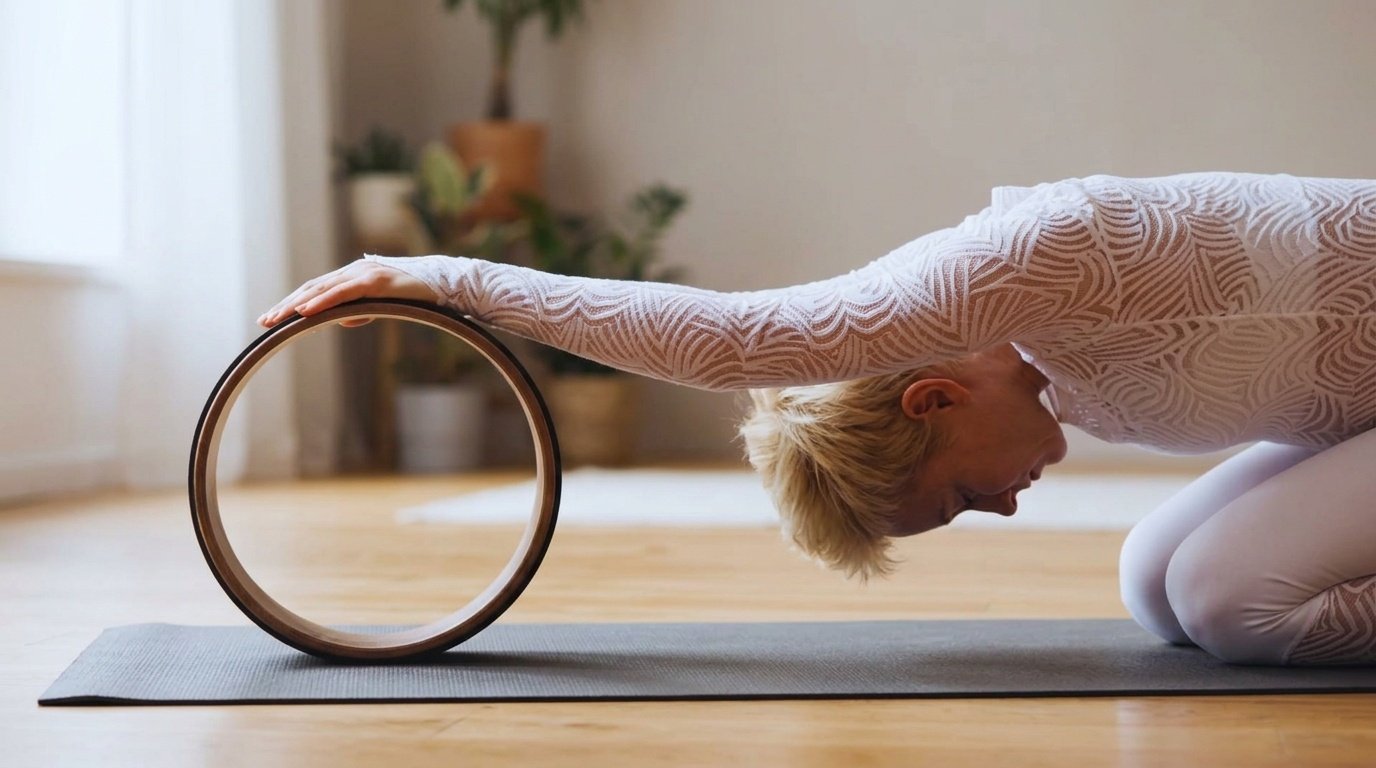
Kneel on the floor and place the yoga wheel in front of you.
Sit back toward your heels and slowly roll your hands forward on the wheel. Let your chest lower toward the floor and relax your neck.
This pose gently stretches the shoulders, upper back, and sides of the body.
Many beginners use it as a starting pose because it feels supported and easy to control. Hold for five to ten slow breaths and avoid lifting the shoulders toward the ears.
2. Supported Fish Pose
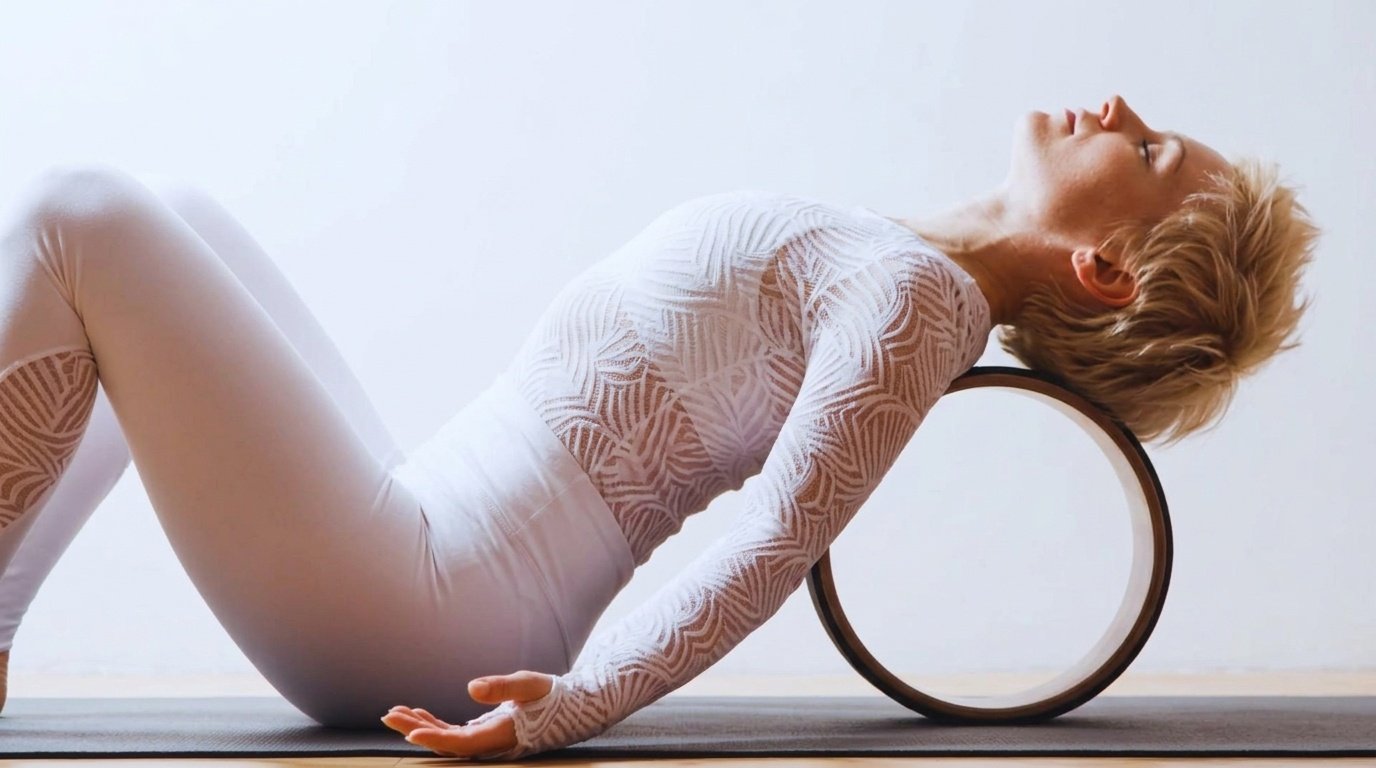
Sit on the floor and place the yoga wheel behind you.
Slowly lie back so the wheel rests under your upper back. Let your arms open to the sides and keep your knees bent.
This chest opening pose can help counter the effects of sitting for long periods. Many yoga students say it feels relieving after desk work. Keep your head relaxed and breathe slowly.
Stay in the pose for twenty to thirty seconds before coming out carefully.
3. Puppy Pose Stretch
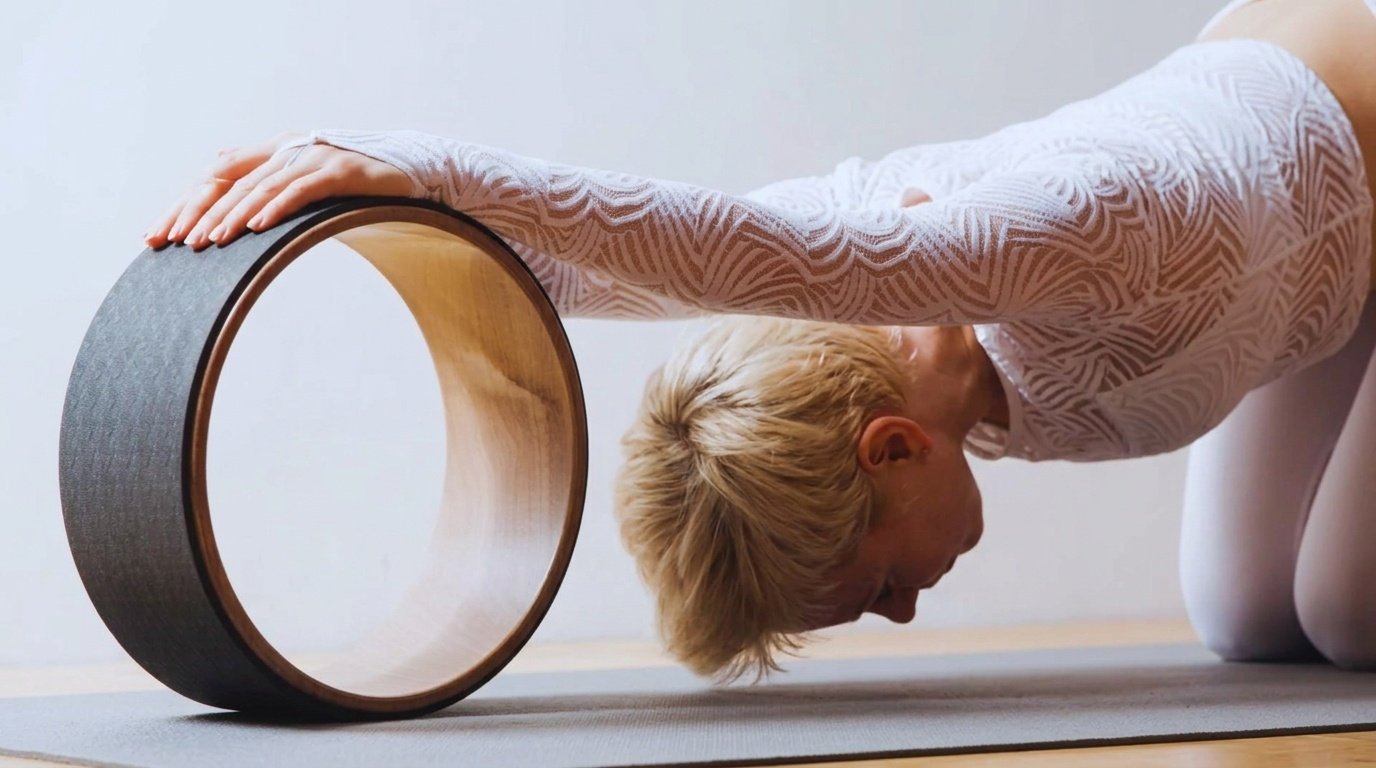
Begin on your hands and knees.
Place your hands on the yoga wheel and gently roll it forward while lowering your chest toward the floor. Keep your hips above your knees.
This stretch works the shoulders, upper back, and chest. It is often used by people who feel tightness from computer work or poor posture.
Move only as far as feels comfortable and take steady breaths to help the muscles relax.
4. Seated Forward Fold With a Yoga Wheel
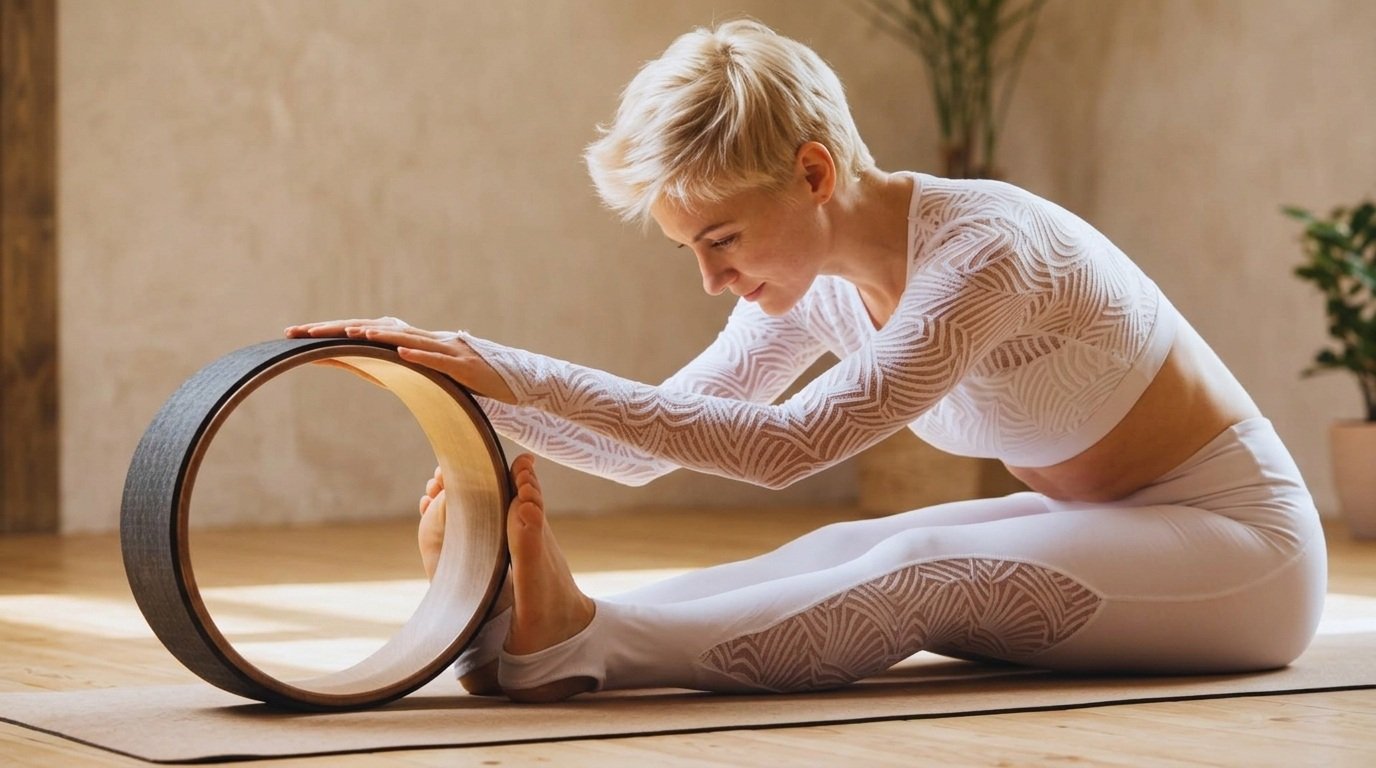
Sit with your legs extended in front of you.
Place the yoga wheel against your feet and rest your hands on top. Slowly roll the wheel forward while leaning from your hips.
This exercise stretches the hamstrings and lower back in a gentle way. Beginners often find the wheel gives them a better sense of control.
Keep your spine long and avoid rounding your back too much. Hold the position for several breaths.
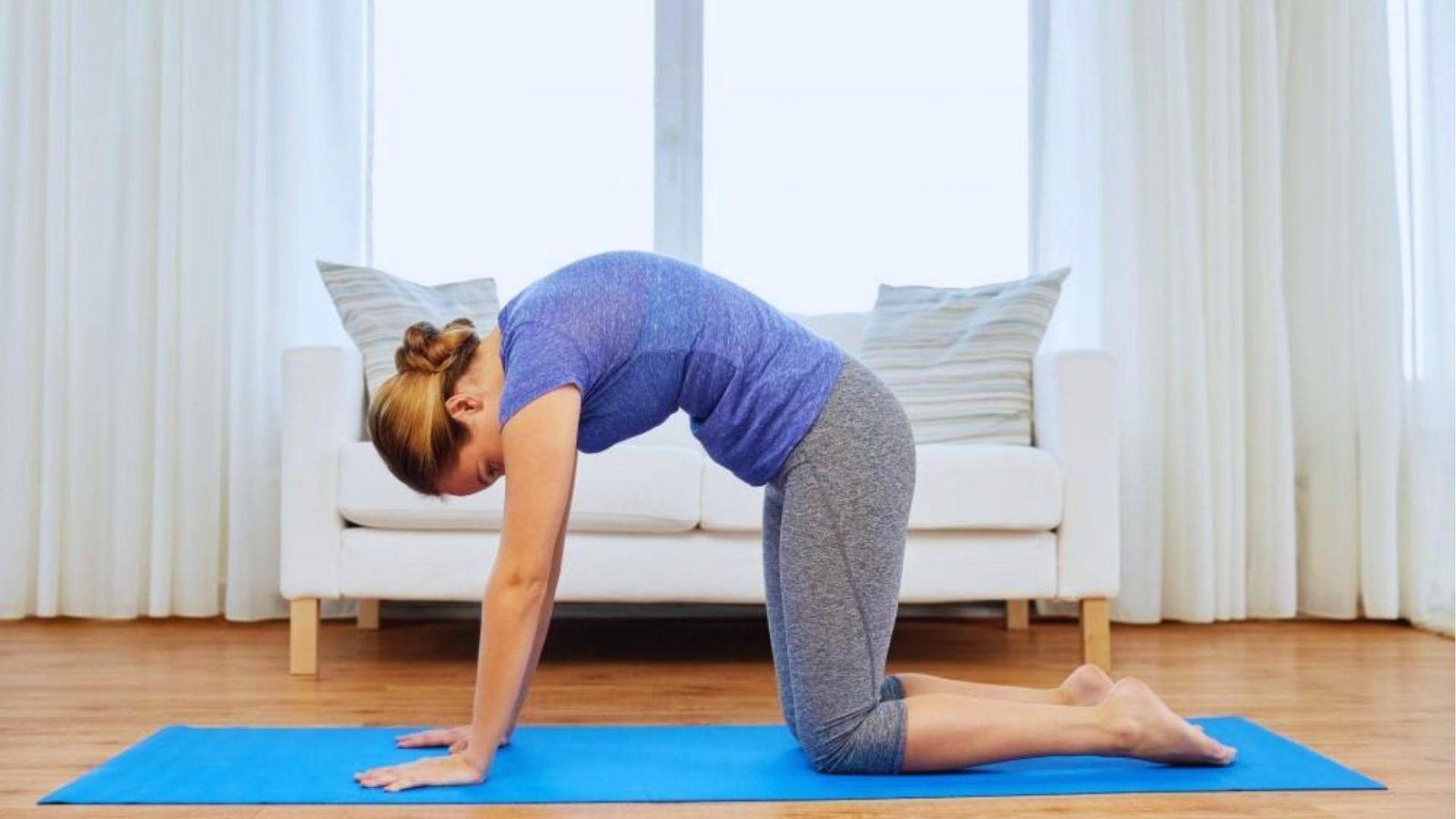
5. Cat Cow Stretch With a Yoga Wheel
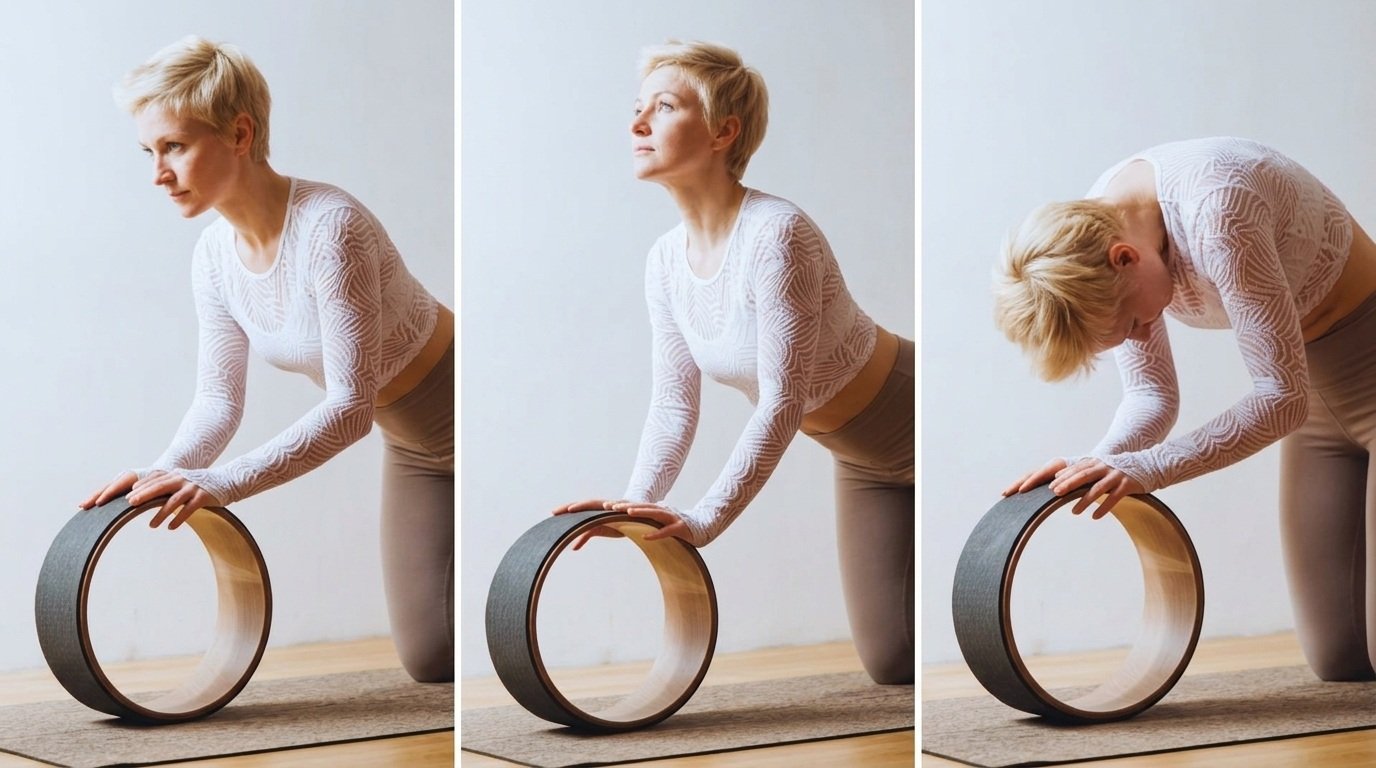
Start on your hands and knees and place both hands on the yoga wheel.
Roll the wheel forward as you lift your chest and look slightly upward. Roll it back as you round your spine and tuck your chin.
This simple movement improves spinal mobility and warms up the body before deeper stretches. It can also ease stiffness after sitting for long periods.
Move slowly and match each movement with your breathing.
6. Heart Opening Backbend
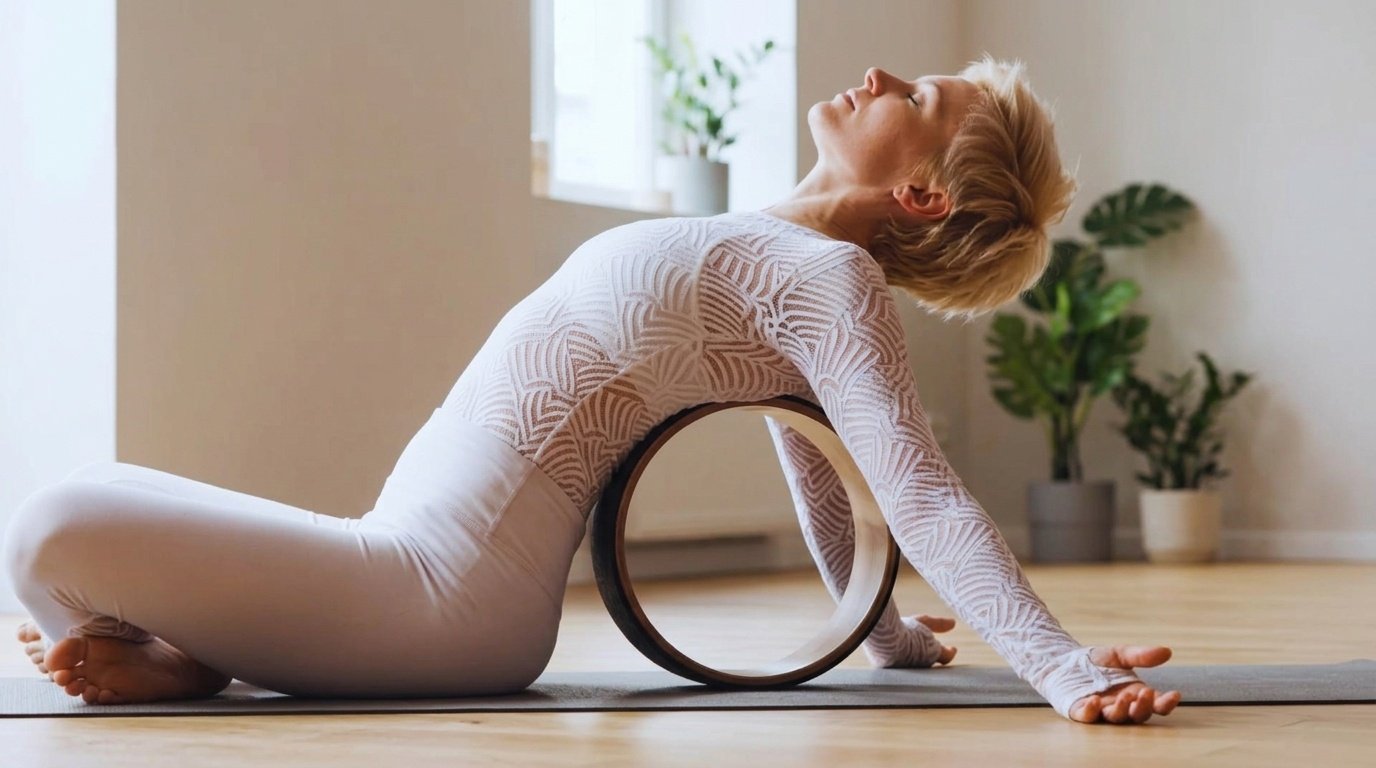
Sit on the floor and place the yoga wheel behind your back.
Slowly lean backward until the wheel supports your spine. Open your chest and let your arms rest beside you.
This exercise stretches the front of the body and may help improve posture over time. Many beginners feel a gentle opening across the chest and shoulders.
Keep your breathing calm and avoid dropping your head too far backward.
7. Reclined Spinal Twist
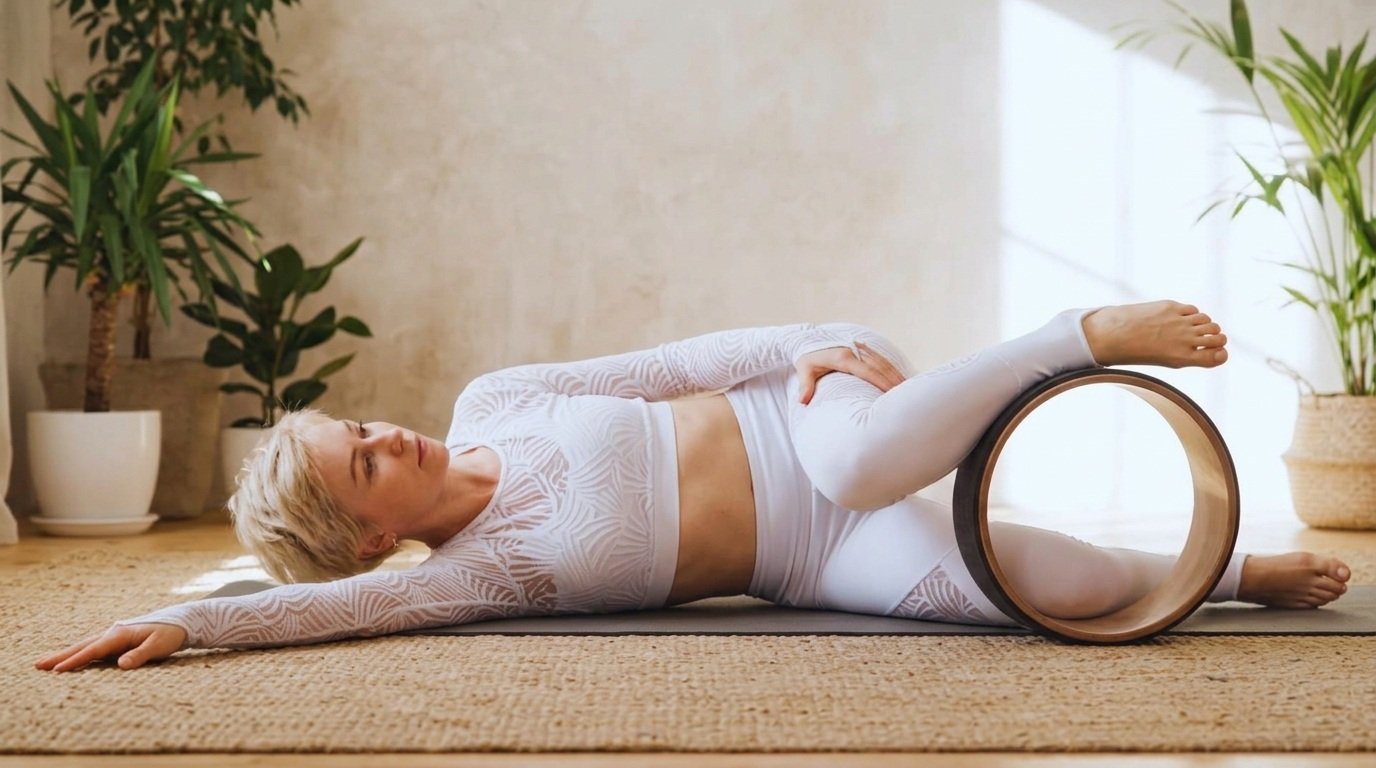
Lie on your back and place the yoga wheel beside you for support if needed.
Bend your knees and lower them to one side while keeping your shoulders on the floor.
This pose helps release tension around the lower back and hips. People often use it at the end of a yoga session because it feels calming.
Keep the movement easy and stay in the twist for several slow breaths before switching sides.
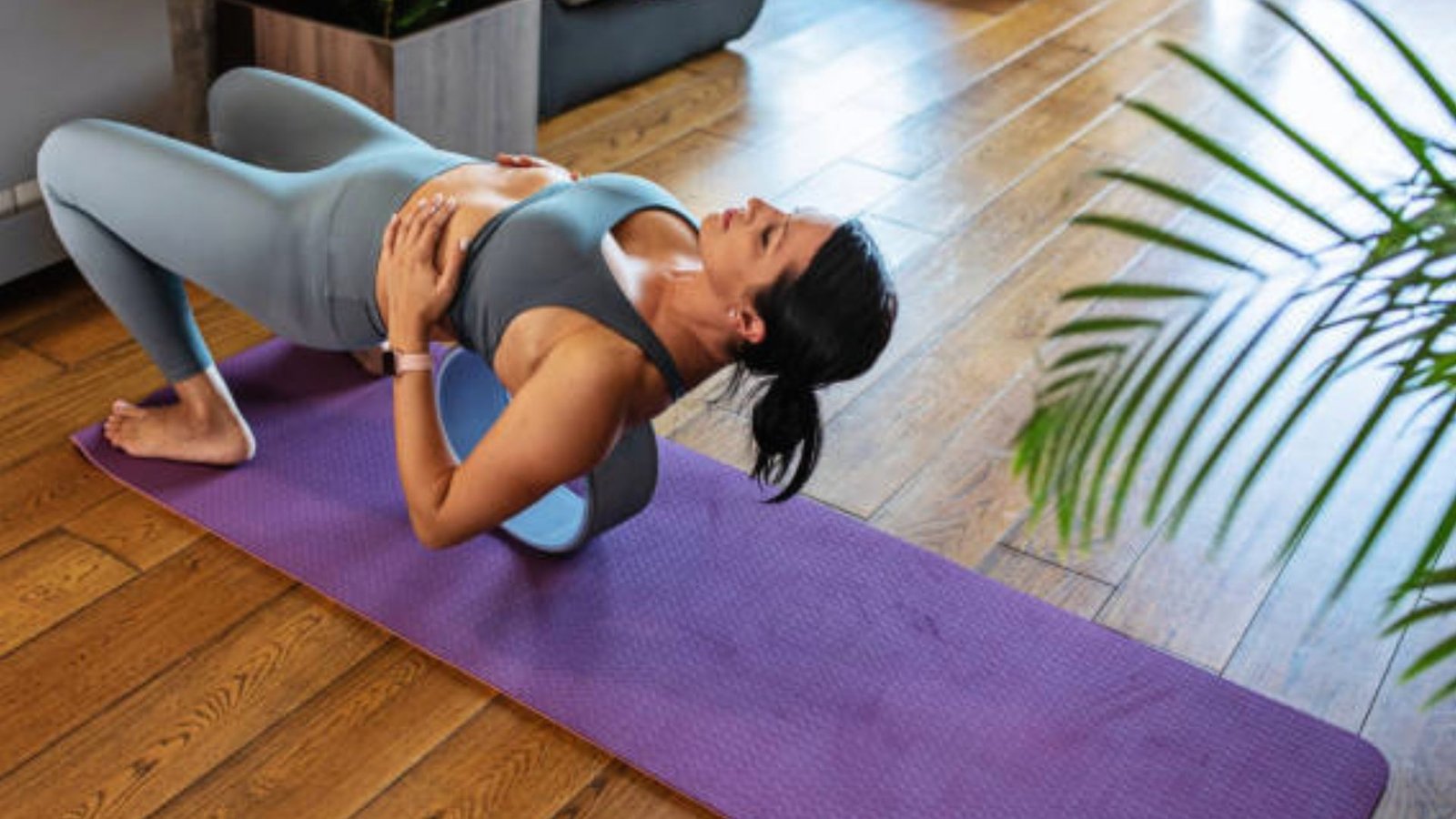
8. Bridge Pose With Feet on the Wheel
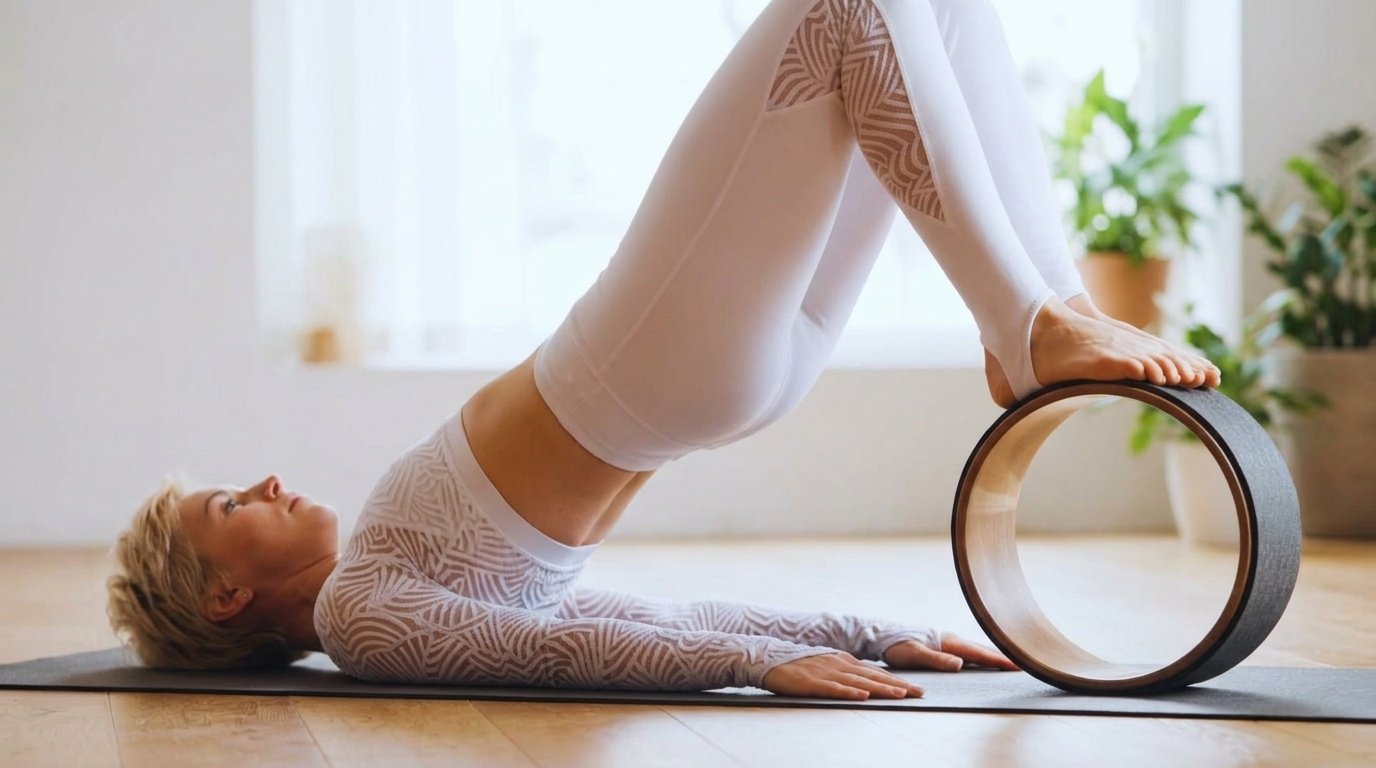
Lie on your back and place your feet on top of the yoga wheel.
Press through your feet and lift your hips slowly from the floor. Keep your knees and feet in line.
This exercise works the glutes, legs, and core muscles while also opening the front of the hips. Because the wheel moves, it also challenges balance.
Start with small lifts and lower your hips slowly after each repetition.
9. Low Lunge Hip Stretch
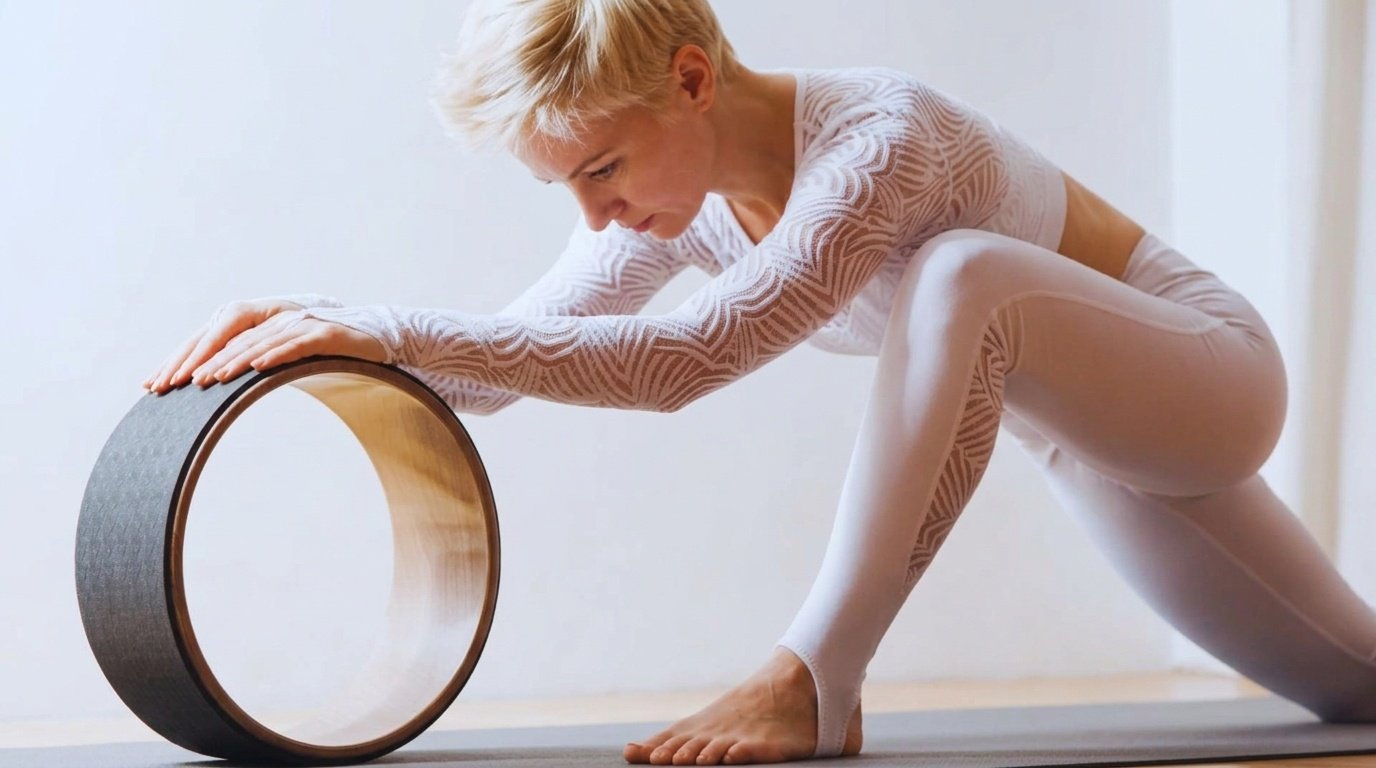
Step one foot forward and lower the opposite knee to the floor.
Place the yoga wheel under your hands for support and gently move your hips forward.
This stretch targets the hip flexors, which often become tight from sitting for many hours. Beginners usually find the wheel helpful because it reduces pressure on the hands and gives extra stability.
Hold the stretch while taking slow and steady breaths.
10. Standing Chest Opener
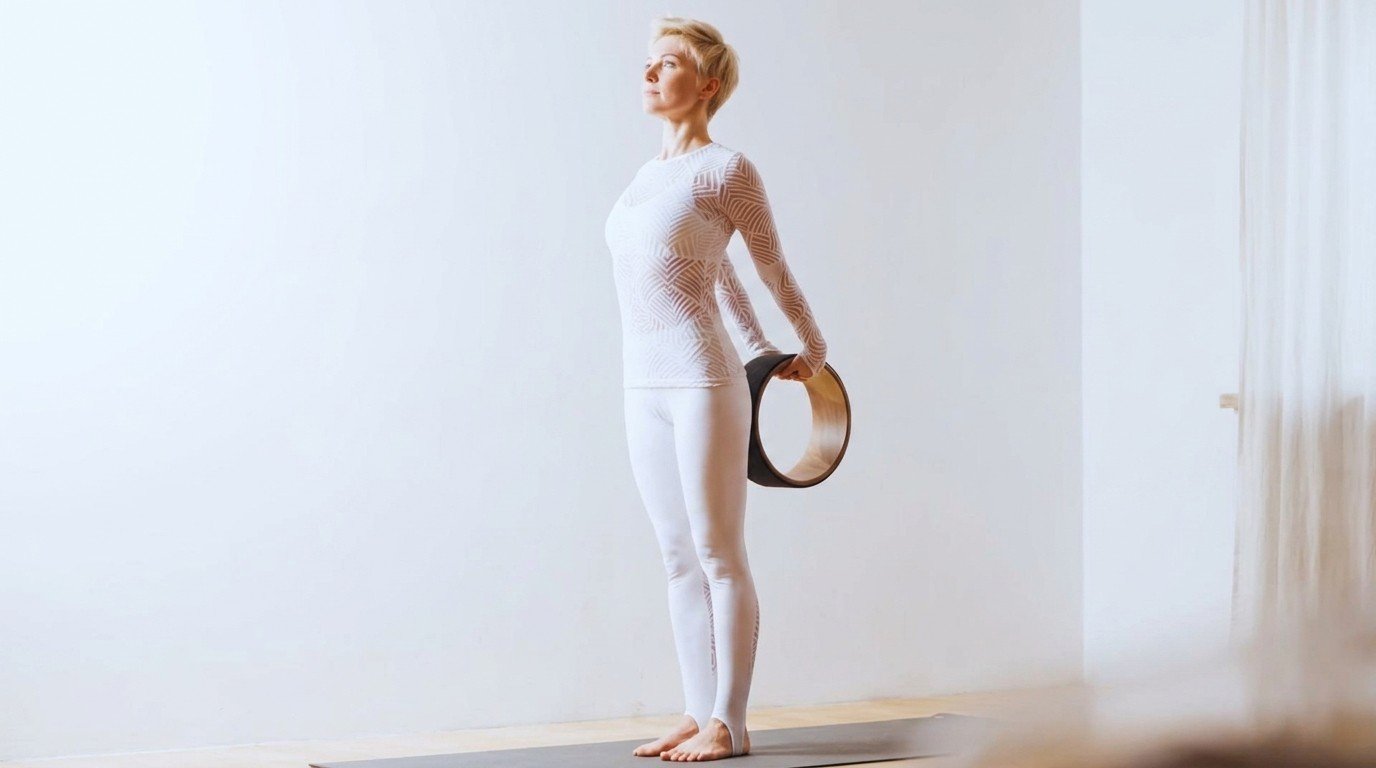
Stand tall and hold the yoga wheel behind your back with both hands.
Gently lift the wheel upward and draw your shoulders back while keeping your chest open.
This exercise stretches the chest and front shoulders and can help reduce rounded posture. Many people use it as a quick break during the day.
Keep your elbows soft and avoid raising the shoulders toward your ears while holding the pose.
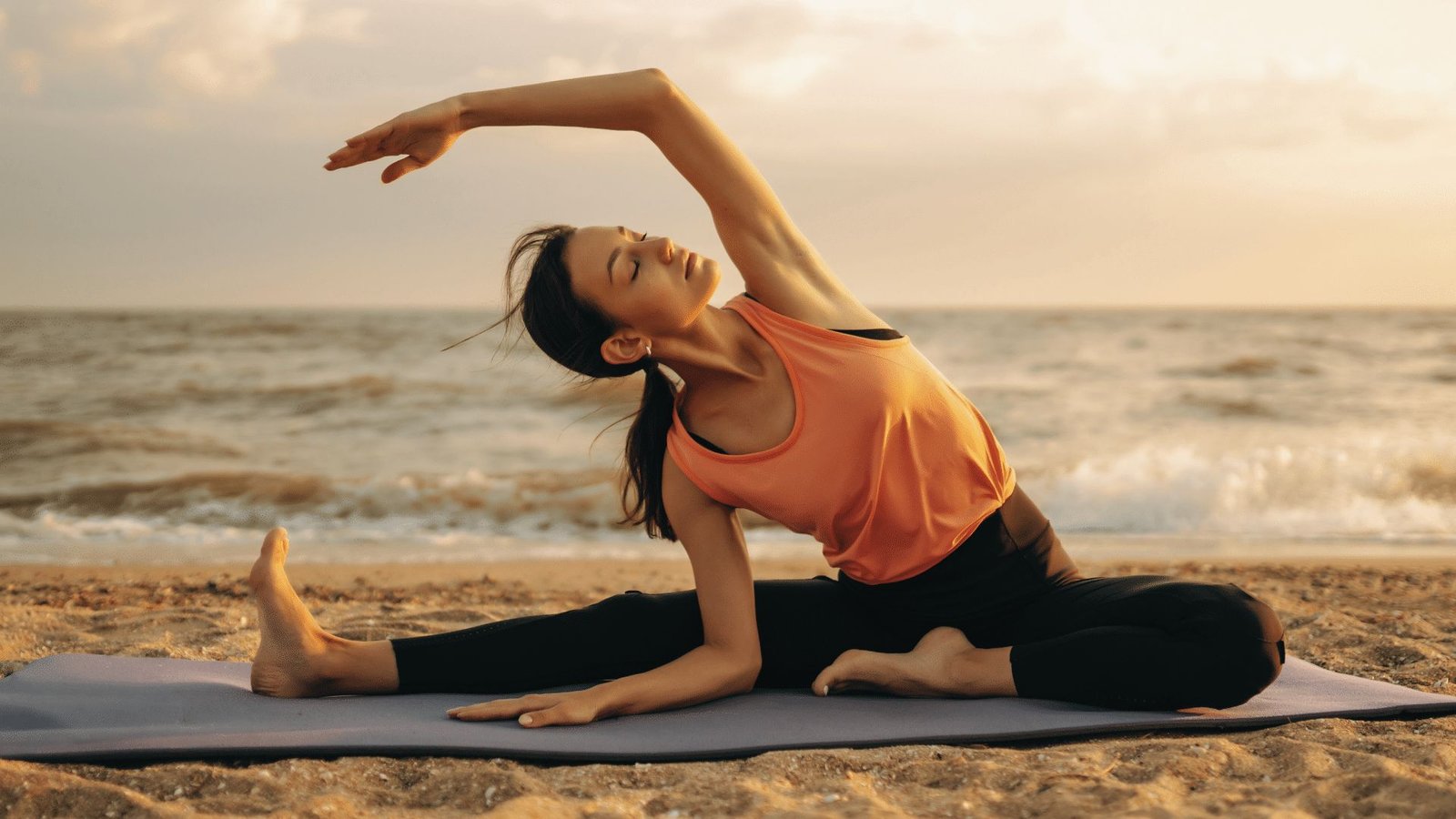
11. Side Bend Stretch With a Yoga Wheel
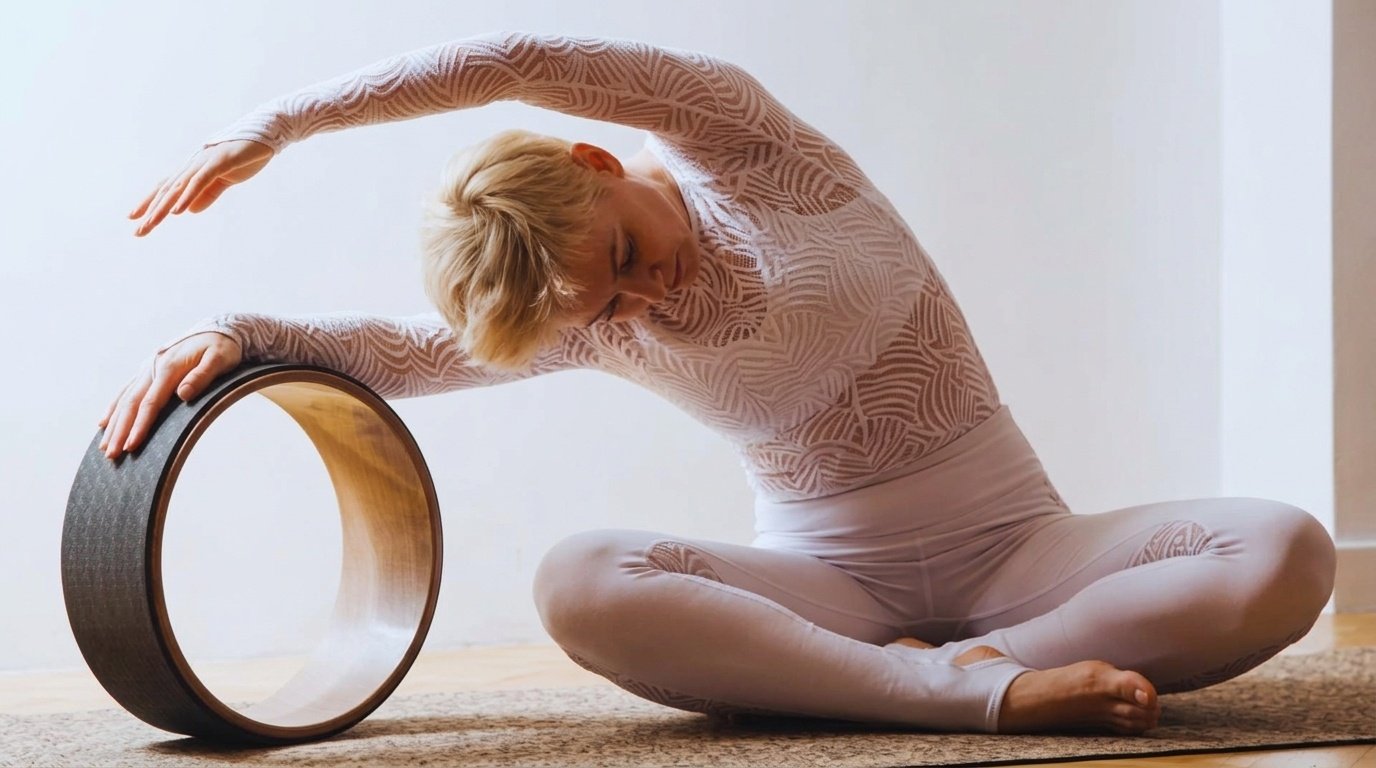
Sit on the floor with your legs crossed or kneel comfortably.
Place one hand on the yoga wheel and slowly roll it to the side while reaching through the opposite arm. Keep both hips grounded.
This stretch targets the sides of the body, shoulders, and upper back. Many beginners notice that one side feels tighter than the other.
Move slowly and stay in the position for several breaths. Return to the center and repeat on the other side.
12. Supine Hamstring Stretch
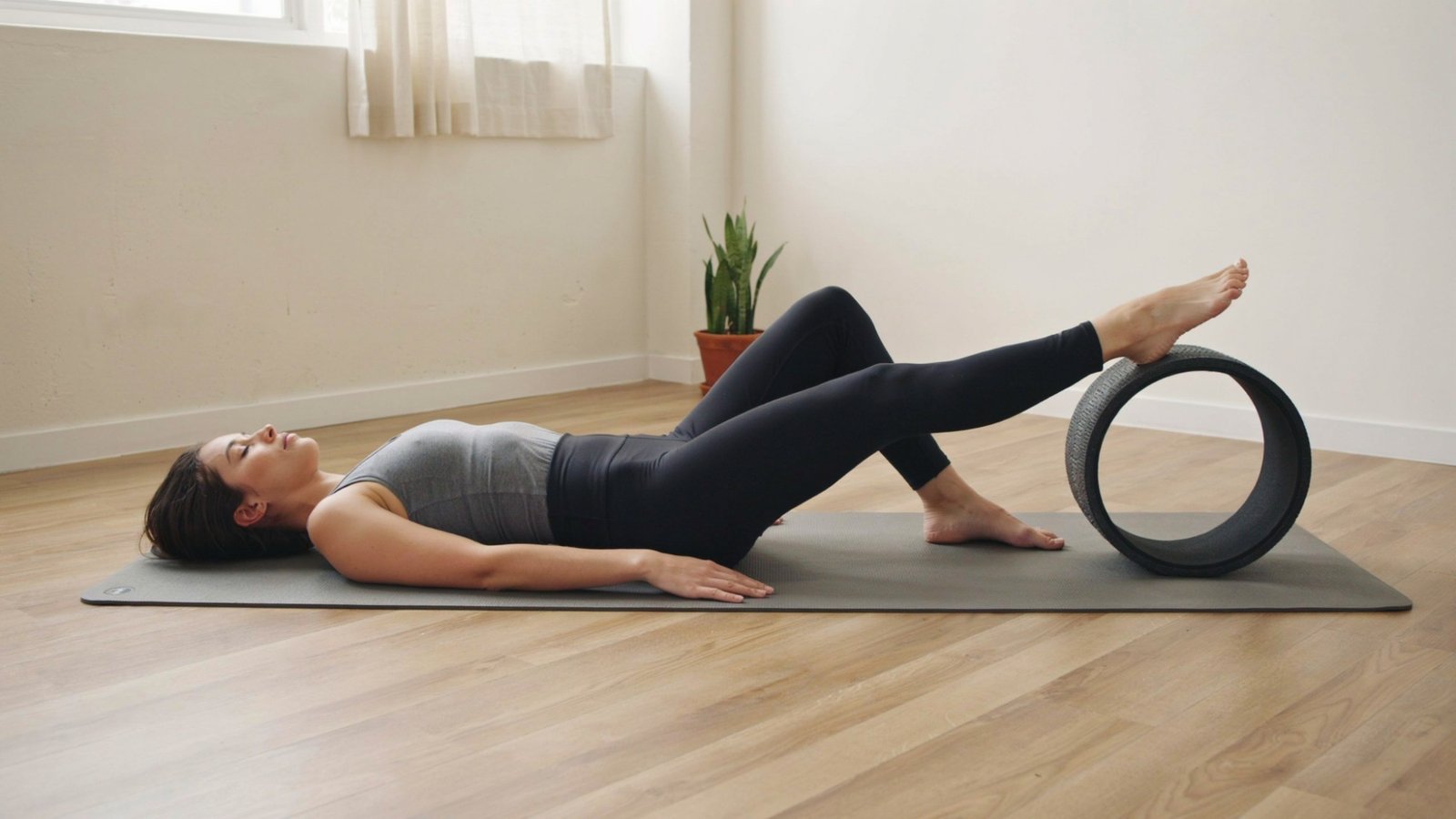
Lie on your back and bend one knee.
Place the foot on the yoga wheel and slowly roll it away while straightening the leg. Keep the opposite leg relaxed on the floor.
This pose gently stretches the back of the leg without putting extra strain on the lower back. It can feel helpful after long periods of sitting or after exercise.
Stop before you feel discomfort. Hold the stretch for several breaths and then switch legs.
13. Easy Wheel Assisted Backbend
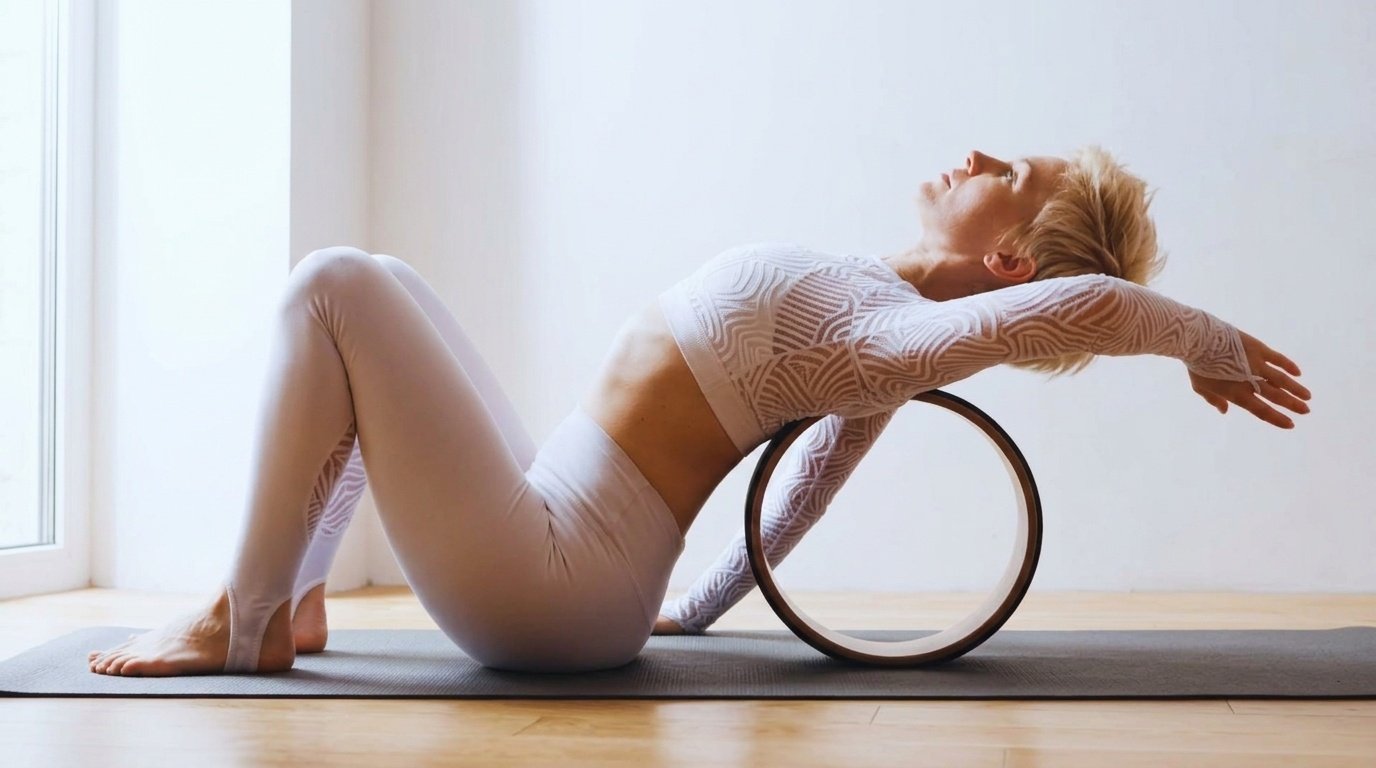
Sit on the floor with the yoga wheel behind you.
Slowly lean backward and let the wheel support your spine as you roll over it. Keep your feet flat on the floor and your knees bent.
This pose gives beginners a supported way to practice gentle backbends. Many yoga students say it helps reduce stiffness in the chest and upper back.
Move carefully and keep your breathing steady. Come out of the pose slowly to avoid dizziness.
14. Downward Dog With Hands on the Wheel
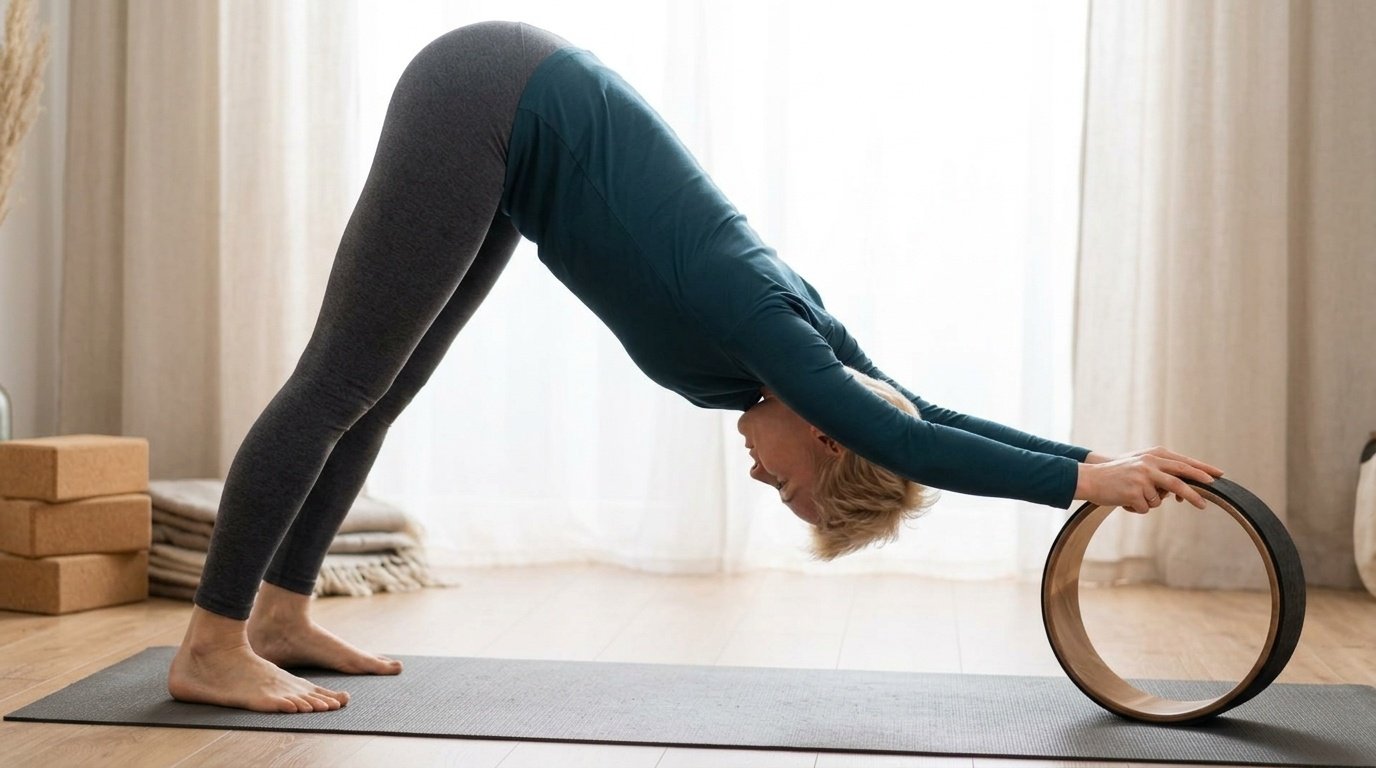
Place both hands on the yoga wheel and step your feet backward until your body forms an upside down V shape. Press your hips upward and keep your spine long.
This variation reduces pressure on the wrists and gives some people more space through the shoulders. Beginners often find it easier than the standard pose.
Keep your knees slightly bent if your hamstrings feel tight and hold the position for several breaths.
15. Cobra Pose With Wheel Support
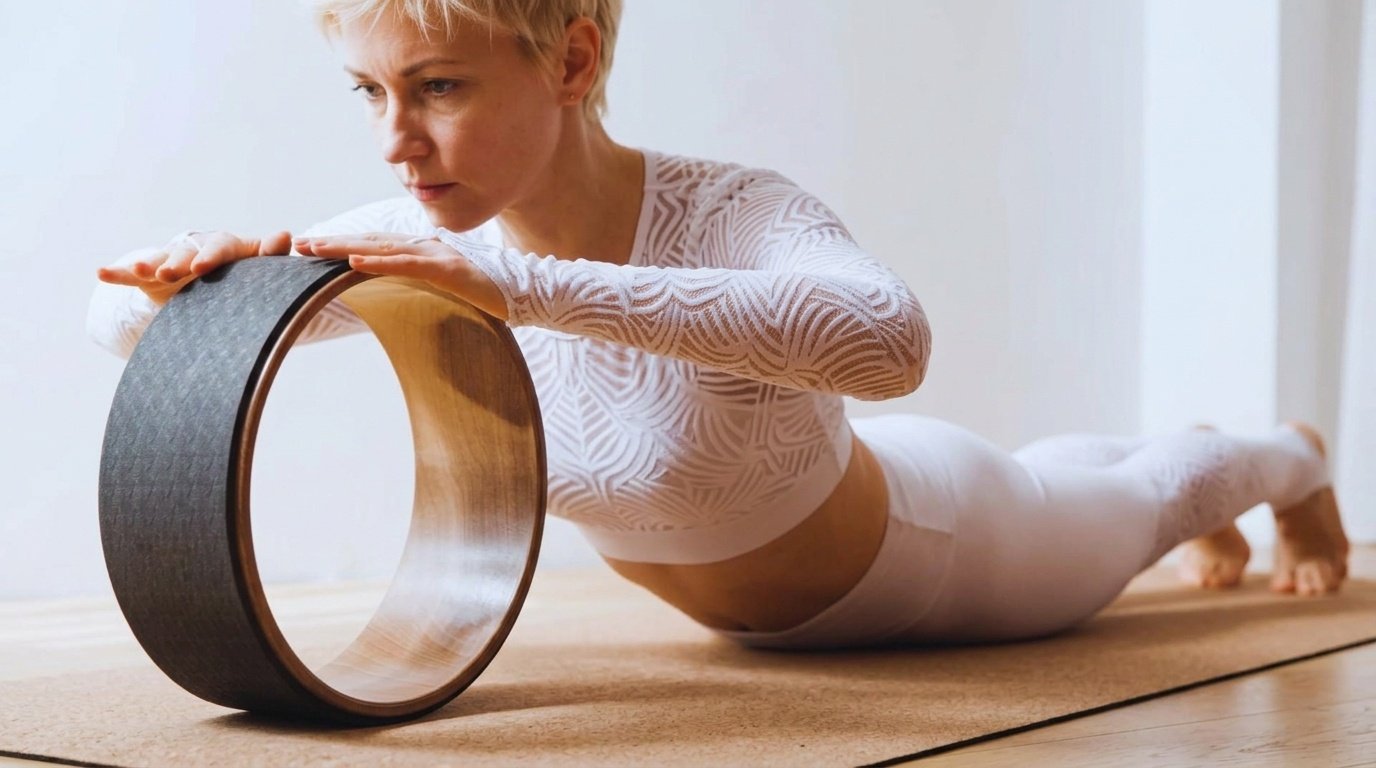
Lie on your stomach and place the yoga wheel under your hands.
Press gently into the wheel and lift your chest while keeping your hips on the floor. Keep your elbows slightly bent.
This pose stretches the front of the body and encourages movement in the upper spine. Many people use it to ease stiffness after sitting at a desk.
Avoid lifting too high and focus on slow breathing throughout the pose.
16. Thread the Needle Shoulder Stretch
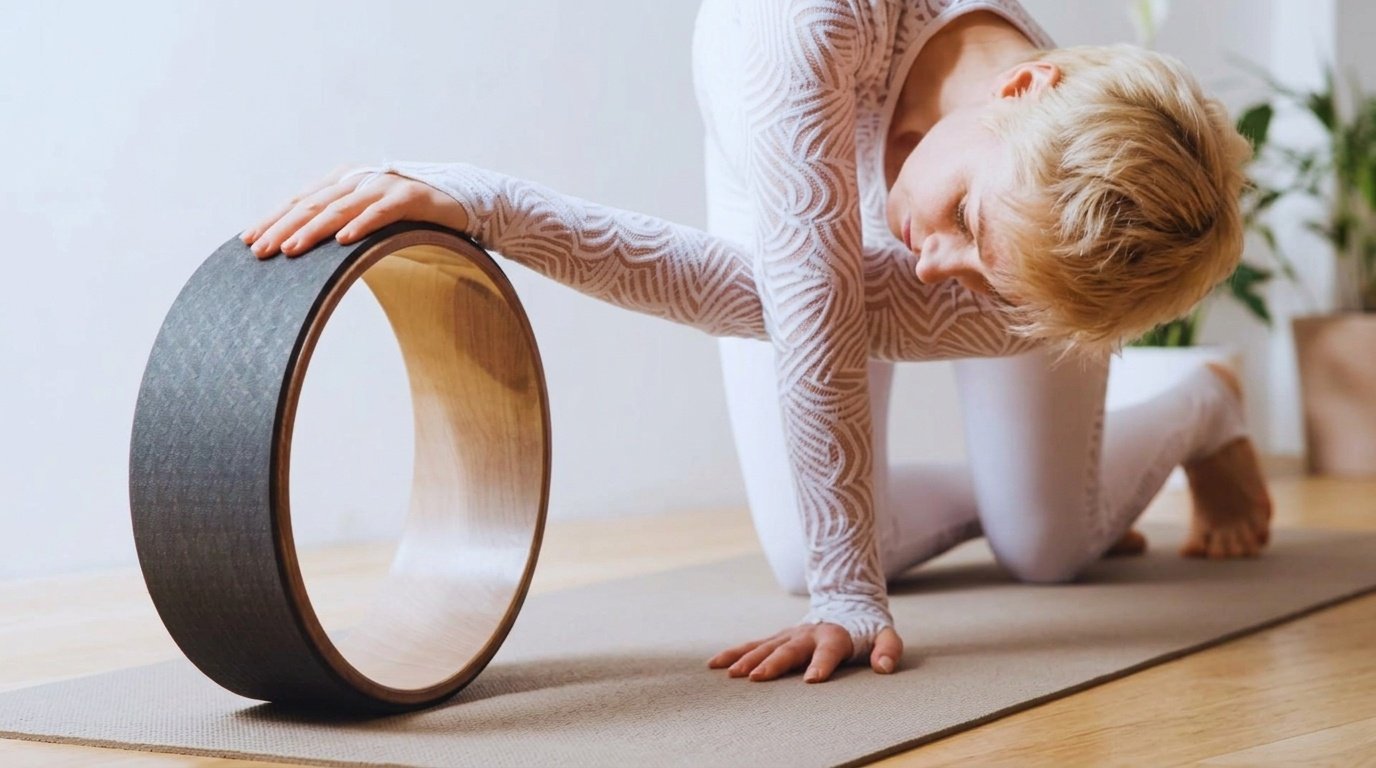
Begin on your hands and knees and place the yoga wheel beside you.
Slide one arm under the opposite arm and lower your shoulder toward the floor. Use the wheel for extra support if needed.
This stretch works deep muscles around the shoulders and upper back. People who spend long hours at computers often say it helps release tightness.
Keep your breathing calm and avoid forcing your shoulder to the floor.
17. Supported Camel Pose
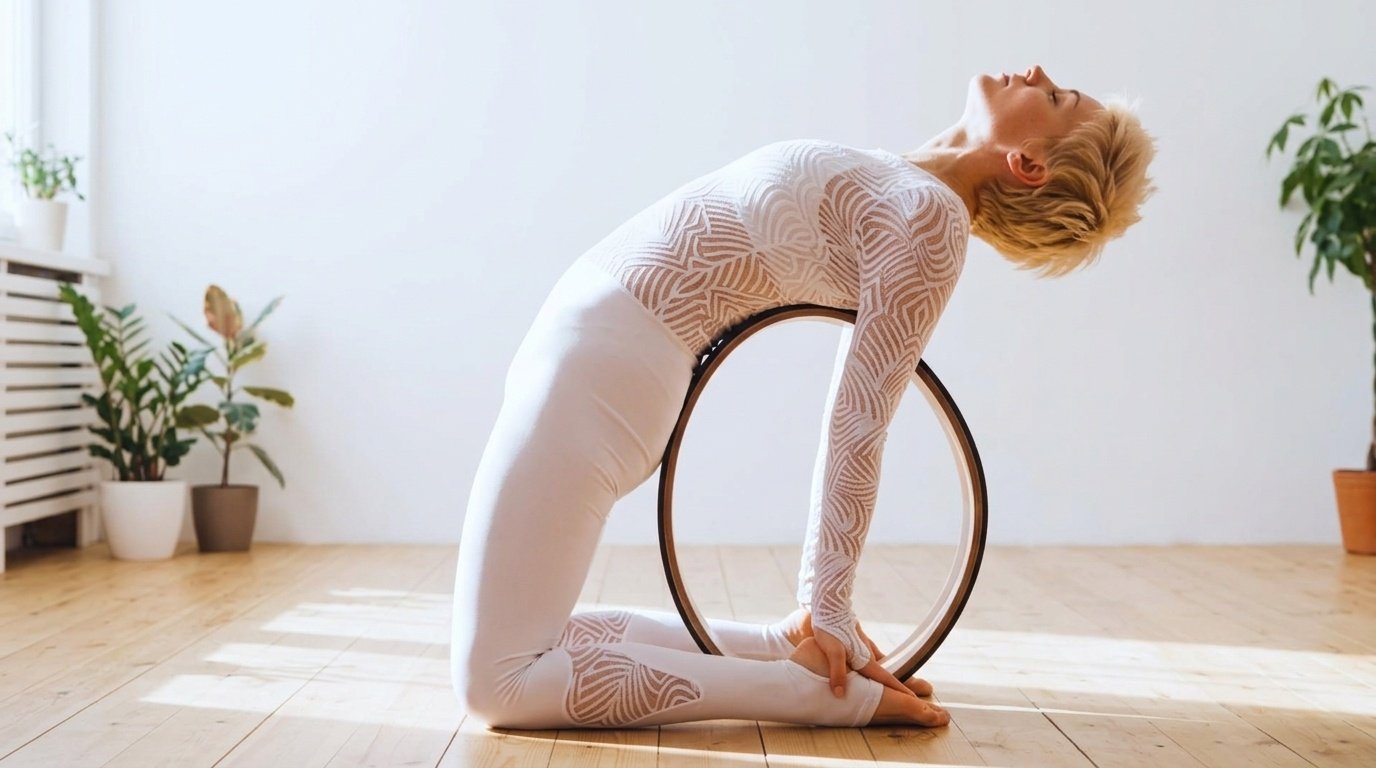
Kneel on the floor and place the yoga wheel behind your back.
Slowly lean backward and allow the wheel to support your spine. Keep your hips above your knees and let your chest open.
This pose stretches the chest, shoulders, and front of the hips. The wheel gives beginners a sense of support and can make the position feel less intense.
Hold for several breaths and return to an upright position slowly.
18. Legs Up the Wall With a Yoga Wheel
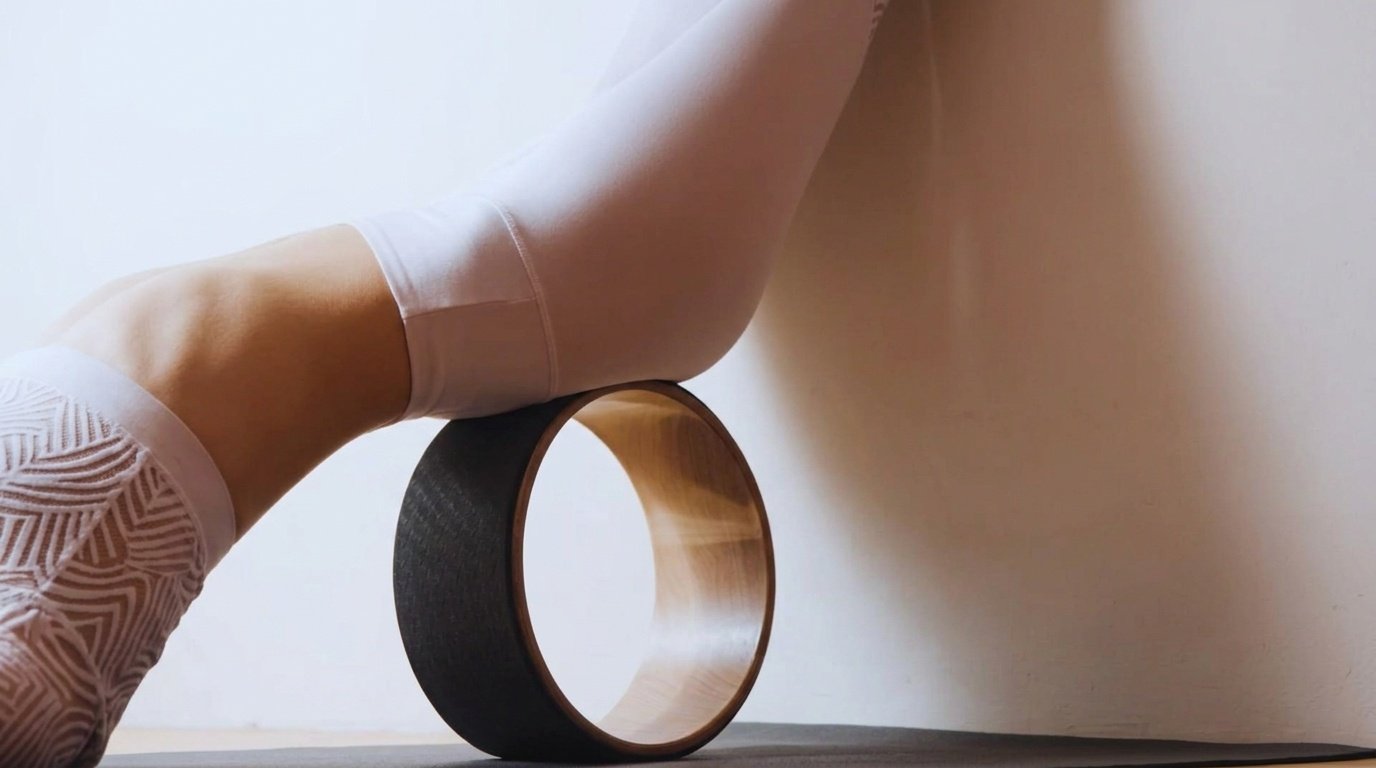
Sit close to a wall and lie on your back with your legs resting against the wall. Place the yoga wheel under your hips or lower back for gentle support.
This resting pose can help ease tired legs and create a sense of calm after a yoga session. Many people enjoy using it in the evening.
Stay in the position for several minutes and keep your breathing soft and steady.
19. Happy Baby Pose With Wheel Support
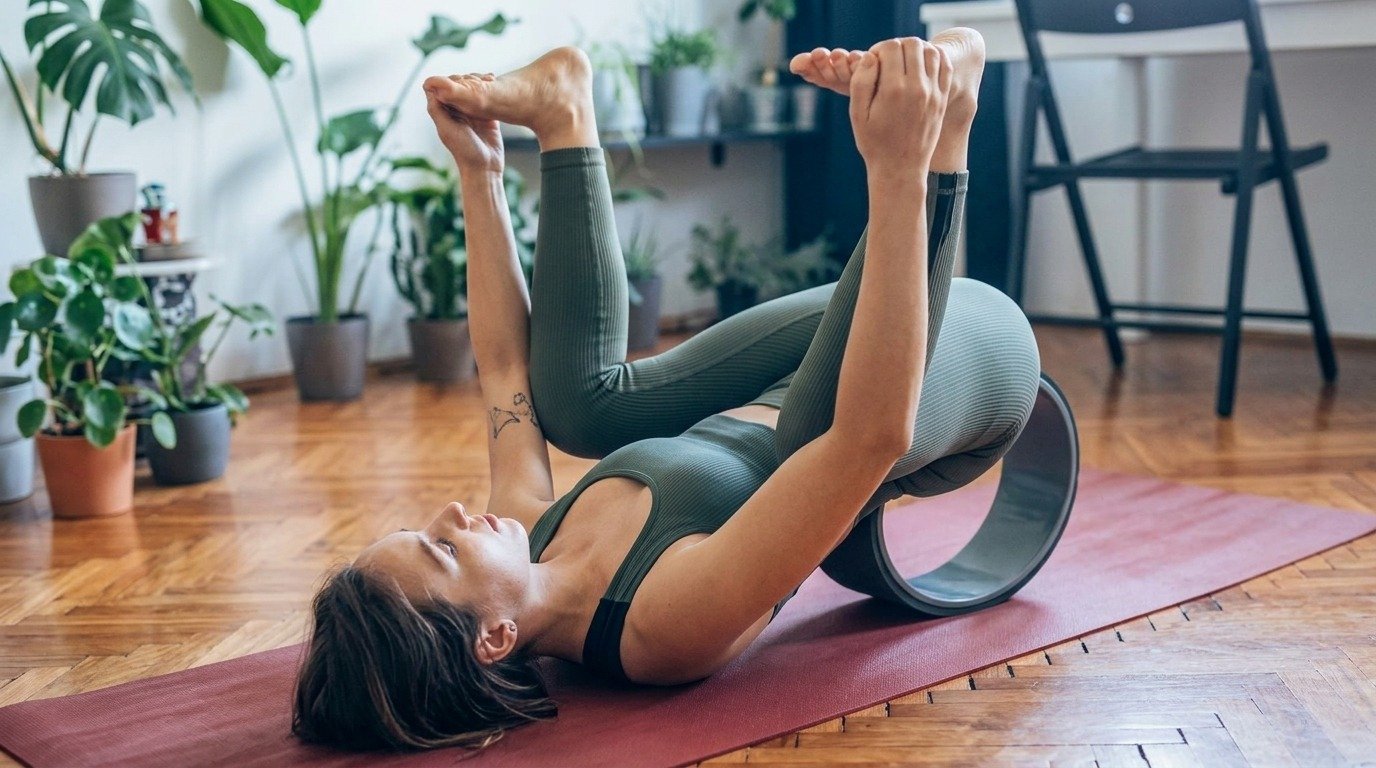
Lie on your back and bend your knees toward your chest.
Hold your feet or place the yoga wheel under your hips for support. Let your knees move toward the floor beside your body.
This pose gently stretches the hips and lower back. Beginners often enjoy the supported version because it feels relaxing and does not require much effort.
Take slow breaths and stay in the pose until your body feels at ease.
Common Mistakes to Avoid During Yoga Wheel Exercises
Many beginners try to move too quickly or push their bodies into deep stretches.
Yoga wheel exercises work best when done slowly and with control. Avoid holding your breath or placing the wheel on slippery surfaces.
Do not force your neck or lower back into positions that feel painful. Keep your core muscles lightly active and stop if you feel sharp discomfort.
Taking time to set up each pose correctly often leads to a safer and more comfortable practice.
Conclusion
Yoga wheel exercises do not need to be difficult.
Start with simple stretches and give your body time to adjust. A few minutes of practice each week can help you feel less stiff and move with more ease.
The goal is not to do every pose perfectly. The goal is to move with care and enjoy the process.
Remember that small steps often lead to lasting changes. Try one or two poses today, then leave a comment and share this guide with someone who may enjoy it too.
Frequently Asked Questions
Is a yoga wheel good for beginners?
Yes. A yoga wheel can make stretches and backbends feel more supported. Many beginners use it to improve flexibility and practice poses with better control.
How often should I do yoga wheel exercises?
Most people do well with yoga wheel exercises two to four times a week. Short sessions of about 15 to 20 minutes can help reduce stiffness and improve movement.
Can a yoga wheel help with back pain?
A yoga wheel may help ease mild tightness in the back by stretching the chest and spine. If you have ongoing or severe back pain, talk to your doctor before using one.
How long should I hold each yoga wheel stretch?
Most beginners hold each stretch for about 20 to 30 seconds or five to ten slow breaths. Move slowly and stop if you feel pain.
What size yoga wheel should beginners use?
A standard yoga wheel that is about 12 to 13 inches wide works well for most beginners. It gives enough support for stretches and feels stable during practice.