I started wall yoga when I couldn't hold a single balance pose without wobbling. The wall changed everything for me.
Wall yoga is a practice where you use a wall for support while doing yoga poses. It helps you build balance, improve flexibility, and feel more confident without the fear of falling.
In this guide, I'll walk you through what wall yoga is and how it works, fifteen wall yoga poses for beginners, a simple sequence to follow at home, and benefits, common mistakes, and safety tips.
I've practiced and researched these poses carefully, so you get a safe, beginner-friendly guide you can trust.
What Is Wall Yoga? A Beginner's Guide to This Supportive Practice
Wall yoga is a smart way for beginners to build a strong yoga foundation safely and confidently. It uses a flat wall as a prop during your practice.
You stand near it, lean against it, or rest your legs on it. The wall gives your body the feedback it needs to hold poses correctly.
It reduces the risk of falling and helps you understand how each pose should feel.
Anyone can try it, complete beginners, seniors, people recovering from injuries, or anyone who struggles with balance.
The wall keeps your body aligned, takes pressure off your joints, and lets you focus on breathing and form rather than just staying upright.
15 Wall Yoga Poses and Exercises for Beginners
These fifteen wall yoga poses are simple, safe, and great for building strength and flexibility from scratch.
1. Standing Posture Check
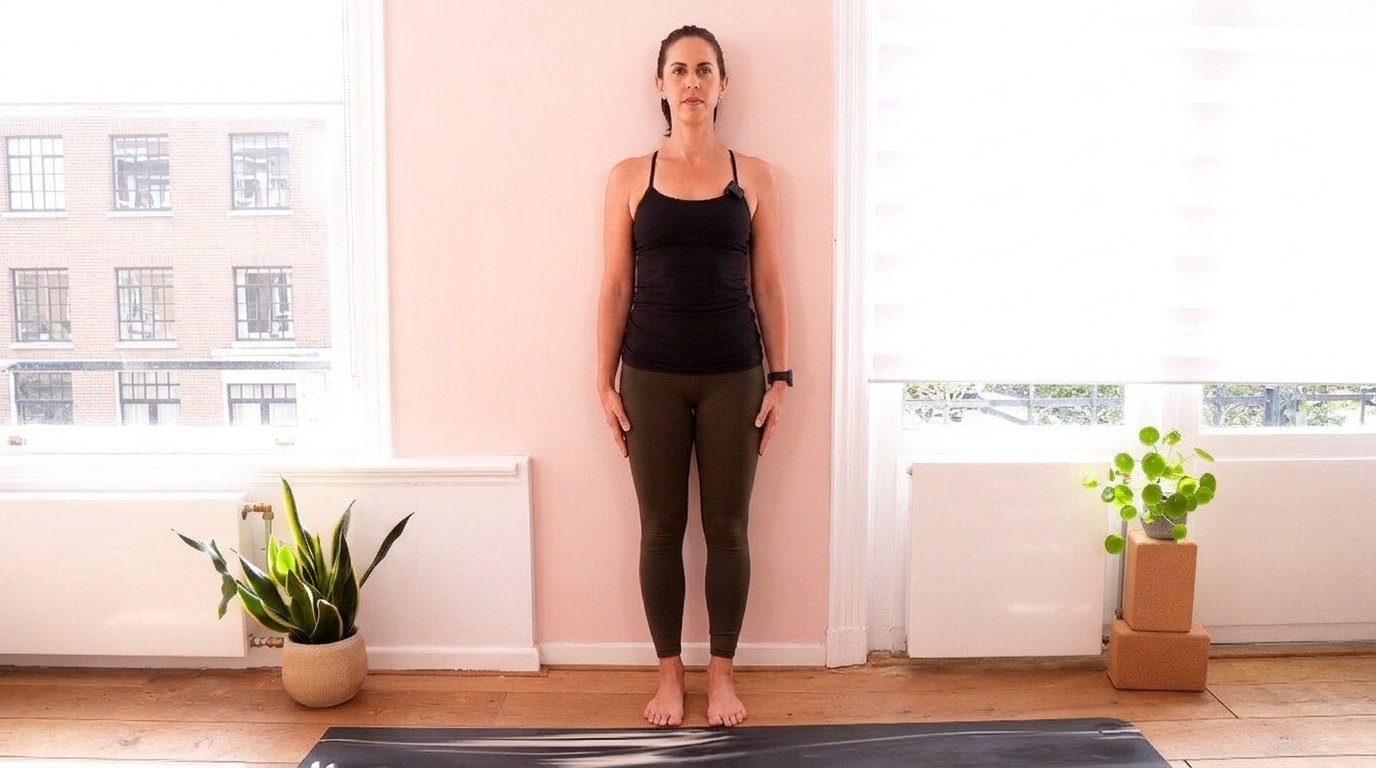
This pose teaches your body what proper alignment really feels like.
Stand with your back touching the wall. Let your heels, hips, and shoulders rest against it.
Breathe slowly and notice how your spine lines up. Stay here for thirty seconds before moving on.
2. Chair Pose (Utkatasana)
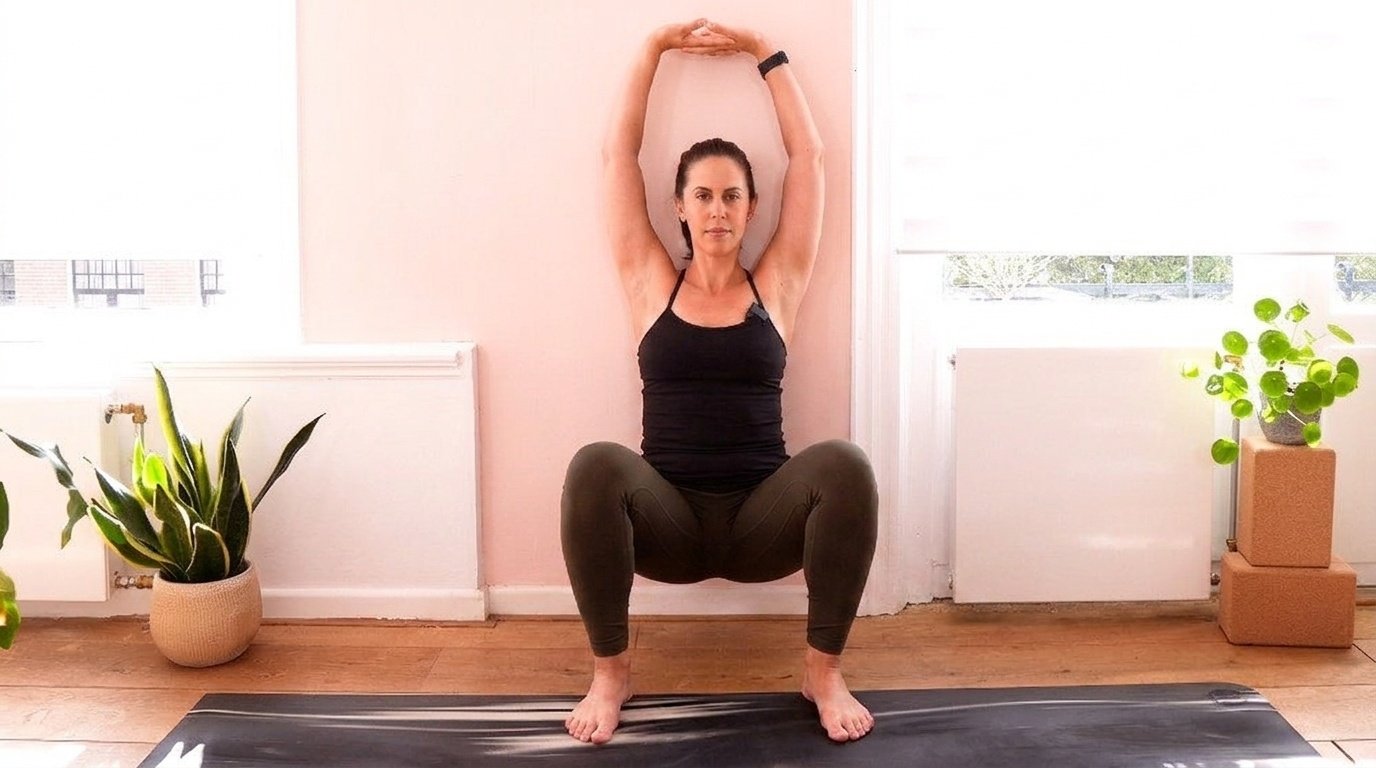
This pose builds strength in your legs and core at the same time.
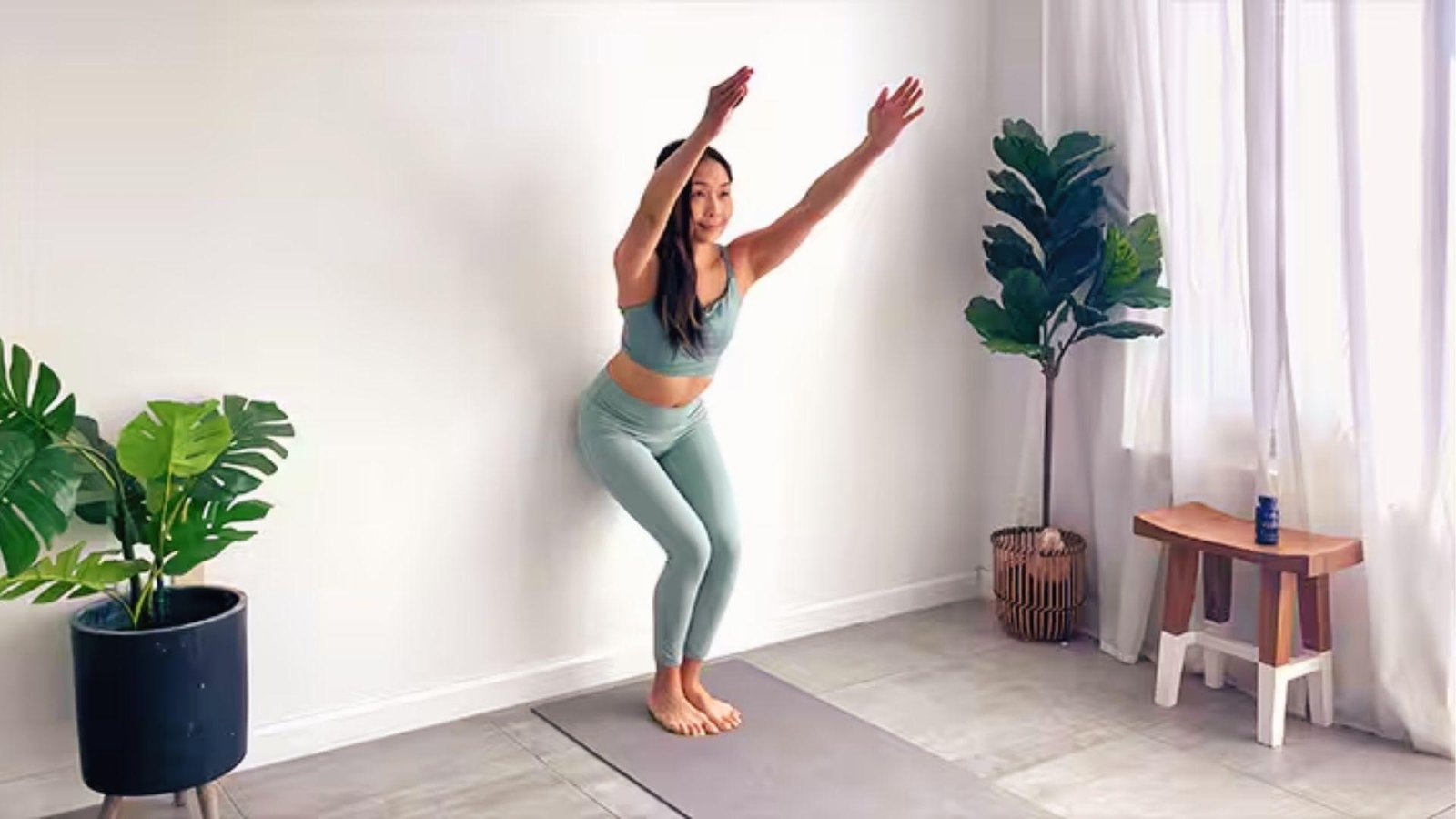
Stand with your back against the wall. Slide down slowly until your thighs are parallel to the floor.
Hold the position for a few breaths. Push back up using your leg muscles, not your hands.
3. Wall-Supported Tree Pose
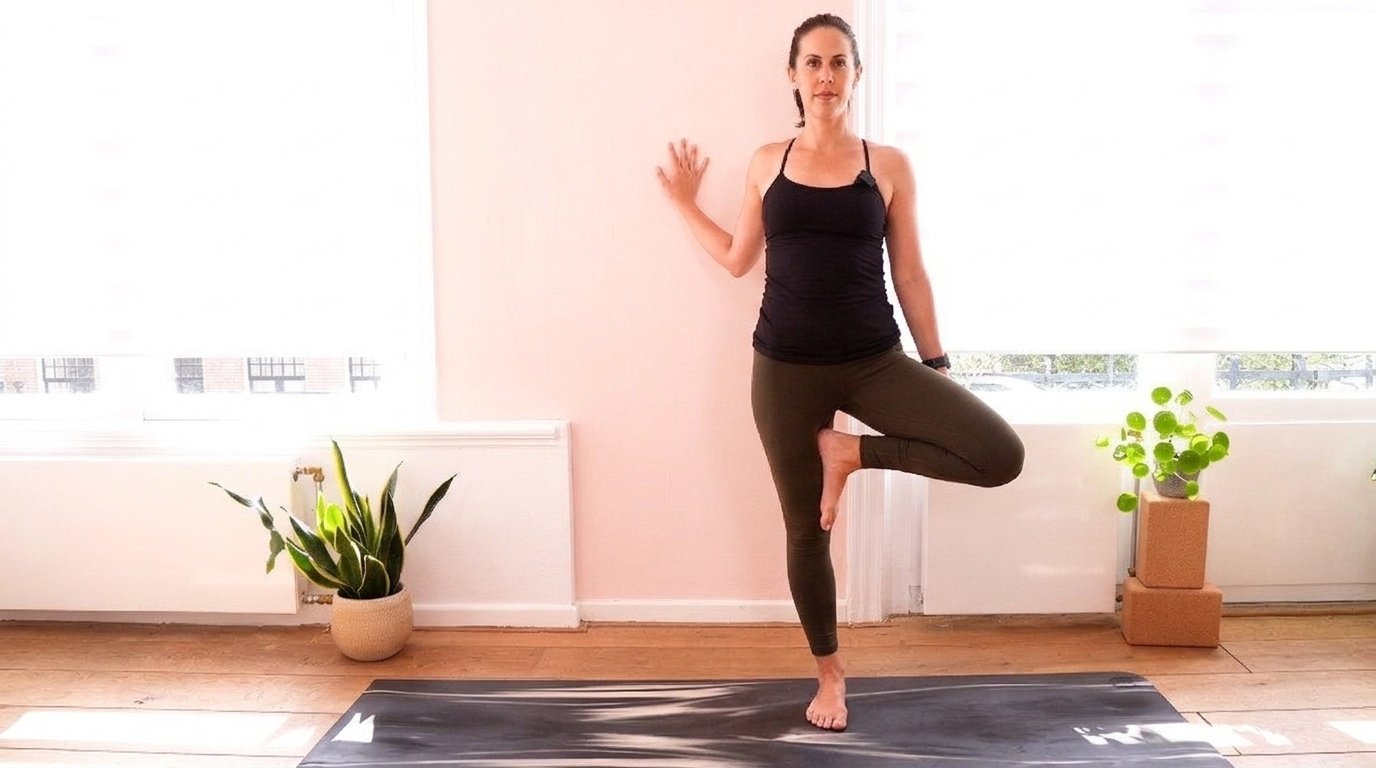
This pose helps you build balance without the fear of falling.
Stand next to the wall with one hand touching it lightly. Lift one foot and place it on your inner calf or thigh.
Keep your standing leg strong and steady. The wall is there if you need it.
4. Warrior III Pose (Virabhadrasana III)
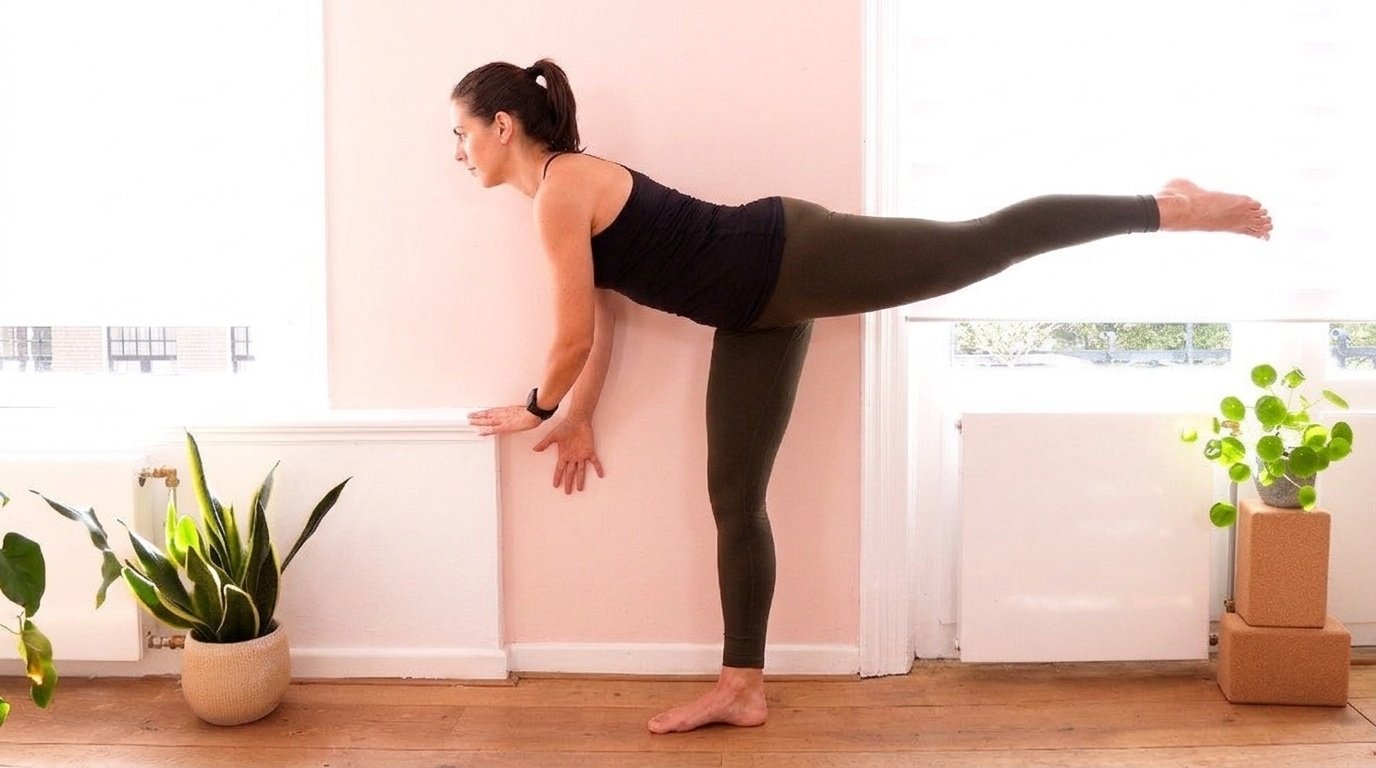
This pose strengthens your back leg and improves overall stability.
Stand facing the wall and place both hands on it at hip height. Hinge forward from your hips and lift one leg straight behind you.
Keep your shoulders away from your ears. Hold for a few breaths before switching sides.
5. Four-Limbed Staff Pose At The Wall
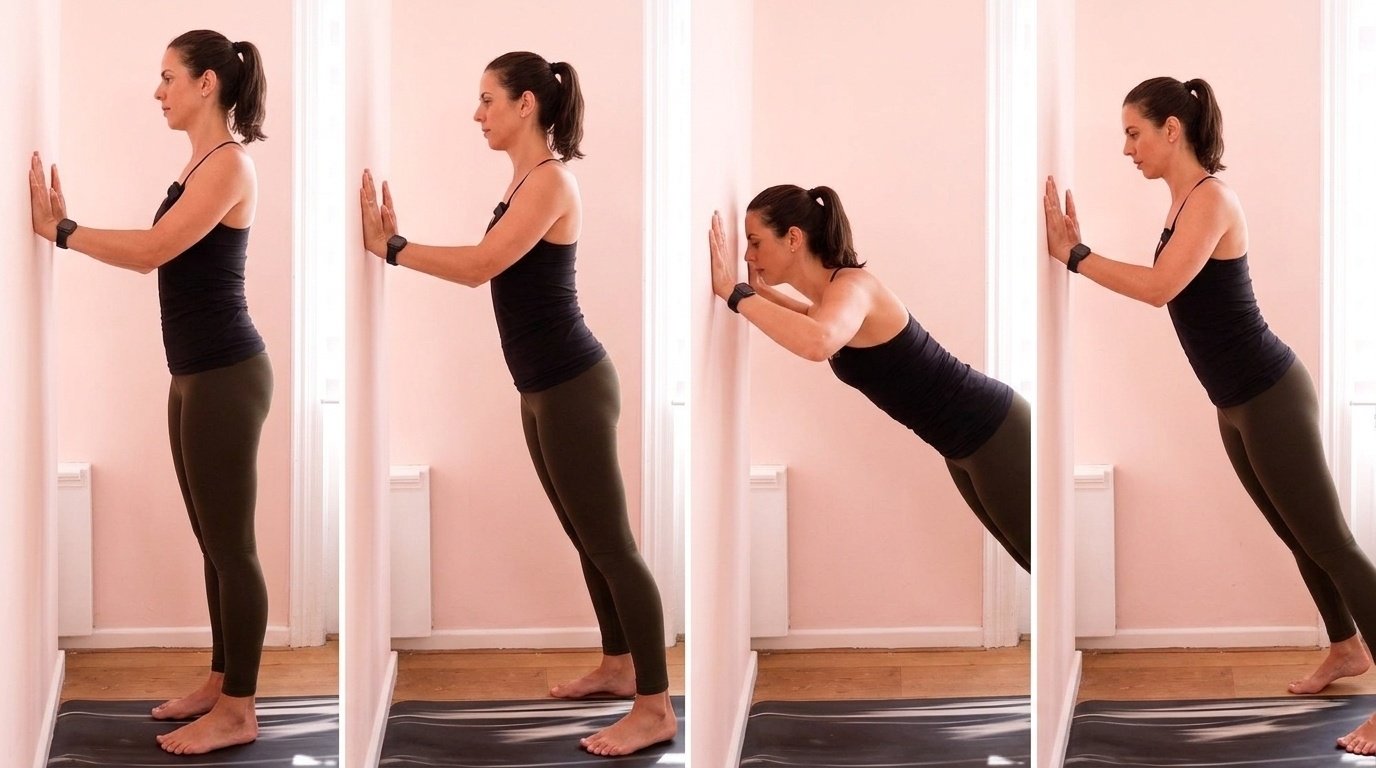
This pose builds upper body strength in a gentle way.
Stand facing the wall and place your hands on it. Walk your feet back a few steps.
Bend your elbows and lower your chest toward the wall. Push back to the starting point with control.
6. Cobra Pose (Bhujangasana)
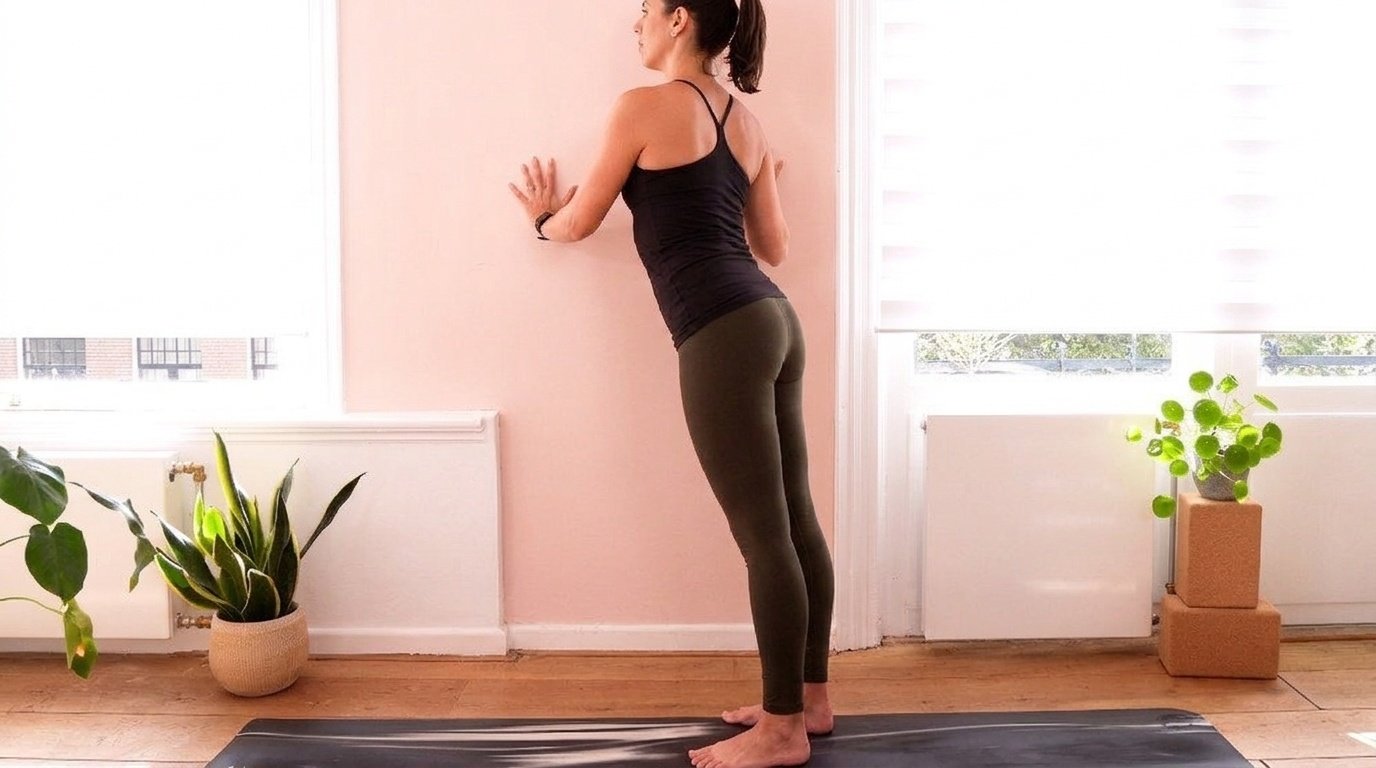
This pose opens your chest and gives your spine a gentle stretch.
Stand facing the wall and place your palms flat at chest height. Press into the wall as you arch your back slightly.
Keep your neck relaxed and your shoulders down. Hold for a few breaths.
7. Sphinx Pose (Salamba Bhujangasana)
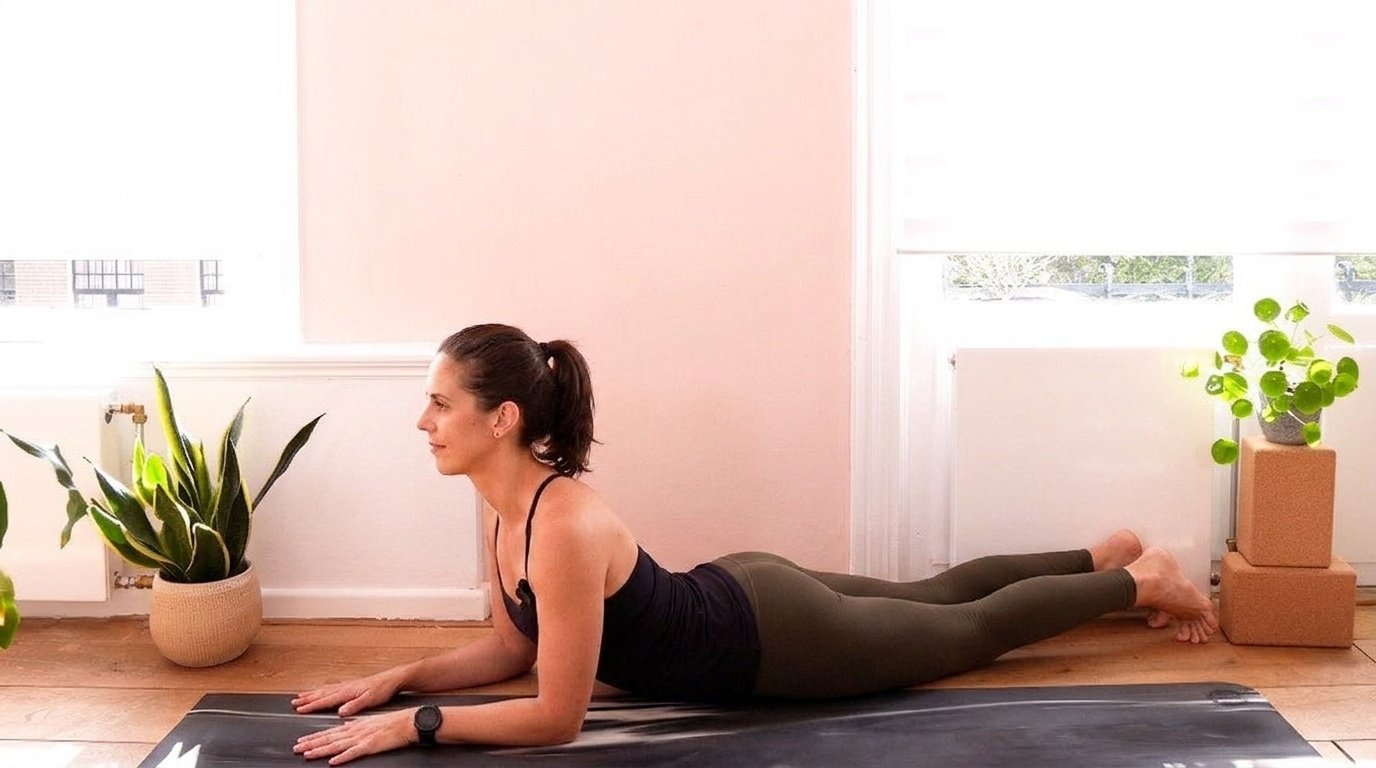
This pose gives a soft backbend with extra support from the wall.
Lie on your stomach facing away from the wall. Rest your forearms flat on the floor.
Press your feet gently into the wall behind you. Let your chest lift naturally as you breathe.
8. Wall-Supported Shoulder Opener
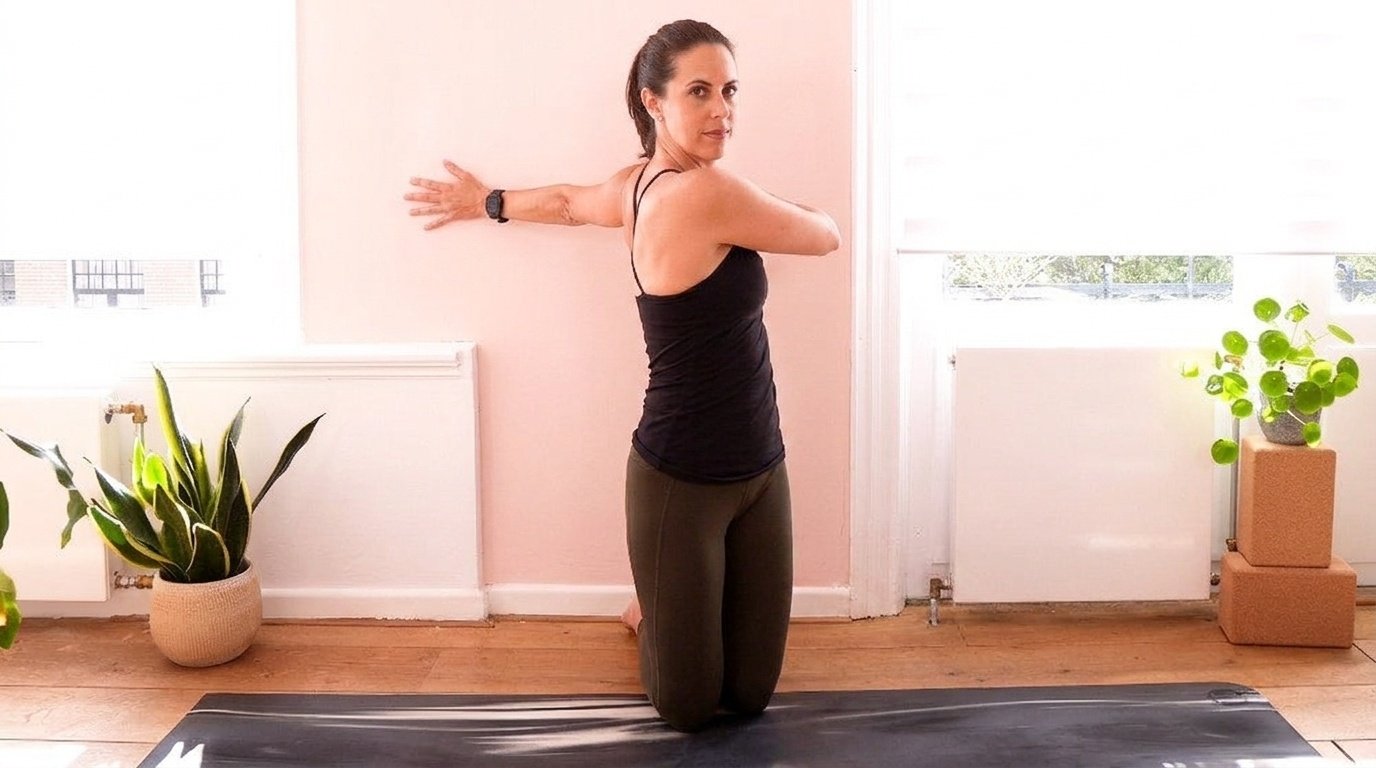
This pose loosens tight shoulders and the front of your chest.
Stand facing the wall and place one hand on it at shoulder height. Slowly turn your body away from the wall.
Stop when you feel a stretch across your chest. Hold and breathe steadily.
9. Easy Standing Forward Bend At The Wall
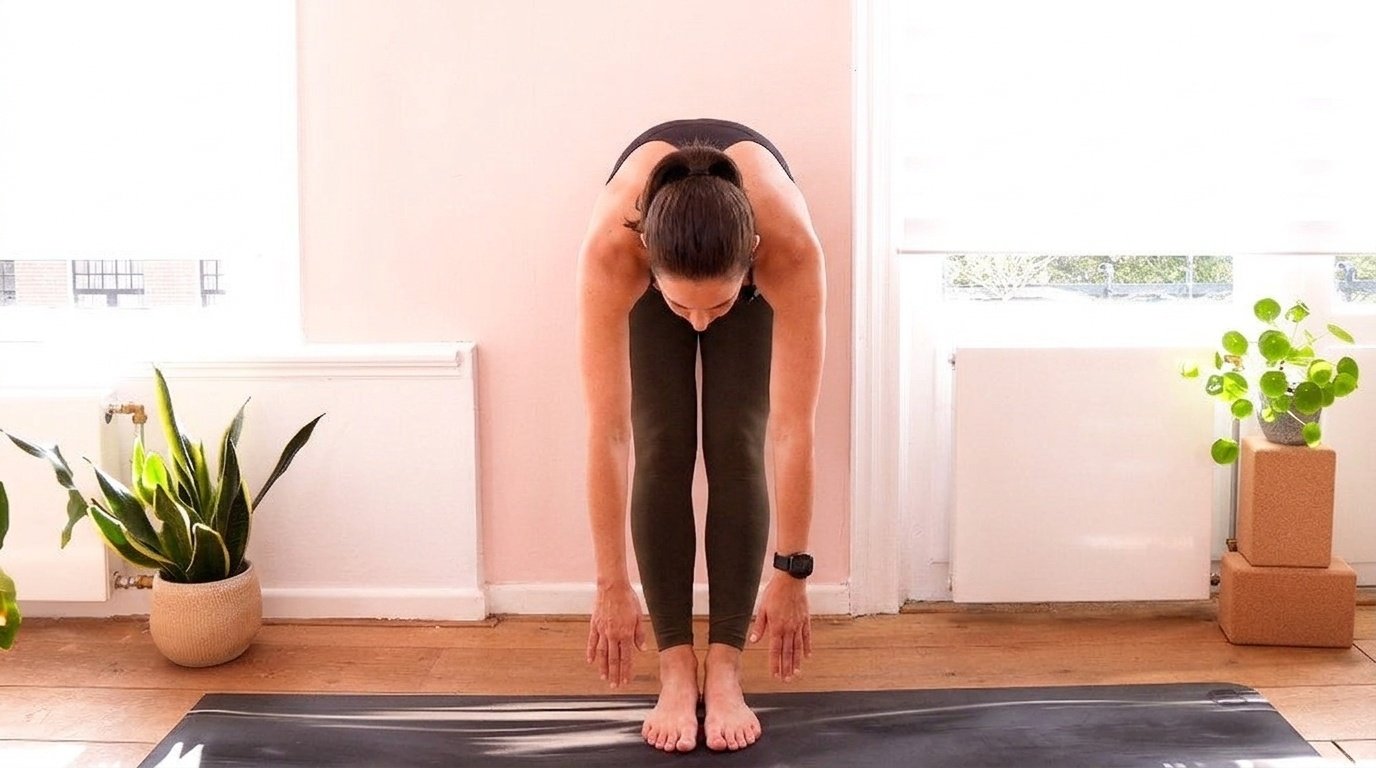
This pose stretches your back while keeping your lower back safe.
Stand with your back against the wall. Fold forward slowly, letting your hands hang toward the floor.
Keep your knees soft, not locked. Let your head relax downward.
10. Pyramid Pose (Parsvottanasana)
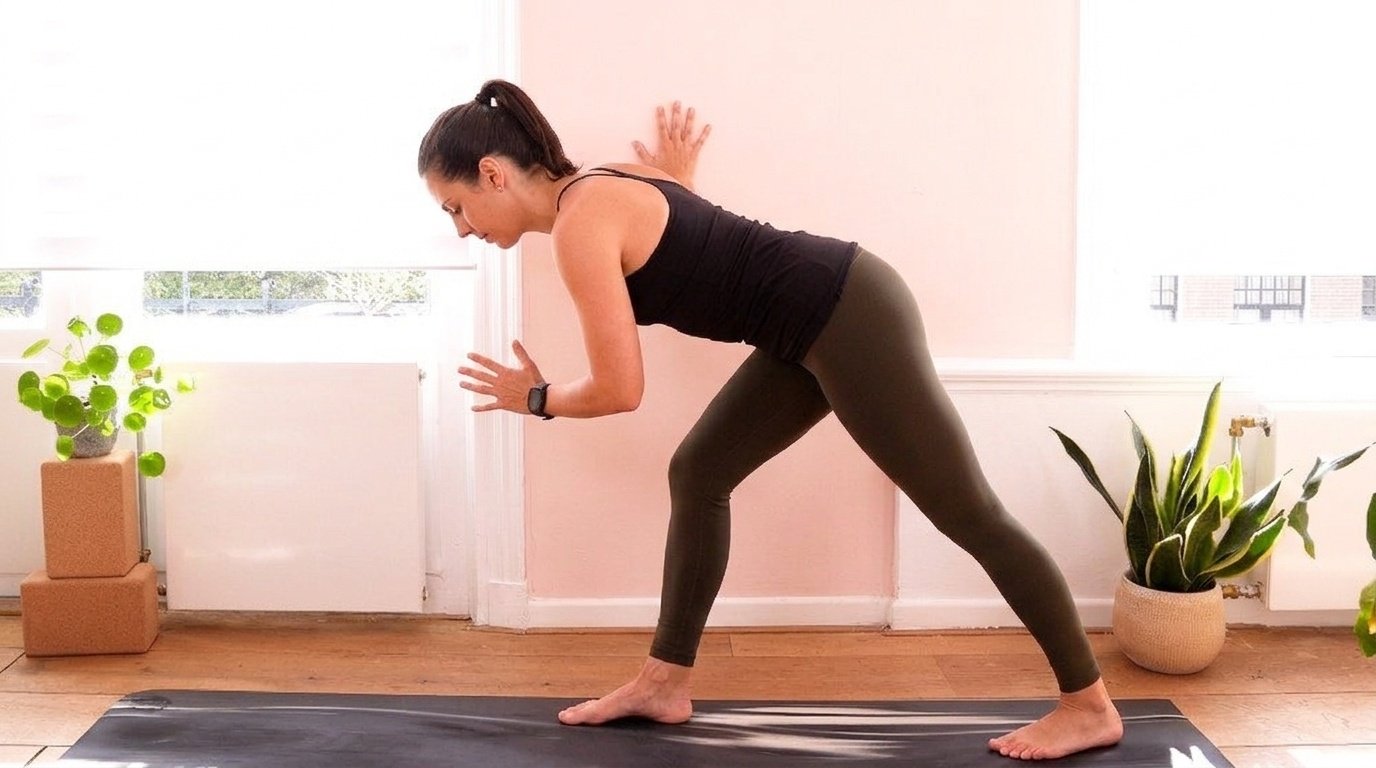
This pose stretches your hamstrings while keeping your hips aligned.
Stand with one foot forward and one foot back. Place your hands on the wall in front of you.
Hinge forward over your front leg. Keep your hips facing forward the whole time.
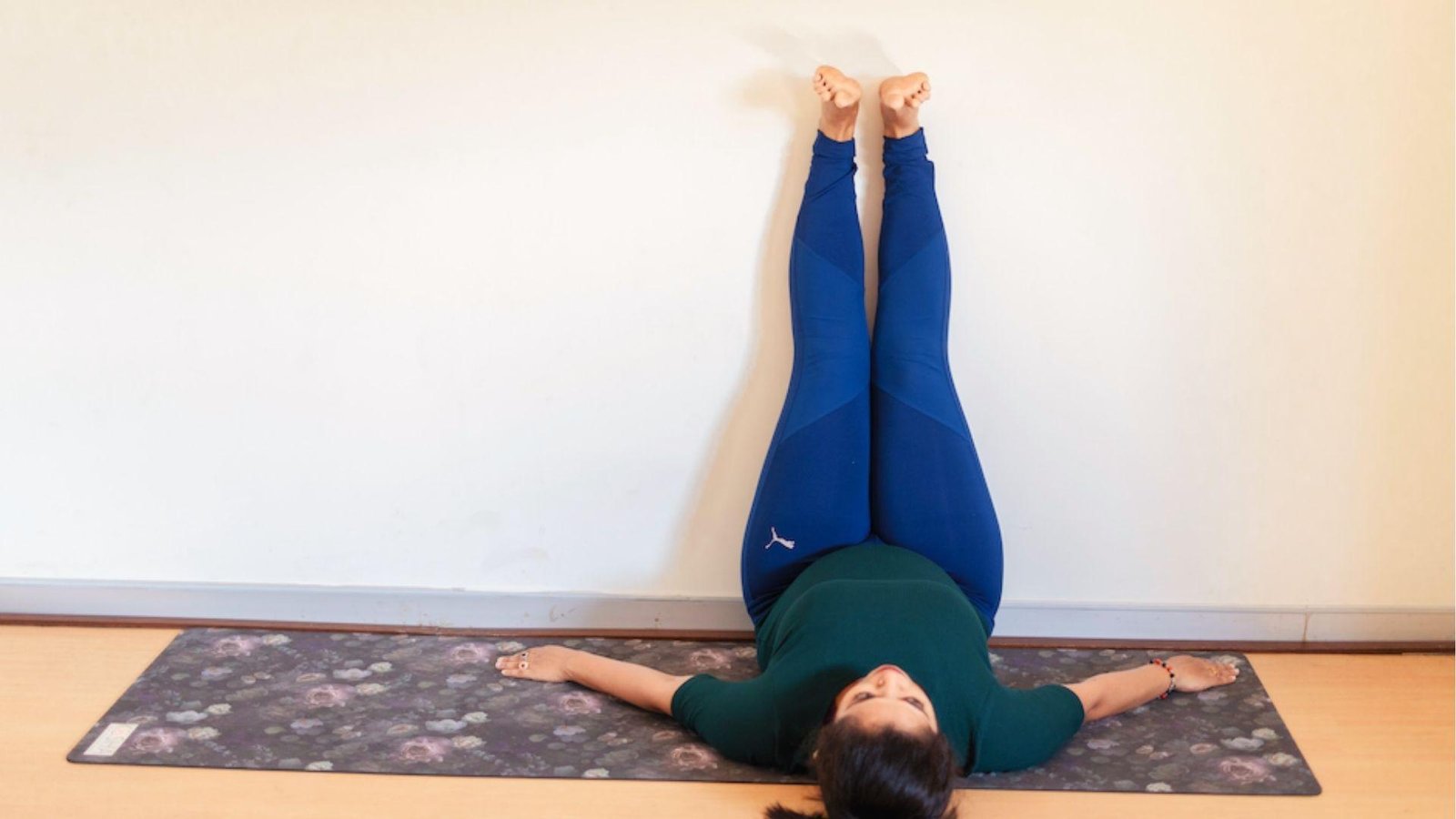
11. Legs-Up-The-Wall Pose (Viparita Karani)
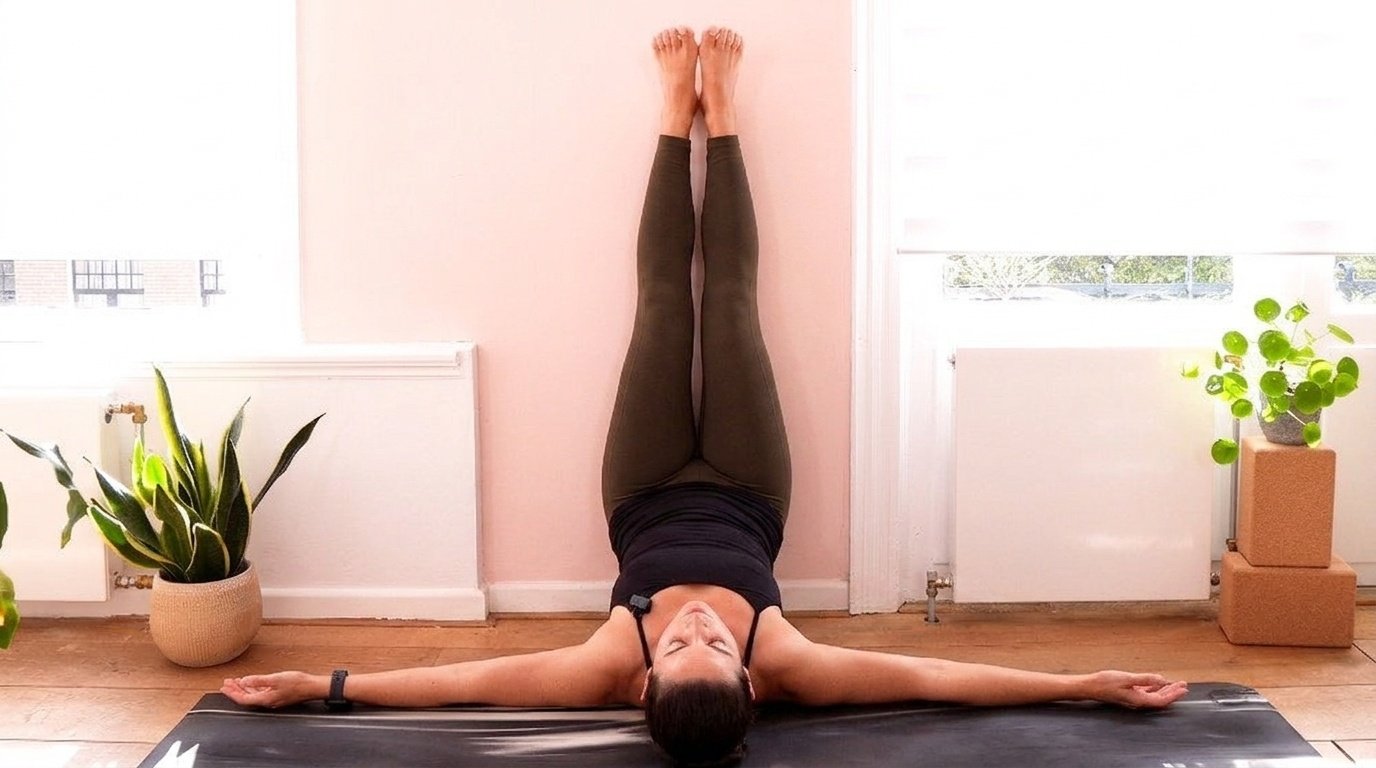
This pose calms your nervous system and relieves tired legs.
Sit sideways next to the wall. Swing your legs up so they rest against it. Lie back on the floor and let your arms relax. Stay here for several minutes and breathe slowly.
12. Reclined Squat Pose At The Wall
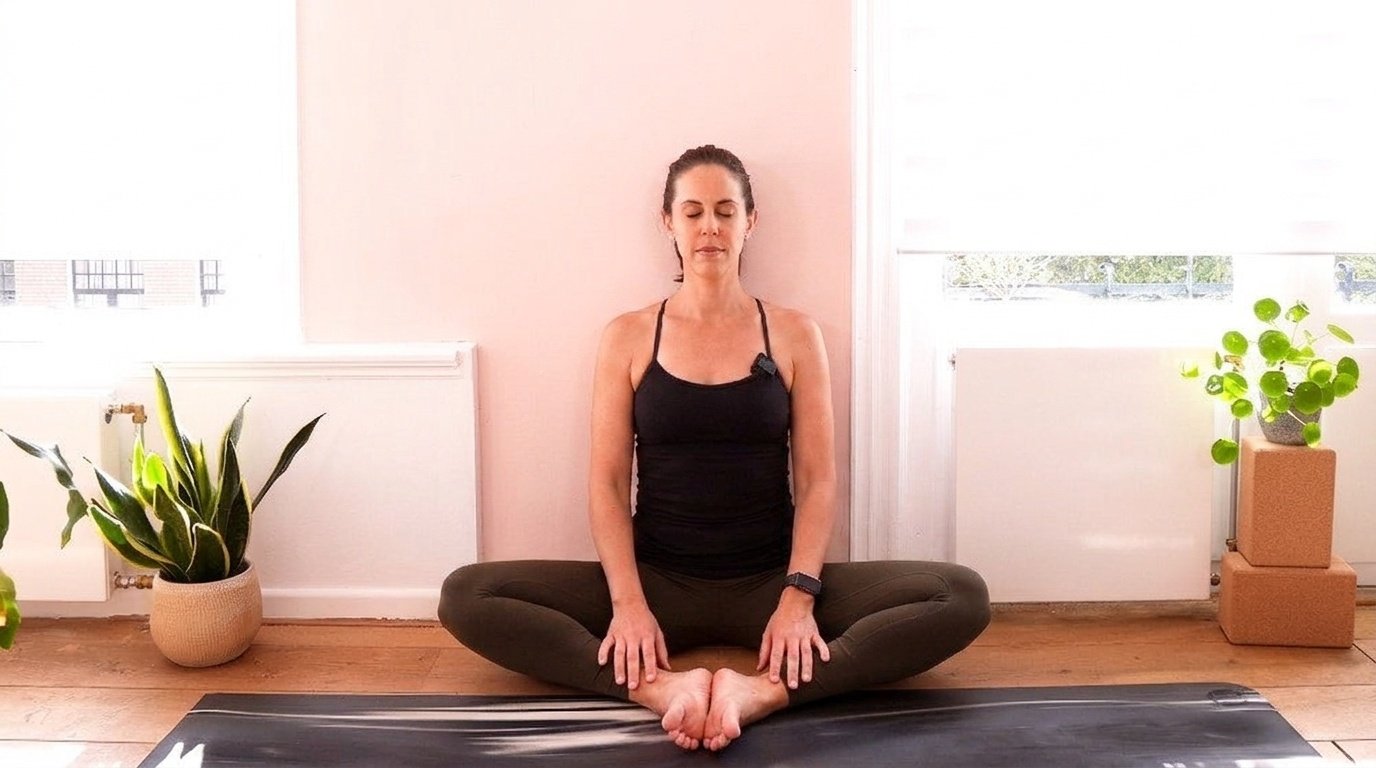
This pose stretches your hips while keeping your spine supported.
Sit with your back against the wall. Bring the soles of your feet together. Let your knees fall open to the sides. Rest your hands on your thighs and breathe.
13. Figure Four Wall Stretch
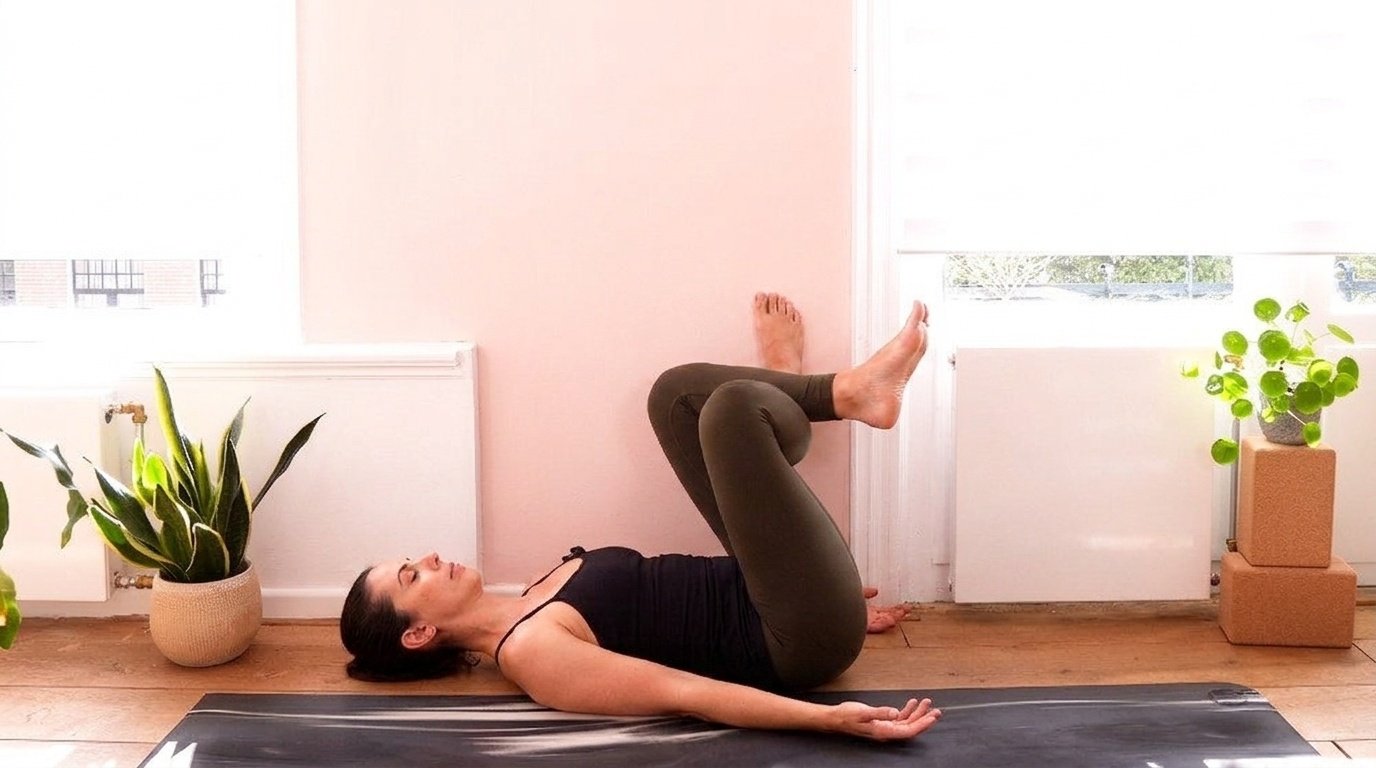
This pose targets the outer hip without putting stress on your back.
Lie on your back with your feet flat on the wall. Cross one ankle over the opposite knee. Flex your foot to protect your joint. Hold for a few breaths, then switch sides.
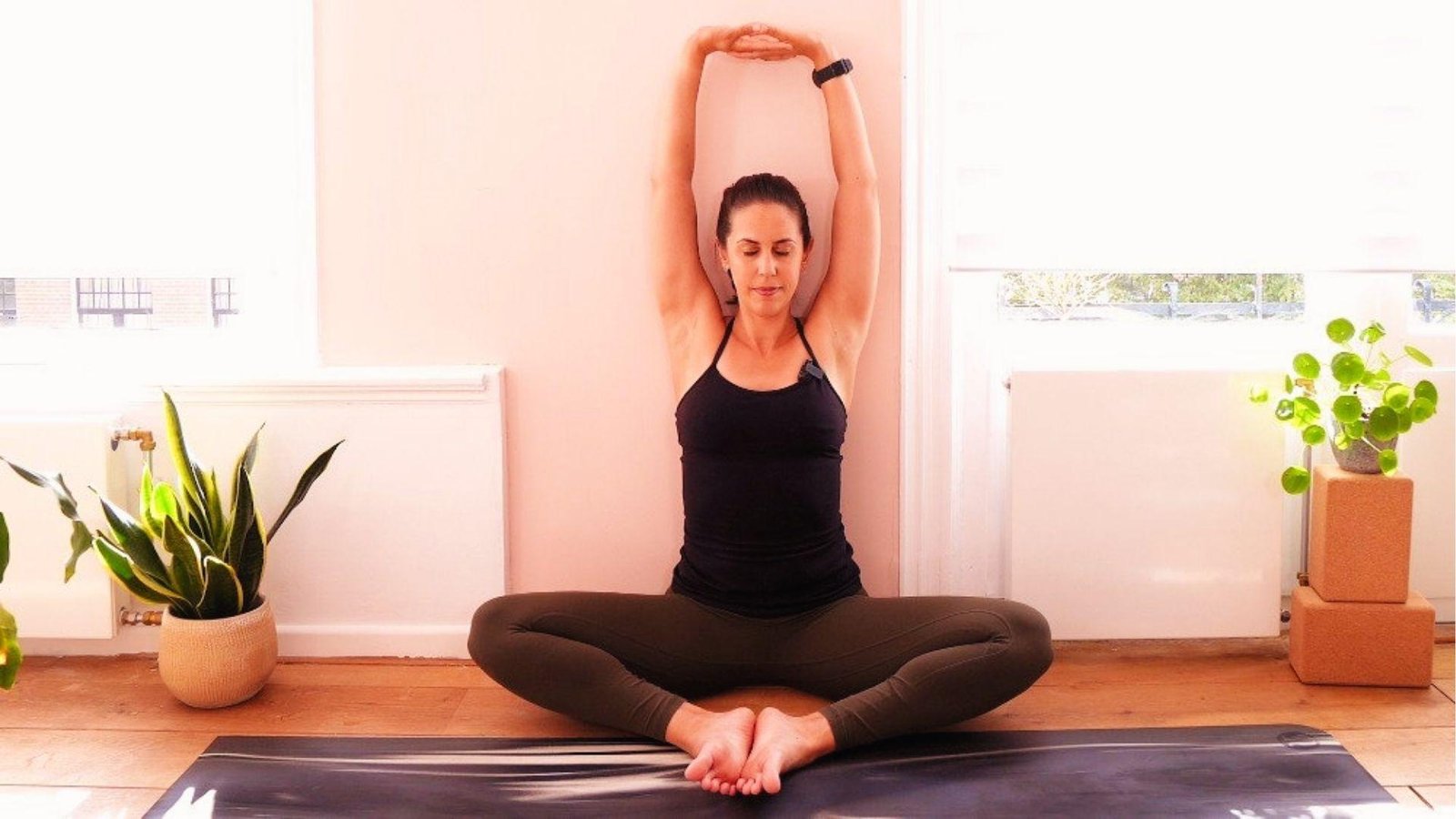
14. Wall-Supported Butterfly Pose
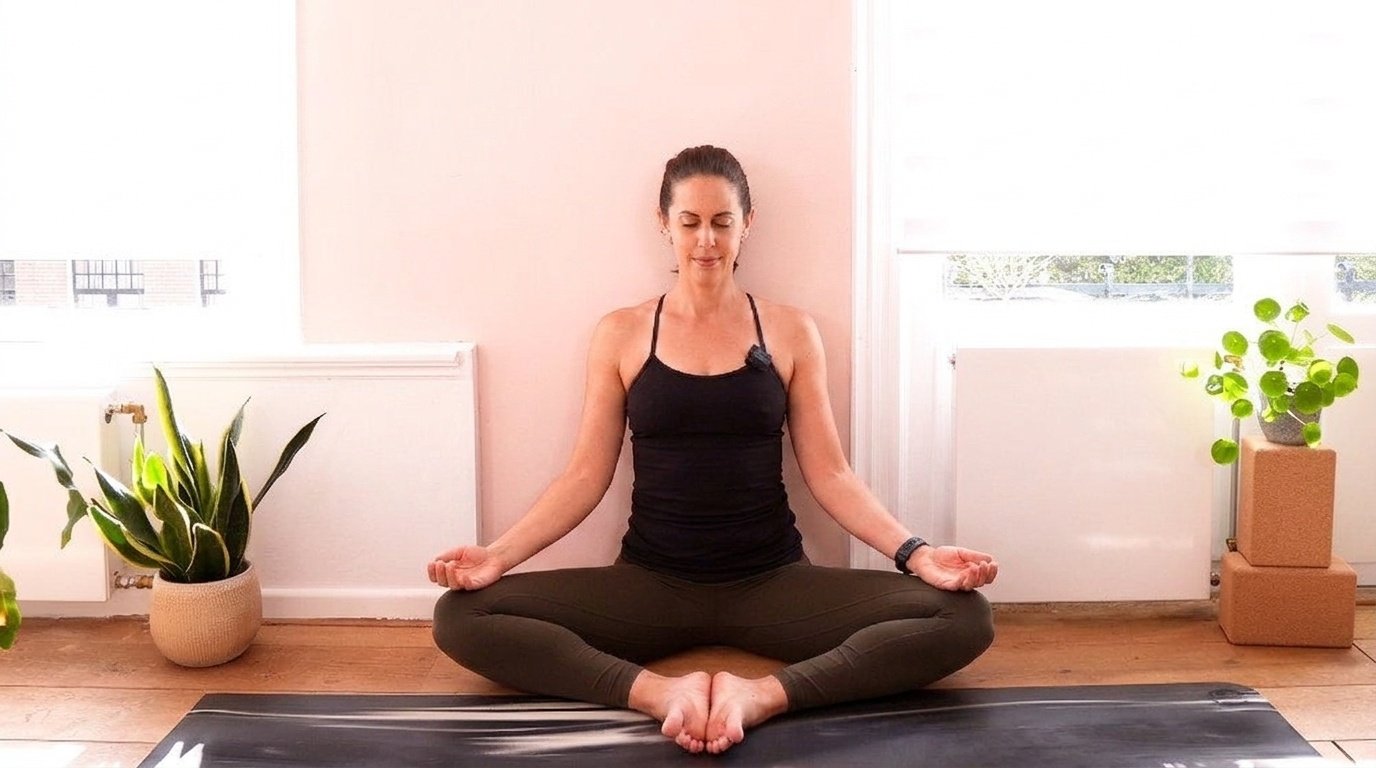
This pose opens your hips while keeping your back straight.
Sit with your back against the wall. Bring the soles of your feet together. Let your knees drop outward gently. Rest here and let your hips loosen over time.
15. Wide-Legged Straddle With Legs-Up-The-Wall
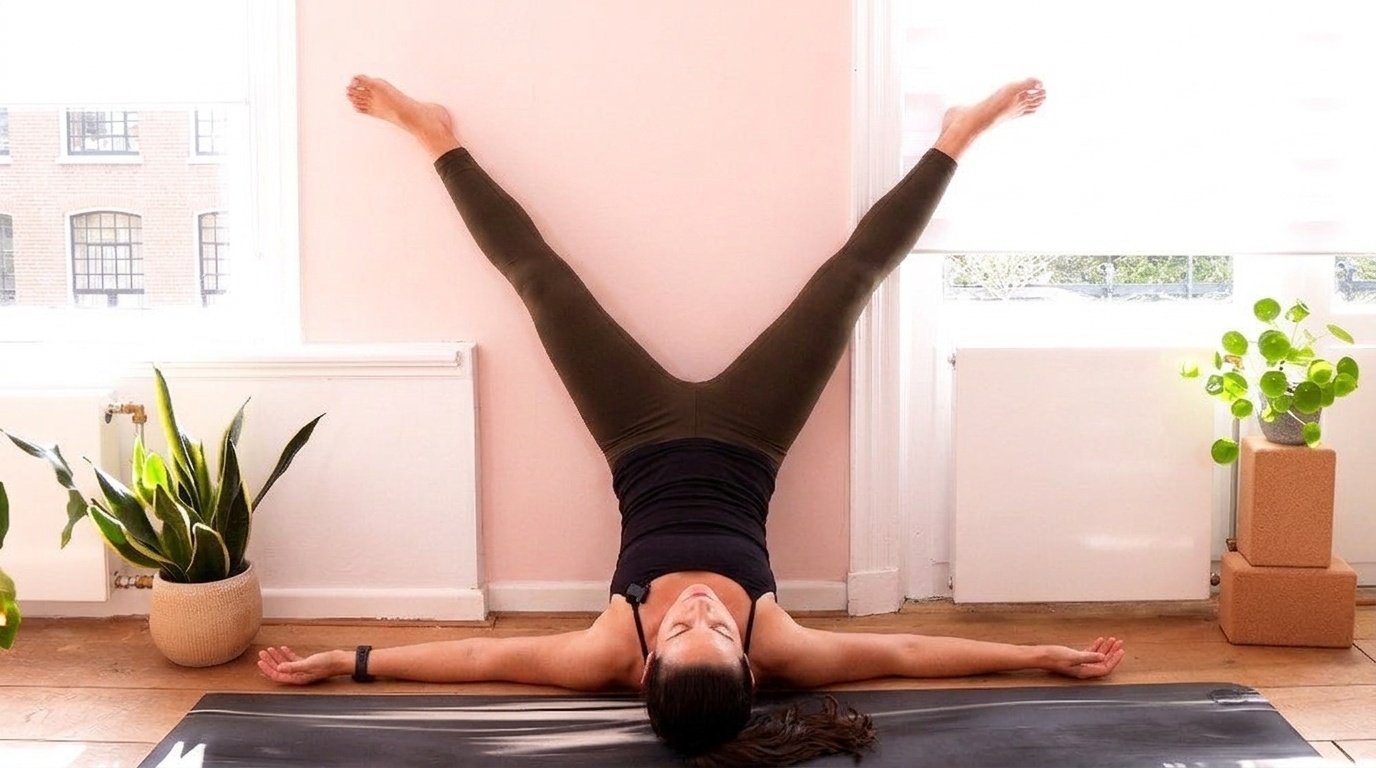
This pose stretches your inner thighs with very little effort.
Lie on your back with your legs resting up the wall. Slowly let your legs open out to the sides. Let gravity pull them down naturally. Bring your legs back together slowly when you are done.
The Benefits of Wall Yoga for Beginners
Wall yoga offers real, lasting benefits that go beyond a typical yoga class or routine.
Improves Balance and Stability
The wall gives you a reference point. Over time, your body learns to balance without relying on it. Balance improves faster when you practice with proper feedback.
Encourages Proper Alignment and Posture
Many beginners curve their spine without realizing it. The wall corrects that instantly. Better posture carries over into daily life too.
Safely Increases Flexibility and Mobility
Supported stretches let you go deeper without strain. Your muscles relax more easily when they feel safe. Flexibility builds steadily this way.
Builds Strength and Body Awareness
Holding wall poses activates your core, legs, and arms. You also start to notice how your body moves and where it holds tension.
Reduces Stress and Promotes Relaxation
Restorative wall poses calm the nervous system. Even ten minutes of Legs-Up-the-Wall can reduce stress and improve sleep quality.
Tips for Practicing Wall Yoga Safely and Effectively
Simple habits practiced regularly make wall yoga more rewarding and injury-free over time.
- Focus on alignment over depth in every pose
- Move slowly and pay attention to how your body feels
- Modify any pose that causes pain or discomfort
- Use a yoga mat, folded blanket, or block for extra support
- Practice at least three times a week for steady progress
Conclusion
Wall yoga was a turning point in my own practice. I finally felt in control instead of frustrated.
These wall yoga poses are a gentle, practical way to build real strength and flexibility without pressure or fear.
Start with two or three poses from this guide. See how your body feels. Then build from there. Small steps lead to big changes over time.
If this helped you, leave a comment below or share it with someone who could use a confidence boost on the mat. I'd love to hear how it goes for you.
Frequently Asked Questions
Is Wall Yoga Suitable for Complete Beginners?
Yes, wall yoga is one of the best options for beginners. The wall provides support that makes poses easier to learn and safer to hold from the start.
How Often Should I Practice Wall Yoga?
Three to four times a week works well for most beginners. Even short sessions of fifteen to twenty minutes can bring noticeable results over time.
Can Wall Yoga Improve Posture and Balance?
Absolutely. The wall gives your body alignment cues that carry over into your daily posture. Balance also improves as your strength and body awareness grow.
Do I Need Any Equipment for Wall Yoga?
You only need a clear wall and a yoga mat. A folded blanket or yoga block can add extra comfort, but they are not required to start.
Are Wall Yoga Exercises Safe for Seniors?
Yes. Wall yoga is low-impact and supportive, making it a great choice for seniors. It reduces the risk of falling and allows movement at a comfortable pace.